Short answer: a contactor is an electrically operated switch for power circuits. When its coil is energised, an electromagnet pulls in the moving contacts and closes the main poles, switching motors, heaters, lighting or capacitors on and off.
How a contactor works
- A control voltage is applied to the coil (A1-A2).
- The electromagnet pulls the armature, closing the main contacts (1/L1-2/T1, 3/L2-4/T2, 5/L3-6/T3) and changing the auxiliary contacts.
- When the coil is de-energised, a spring opens the contacts.
Contactor symbols and terminal numbers

Auxiliary contacts are numbered so that the second digit shows the function: 3-4 is normally open (for example 13-14) and 1-2 is normally closed (for example 21-22).
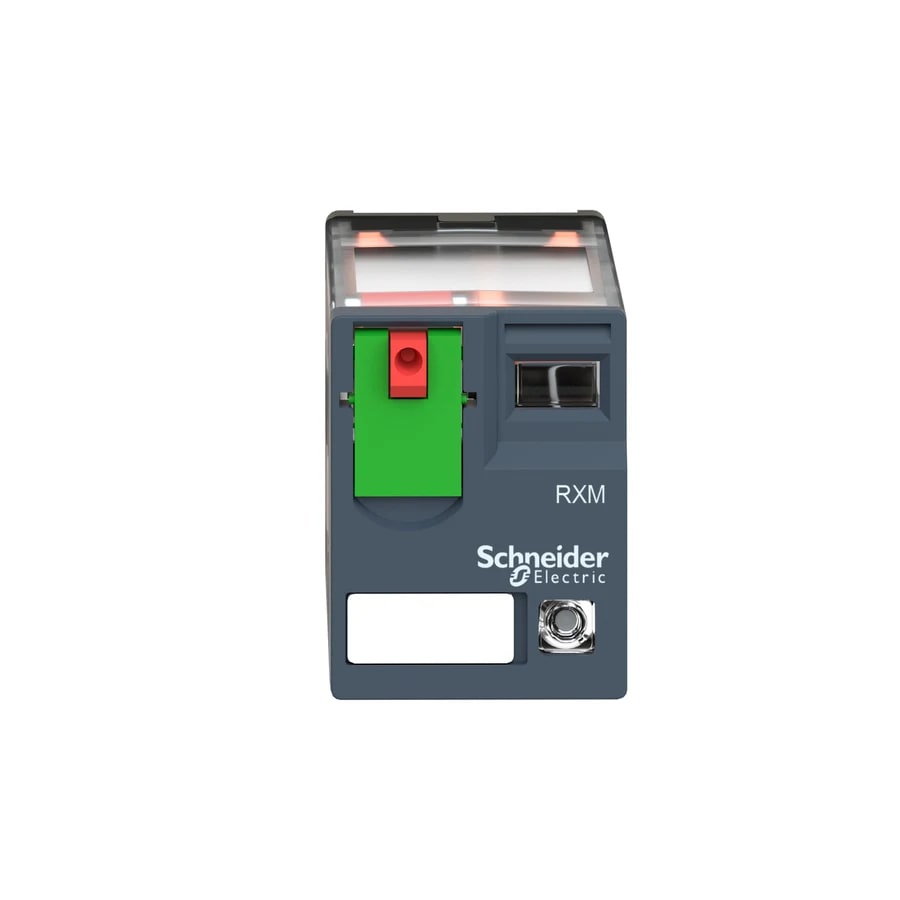
Contactor vs relay
Contactor | Relay | |
|---|---|---|
Switches | Power circuits (motors, heaters) | Control signals |
Current | About 9 A to hundreds of amps | Usually up to about 10–16 A |
Poles | 3 or 4 main poles plus auxiliaries | 1 to 4 changeover contacts |
Arc handling | Arc chutes for high current | Small contacts |
AC-1 and AC-3 ratings
- AC-1: non-inductive or slightly inductive loads, such as heaters.
- AC-3: squirrel-cage motors, starting and switching off while running. Use this rating for motors.
- AC-6b: capacitor switching; capacitor-duty contactors are used in APFC panels.
Types of contactor
Type | What it does | Typical use |
|---|---|---|
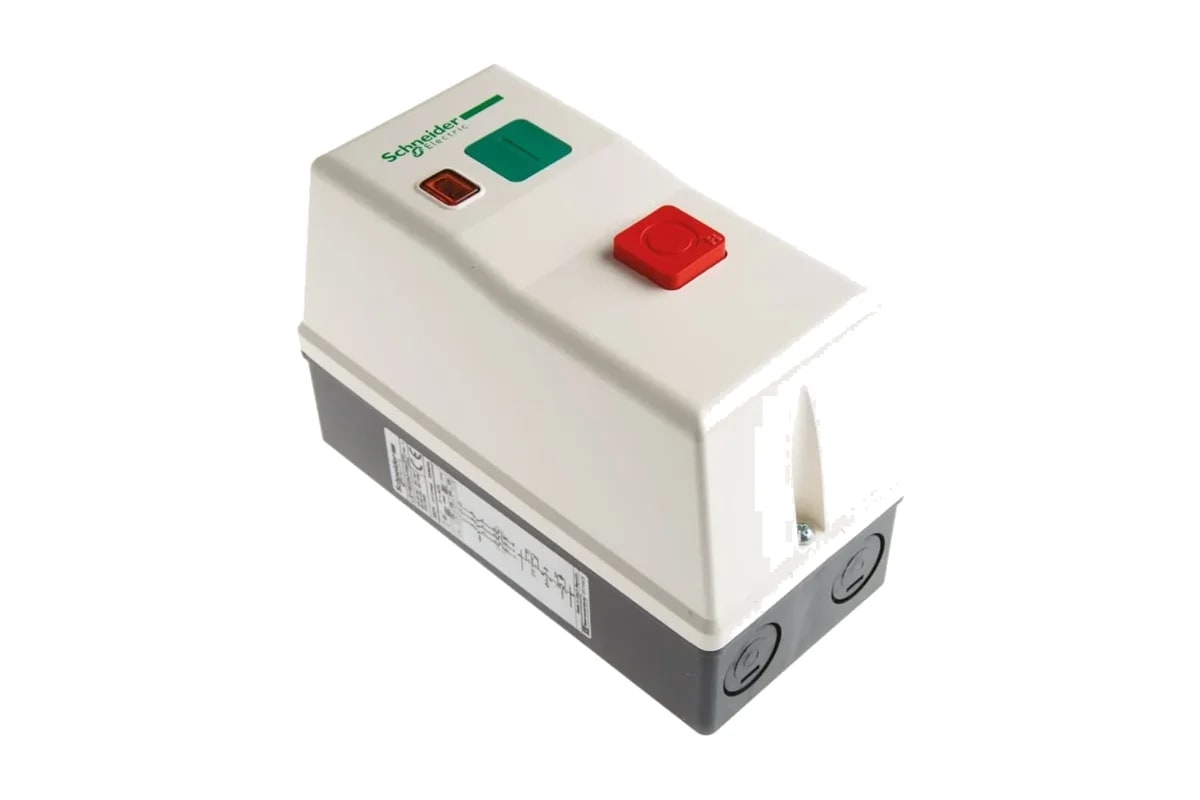
Power (motor) contactor | 3 or 4 main poles rated by AC-3 current | Motor starters, heaters, pumps |
Auxiliary contactor (control relay) | Only auxiliary contacts, no main poles | Interlocks and control logic in panels |
Capacitor-duty contactor | Early-make resistors damp the inrush when a capacitor is switched in | APFC panels |
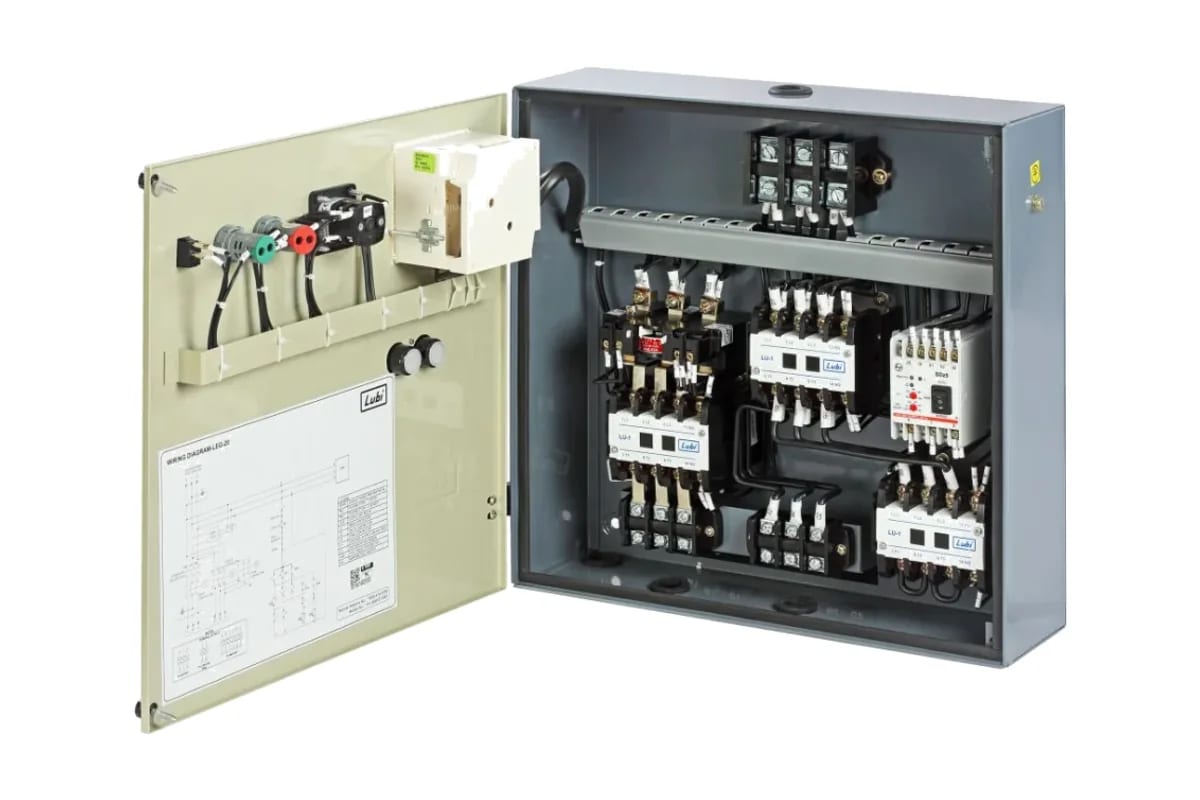
Reversing contactor pair | Two contactors with mechanical and electrical interlock swap two phases | Forward/reverse drives, hoists |
Mini contactor | Compact frame for small loads | Small motors, lighting, OEM machines |
DC contactor | Arc blow-out designed for DC breaking | Battery, solar DC and traction circuits |
Vacuum contactor | Contacts sealed in vacuum bottles | HT motors and frequent switching at 3.3 to 11 kV |
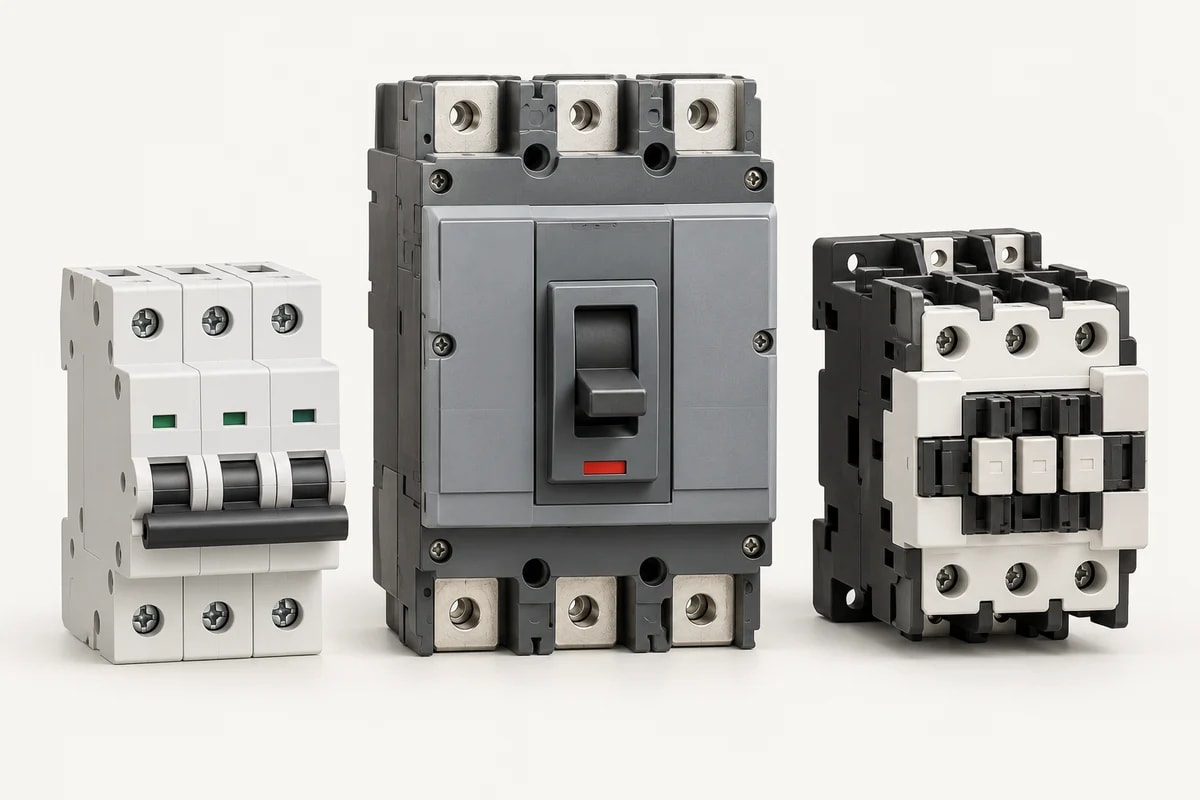
Contactor vs MCB, MCCB and overload relay
A contactor switches a load on and off, often thousands of times a day, but it does not protect anything. Short-circuit protection comes from an MCB, MCCB, fuse or MPCB; overload protection comes from an overload relay fitted under the contactor. A motor starter is the combination of these parts.
Utilisation categories in IEC 60947-4-1
Category | Load |
|---|---|
AC-1 | Non-inductive or slightly inductive loads, resistance furnaces, heaters |
AC-2 | Slip-ring motors: starting and switching off |
AC-3 | Squirrel-cage motors: starting and switching off while running |
AC-4 | Squirrel-cage motors: plugging, inching and reversing |
AC-6b | Switching capacitor banks |
DC-1, DC-3, DC-5 | DC resistive loads, shunt motors and series motors |
The same contactor has a much lower AC-4 rating than AC-3, so jog and plugging duties need a larger frame. Read the maker’s table, not just the frame size printed on the front.
Choosing a contactor
- AC-3 current rating at least equal to motor full-load current at your voltage.
- Coil voltage to match the control supply (24 V DC, 110 V AC, 230 V AC).
- Number of auxiliary contacts for hold-on and interlocks.
- Matching overload relay range.
See the contactor selection guide and contactors and overload relays. For wiring examples see the DOL starter diagram and star delta starter diagram.
Common contactor mistakes
- Selecting a motor contactor by its AC-1 (heater) current instead of AC-3.
- Ordering a 230 V AC coil for a 24 V DC or 110 V AC control circuit.
- Using a contactor without an overload relay or motor protection.
- Reversing with two contactors that have no mechanical interlock.
- Using a standard contactor for capacitor banks instead of a capacitor-duty type.
Brands we quote include Schneider Electric, Siemens, ABB and L&T. See motor starters, soft starters and the motor control and starters category.
Sources
- IEC 60947-4-1 (adopted in India as IS/IEC 60947-4-1): contactors and motor starters
Frequently asked questions
What is the difference between a contactor and a relay?
A contactor switches power circuits with high current; a relay switches control signals.
What does AC-3 mean on a contactor?
It is the rating for switching squirrel-cage induction motors.
What are A1 and A2 on a contactor?
The coil terminals.
What are the types of contactor?
Common types are power (motor) contactors, auxiliary contactors, capacitor-duty contactors, reversing pairs, mini contactors, DC contactors and vacuum contactors for HT motors.
Is a contactor the same as an MCB?
No. A contactor switches a load on command but gives no protection. An MCB or MCCB trips on overload and short circuit. Motor circuits use both, plus an overload relay.
Why does a contactor hum?
Usually low or unstable coil voltage, dirt on the magnet faces, or a damaged shading ring in an AC coil. Check the control voltage first, then clean or replace the contactor.
Which standard applies to contactors?
IEC 60947-4-1, adopted in India as IS/IEC 60947-4-1, covers contactors and motor starters, including the AC-1, AC-3 and AC-4 categories.
Specify your requirement
Send the rating, make, quantity and delivery location. Attach the drawing or datasheet where available.
Request a quote Or send it on WhatsApp ↗