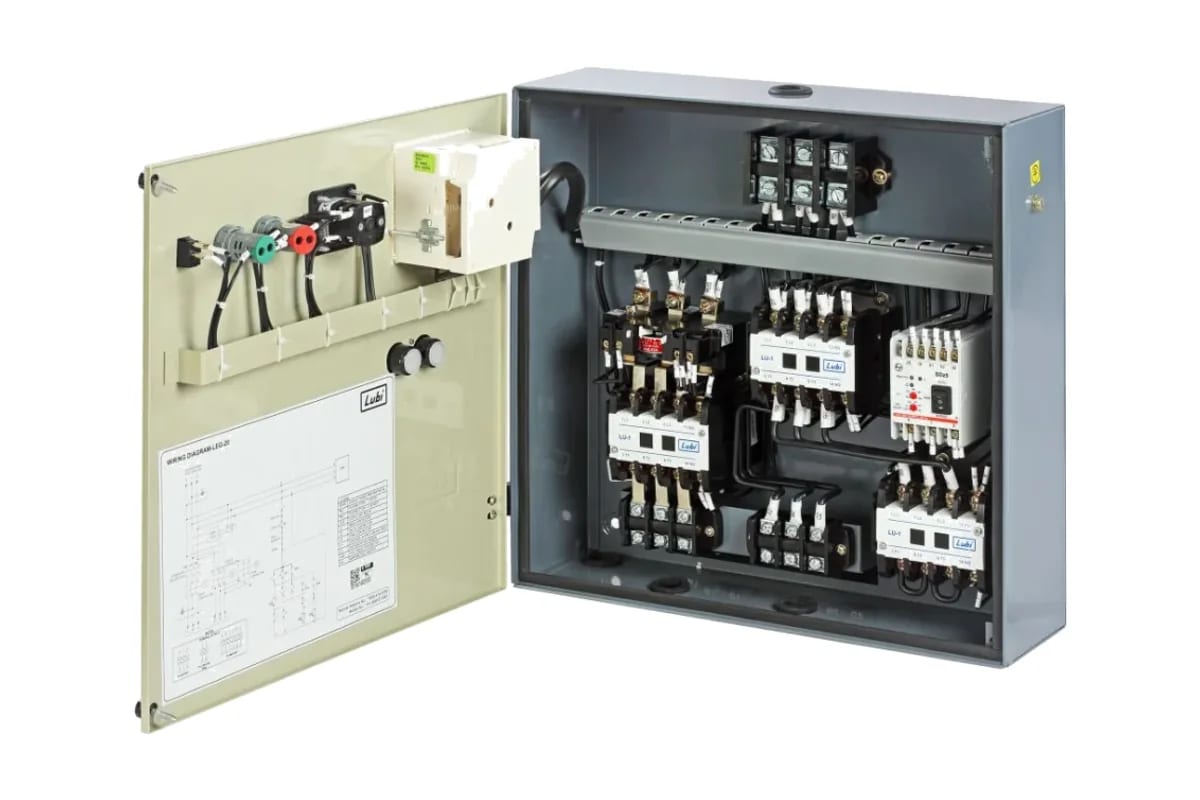
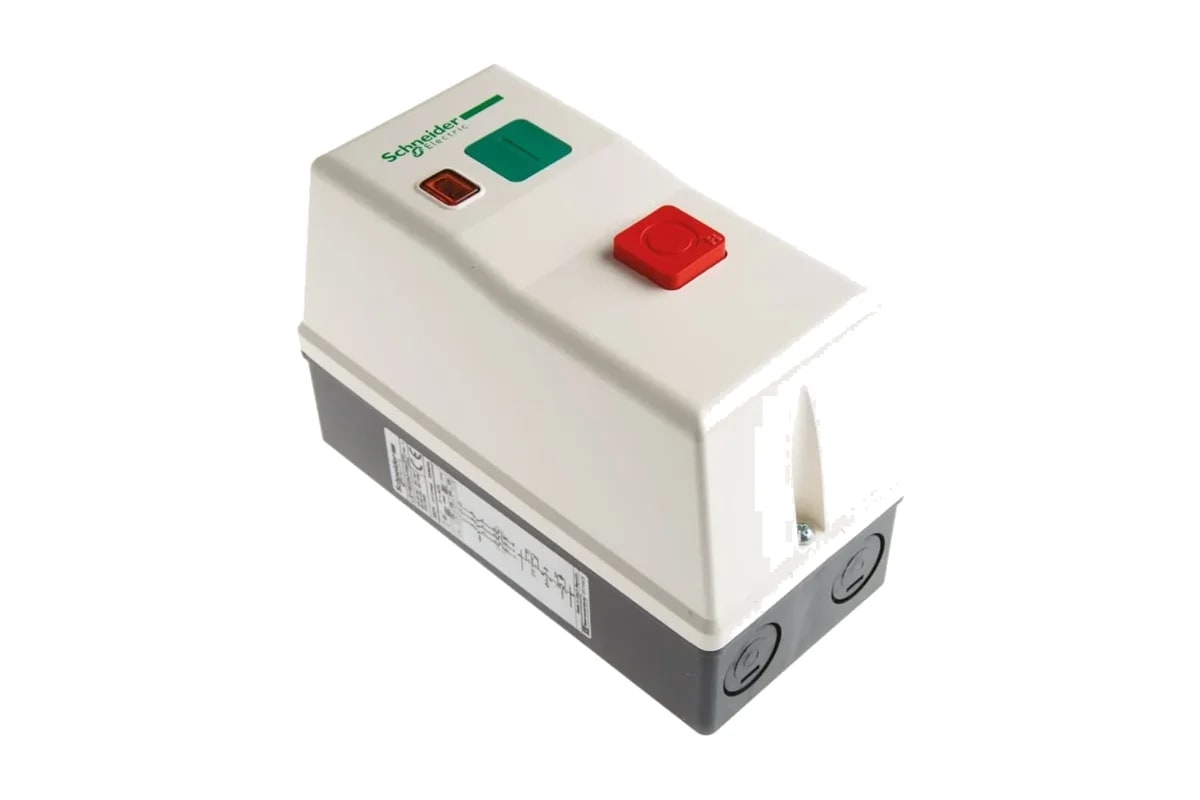
Short answer: a DOL (Direct On Line) starter connects the motor straight across the full supply through a contactor and an overload relay. The control circuit uses a stop button (NC), a start button (NO), the contactor coil and a hold-on (auxiliary) contact that keeps the contactor closed after the start button is released.
DOL starter power diagram

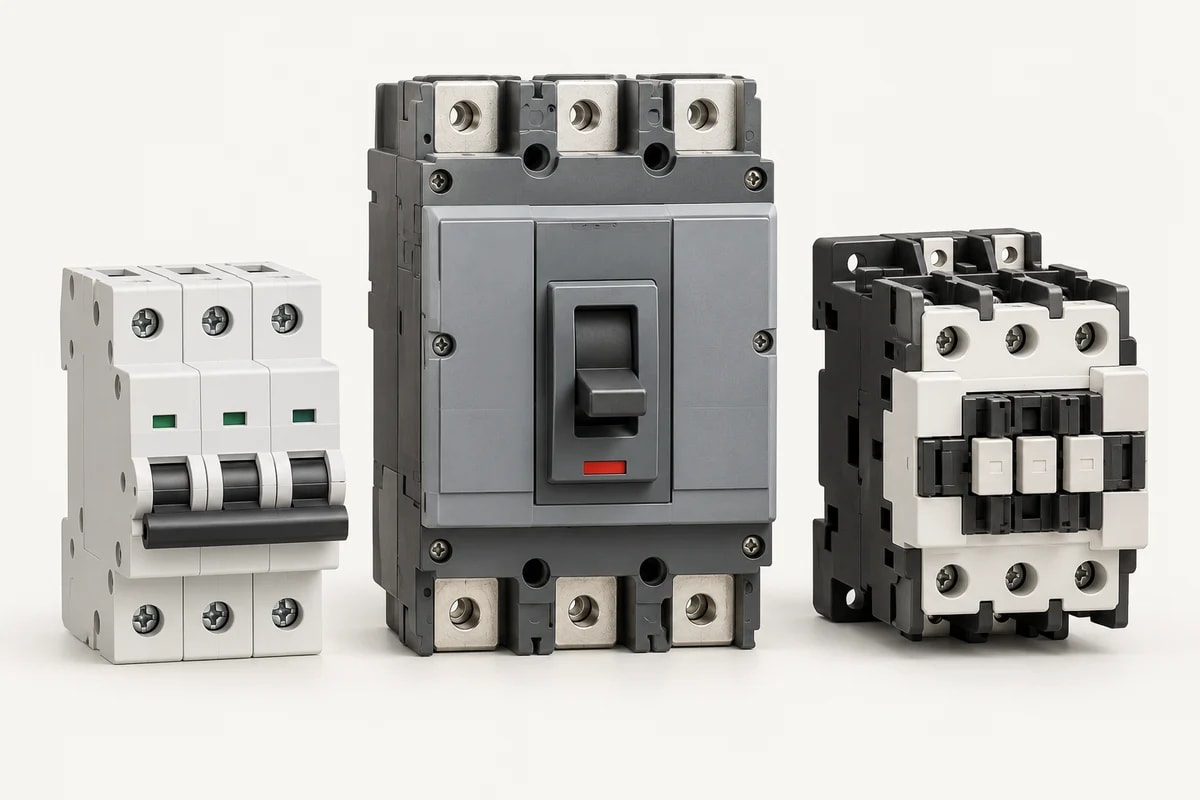
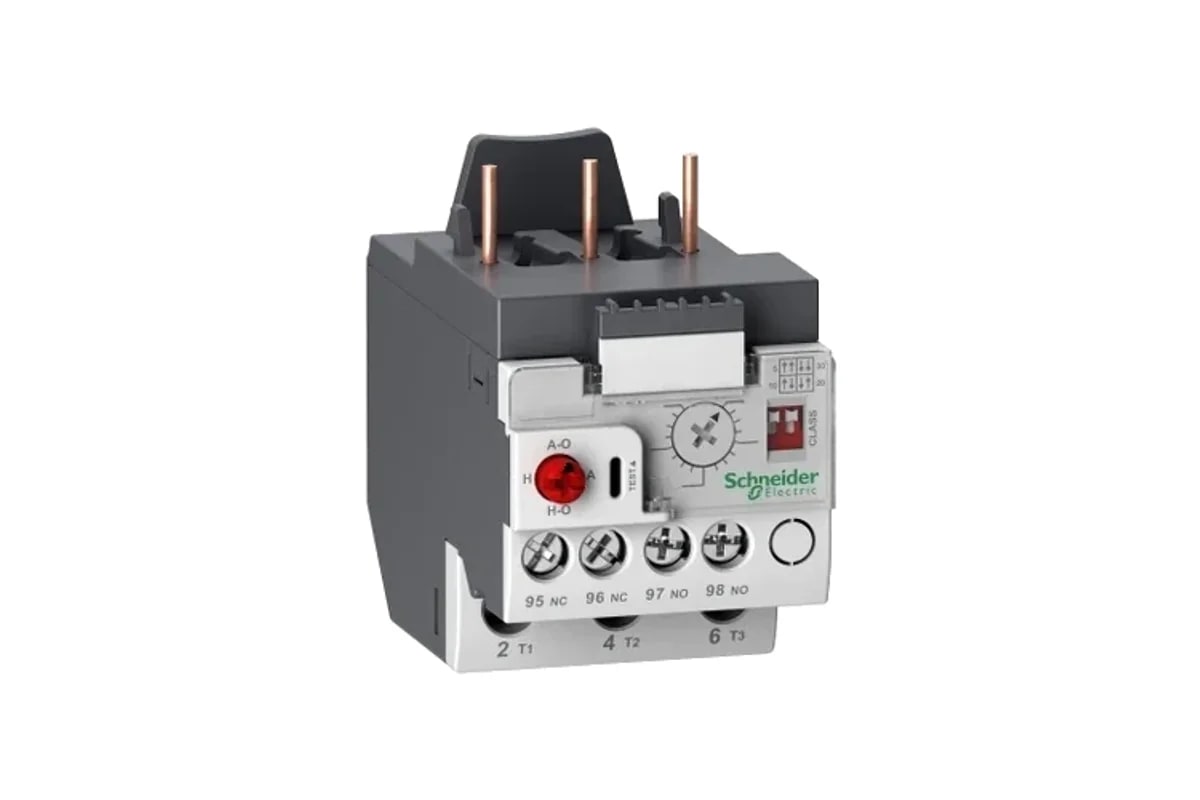
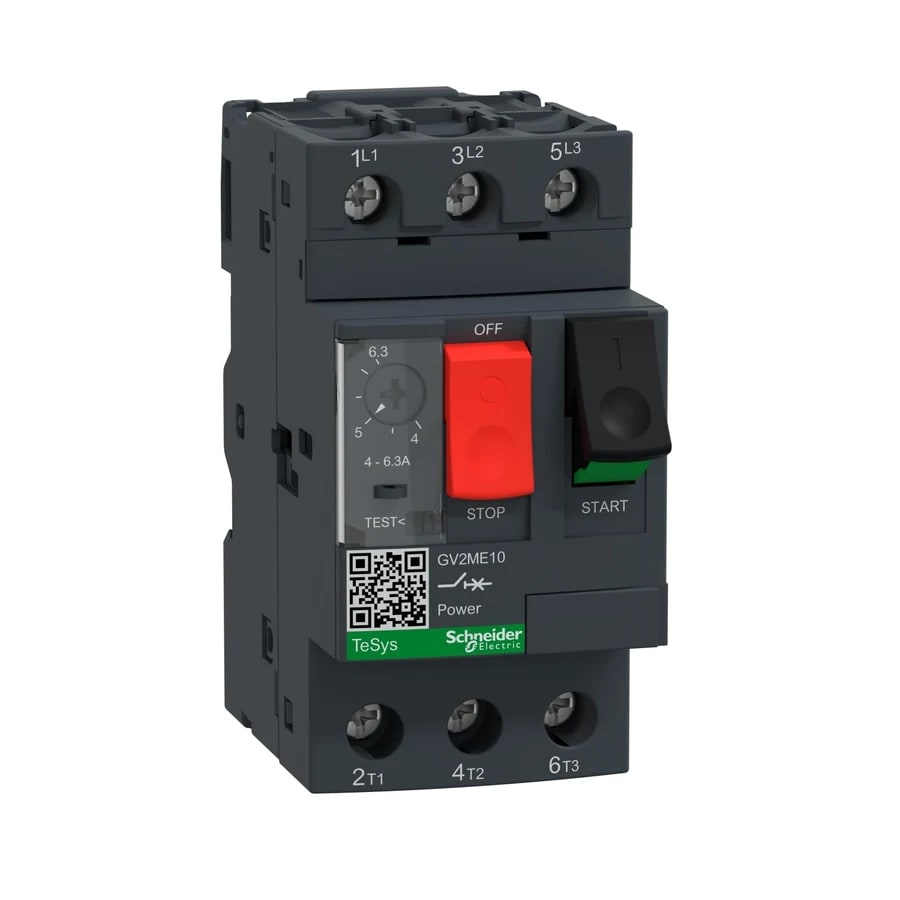
L1, L2 and L3 pass through short-circuit protection (MCCB, fuse or MPCB), the contactor main poles and the overload relay to the motor. Starting current is typically 6 to 8 times full-load current, which is why DOL suits smaller motors or a strong supply.
DOL starter control wiring diagram

How it works
- Press Start S2: current flows through the fuse, overload contact 95-96 and Stop S1 to the K1 coil, and K1 closes.
- K1 13-14 (auxiliary NO) closes in parallel with S2, so K1 stays on after S2 is released.
- Press Stop S1, or an overload opens 95-96: the coil de-energises and the motor stops.
Components
Item | Typical choice |
|---|---|
Contactor | AC-3 rating ≥ motor full-load current |
Overload relay | Range covering motor FLC, set to FLC |
Short-circuit protection | MCCB, HRC fuses or MPCB, coordinated with the contactor |
Push buttons | Green start (NO), red stop (NC) |
Control supply | 230 V AC, 110 V AC or 24 V DC coil to suit |
Buy complete units from DOL starters, or the parts from contactors and overload relays and push buttons. Read the DOL starter buying checklist before ordering.
How to wire a DOL starter: step by step
- Isolate and lock off the supply; check dead.
- Wire L1, L2, L3 from the MCCB or MPCB to contactor terminals 1/L1, 3/L2, 5/L3.
- Fit the overload relay under the contactor and wire its 2/T1, 4/T2, 6/T3 to motor terminals U1, V1, W1; connect the motor earth.
- Control: from the control fuse, go through overload 95-96, then stop (NC), then start (NO) to coil A1; return A2 to neutral or the control supply return.
- Wire auxiliary 13-14 across the start button as the hold-on contact.
- Set the overload dial to motor nameplate full-load current, then test start, stop and an overload trip before handing over.
DOL sizing example
For a 415 V three-phase motor with a nameplate full-load current of, say, 11 A: choose a contactor with an AC-3 rating of at least 11 A, an overload relay whose range covers 11 A (set at 11 A), and short-circuit protection coordinated with the contactor as shown in the maker’s coordination table. Always use the nameplate current, not a kW-to-amps estimate.
Advantages and disadvantages of a DOL starter
Advantages | Disadvantages |
|---|---|
Simplest and lowest-parts starter | High starting current, typically 6 to 8 × full-load current |
Full starting torque | Voltage dip on weak supplies |
Easy to wire and fault-find | Mechanical shock to belts, couplings and pumps |
Compact enclosure | Limited motor size depending on supply authority rules |
If the starting current or torque shock is a problem, compare star delta starters, soft starters and VFDs in DOL vs star delta vs soft starter. Understanding the coil and contacts is covered in what is a contactor.
Common faults
- Contactor drops when Start is released: hold-on contact 13-14 not wired across S2.
- Contactor will not pull in: open overload contact, stop button or wrong coil voltage.
- Overload trips at start: overload set below FLC, or a long, heavy start that needs star delta, a soft starter or a VFD.
Sources
- IEC 60947-4-1 (adopted in India as IS/IEC 60947-4-1): contactors and motor starters
Frequently asked questions
What is a DOL starter?
A Direct On Line starter that connects the motor to the full supply voltage through a contactor and overload relay.
Why is a hold-on contact used?
It keeps the contactor energised after the start button is released.
Up to what rating is DOL used?
Commonly for small motors, often up to about 5–7.5 kW, depending on supply capacity and utility rules.
What is the starting current of a DOL starter?
A motor started direct on line typically draws 6 to 8 times its full-load current for a few seconds. The exact value is on the motor datasheet as the locked-rotor current.
What is the difference between DOL and star delta starters?
DOL applies full voltage at start, giving full torque and high current. Star delta starts the motor in star at reduced voltage, cutting starting current and torque to about one-third, then switches to delta.
Can a DOL starter be used for a single-phase motor?
Yes. A single-phase DOL starter uses a contactor and overload relay on the phase conductor with the same start, stop and hold-on control circuit.
Specify your requirement
Send the rating, make, quantity and delivery location. Attach the drawing or datasheet where available.
Request a quote Or send it on WhatsApp ↗