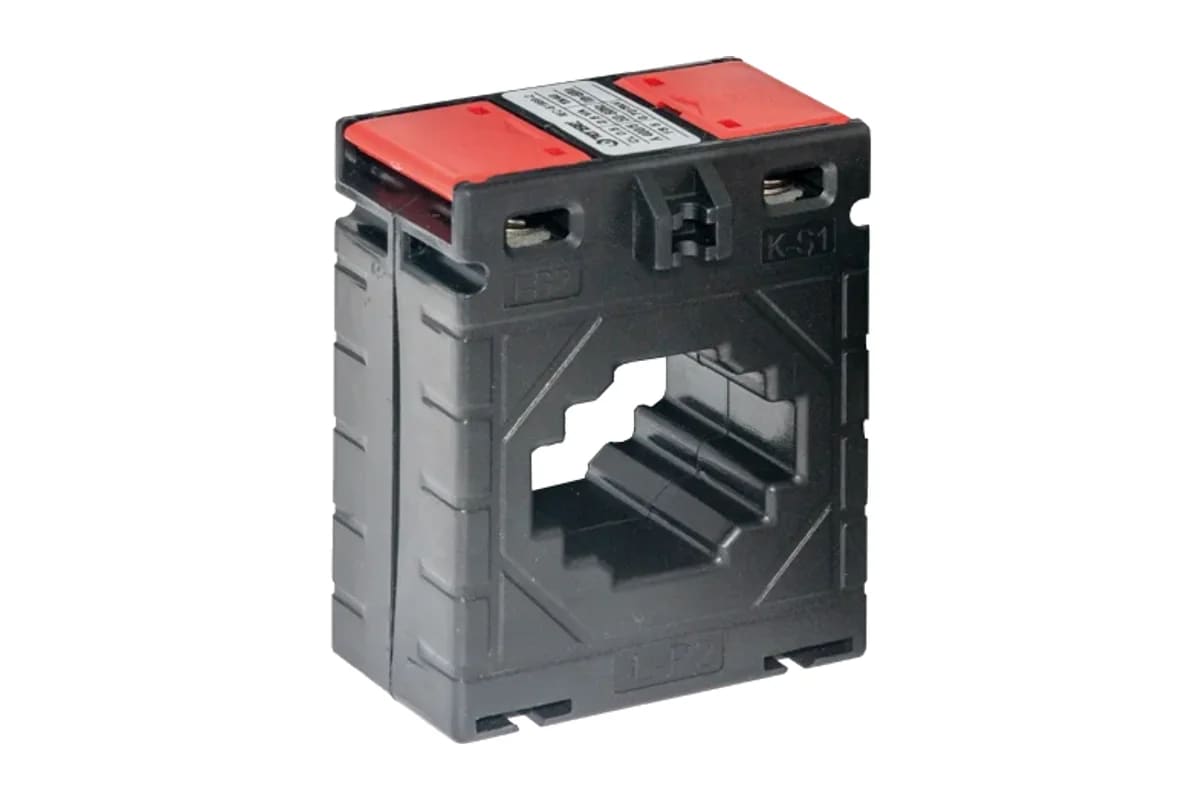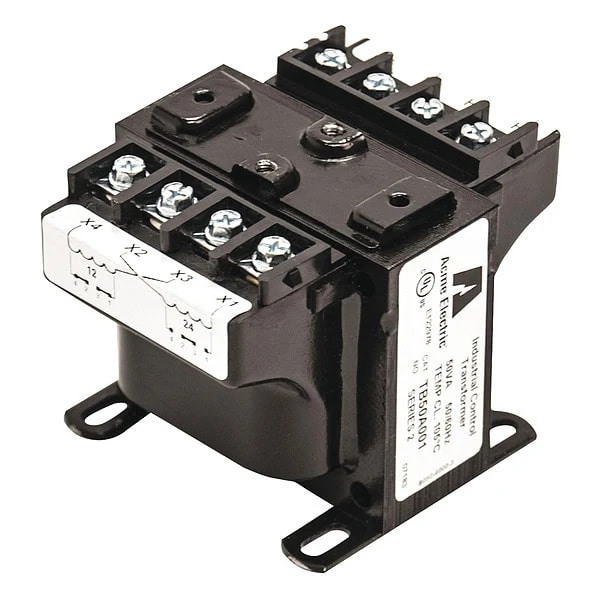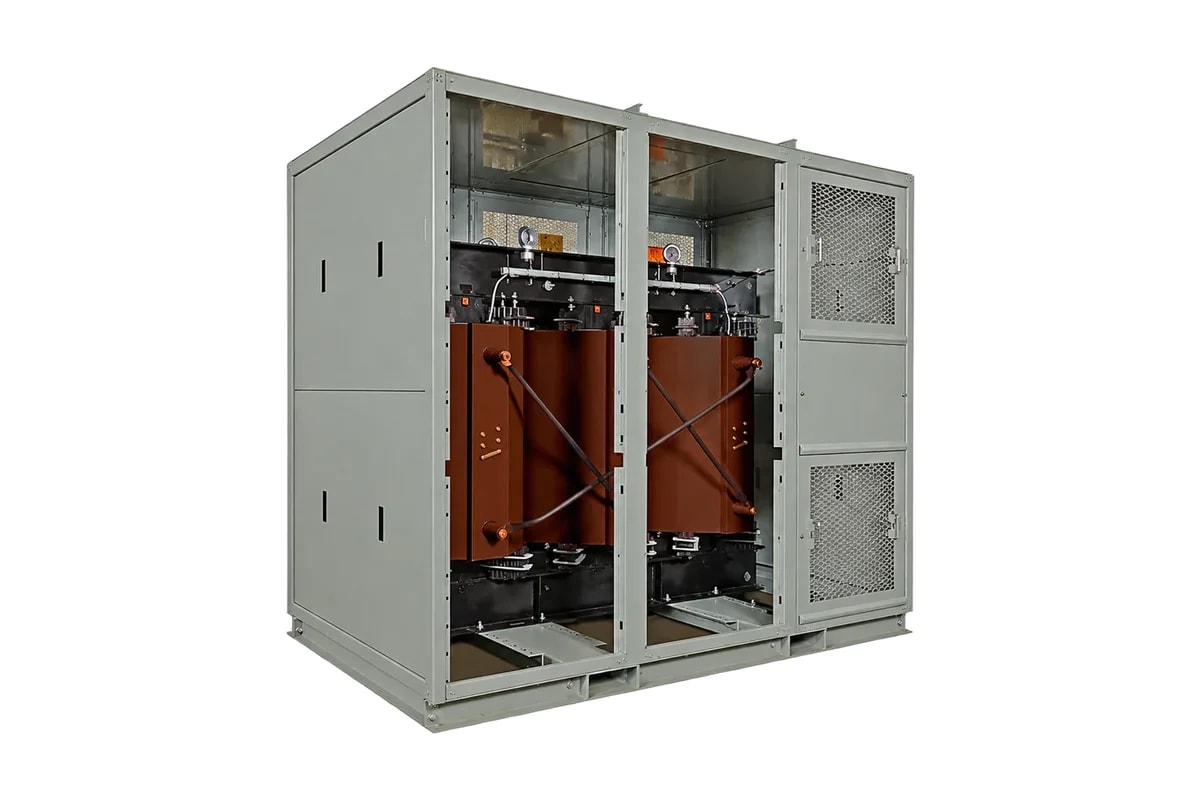
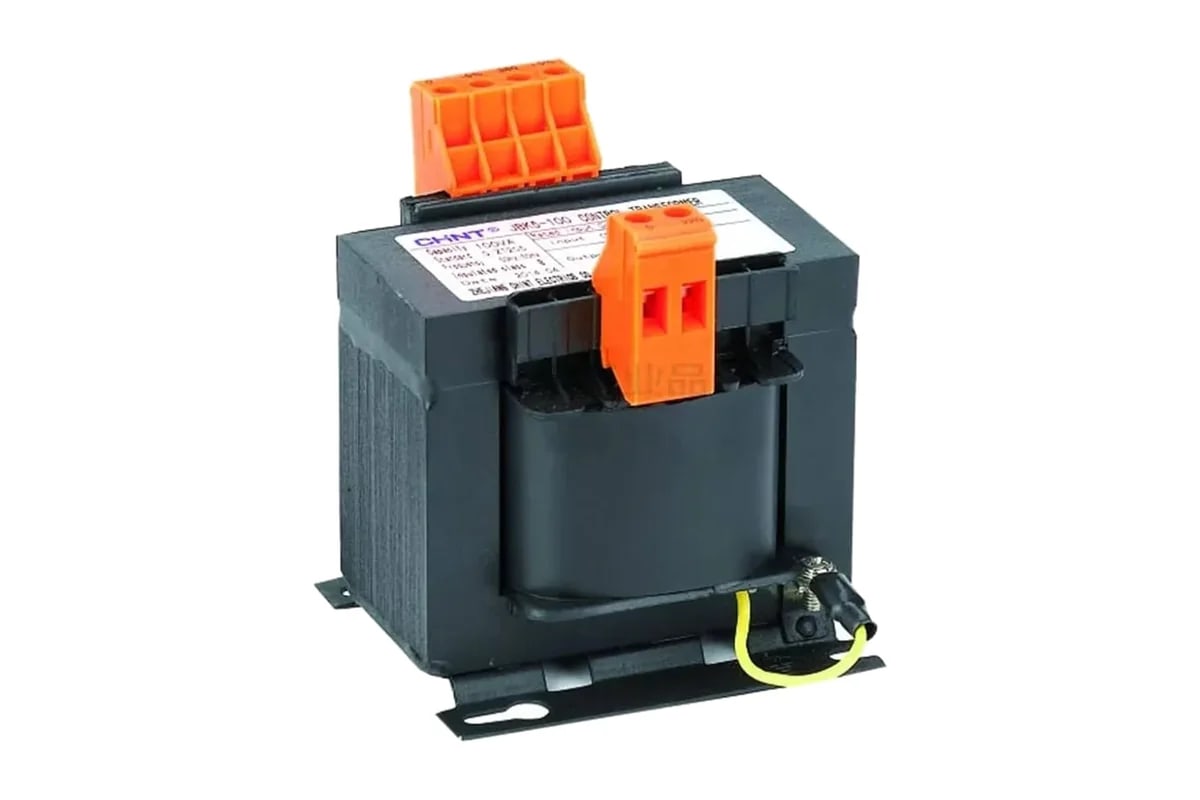
Short answer: a transformer is a static machine that transfers AC power from one circuit to another through a shared magnetic core, raising or lowering the voltage in proportion to the turns ratio. Transformers are grouped by function (step-up, step-down, isolation), by application (power, distribution, instrument), by construction (core, shell, auto, toroidal) and by cooling (oil-immersed or dry-type).
How a transformer works
An alternating current in the primary winding sets up an alternating magnetic flux in the laminated core. That flux links the secondary winding and induces a voltage in it. The induced voltage follows the EMF equation E = 4.44 × f × N × Φm, so for an ideal transformer V1/V2 = N1/N2 = I2/I1. More turns on the secondary raise the voltage and lower the current; fewer turns do the opposite. Transformers work only on AC, because a steady DC flux induces no voltage.
Types of transformers by function
- Step-down transformer: secondary voltage lower than primary, for example 11 kV to 433 V in a distribution substation or 415 V to 24 V in a control circuit.
- Step-up transformer: secondary voltage higher than primary, used at generating stations to raise voltage for transmission.
- Isolation transformer: 1:1 ratio with separate windings, used to isolate equipment from the supply for safety and noise reduction.
Types by application
Type | Typical rating | Where it is used | Indian standard |
|---|---|---|---|
Power transformer | Large ratings, 33 kV and above | Generating stations and transmission substations | IS 2026 |
Distribution transformer | Up to 2500 kVA, up to 33 kV | Final step-down to 415/433 V for plants and buildings | IS 1180 |
Current transformer (CT) | Ratios such as 100/5 A, 800/1 A | Metering and protection relays | IS 2705 / IEC 61869-2 |
Potential transformer (PT/VT) | Ratios such as 11000/110 V | Metering and protection on HT systems | IS 3156 / IEC 61869-3 |
Control transformer | Small VA ratings | Contactor coils, PLCs and panel control circuits | IS/IEC 61558 |
Special transformers | As designed | Furnace, rectifier, welding and auto-transformers | As specified |
Types by construction and cooling
In a core-type transformer the windings surround the core limbs; in a shell-type the core surrounds the windings. An auto-transformer uses one tapped winding for both primary and secondary, which is compact but gives no isolation. Toroidal transformers use a ring core with low stray flux.
Oil-immersed transformers (ONAN, ONAF) use mineral oil for insulation and cooling and suit outdoor substations. Dry-type and cast-resin transformers (IS 11171) avoid oil and suit indoor, commercial and high-rise installations where fire risk matters.
How to size and select a transformer
For a three-phase load, kVA = √3 × line voltage × line current ÷ 1000. Add the connected loads, apply diversity, allow for motor starting and future growth, then choose the next standard rating.
- Primary and secondary voltage, phase and frequency.
- kVA rating, impedance and vector group (Dyn11 is common for distribution).
- Cooling type and installation location (indoor or outdoor).
- Tap changer requirement (off-circuit or on-load) and voltage regulation range.
- Energy efficiency level for distribution transformers under IS 1180.
- Protection and accessories: Buchholz relay, oil and winding temperature indicators, breather with silica gel.
Oil-immersed vs dry-type transformer
Point | Oil-immersed | Dry-type / cast resin |
|---|---|---|
Insulation and cooling | Mineral or ester oil (ONAN, ONAF) | Air with resin-encapsulated or varnished windings (AN, AF) |
Location | Outdoor yards and substations | Indoor, high-rise, hospitals, malls |
Fire risk | Needs oil containment and fire separation | Lower; no oil to leak or burn |
Maintenance | Oil tests (BDV, moisture), breather silica gel | Cleaning and connection checks |
Standard | IS 1180 / IS 2026 | IS 11171 |
Single-phase vs three-phase transformers
Single-phase units serve domestic and small control loads. Industrial supply is three-phase: either one three-phase core or a bank of three single-phase units. Winding connections (star or delta) and the vector group, such as Dyn11, decide phase shift and how the neutral is available.
Transformer losses and efficiency
- No-load (core) loss: hysteresis and eddy current loss in the core; present whenever the transformer is energised.
- Load (copper) loss: I²R loss in the windings; rises with the square of load current.
- Distribution transformers under IS 1180 are made to defined energy-efficiency levels with maximum total loss values. Ask for the guaranteed losses on the quotation.
Common transformer selection mistakes
- Sizing by kW without converting to kVA using the power factor.
- Ignoring motor starting current and harmonic loads such as VFDs and UPS systems.
- Choosing an oil-filled unit for an indoor location that needs a dry-type.
- Missing the vector group when paralleling with an existing transformer.
- Using an auto-transformer where isolation is required.
Shop by type: LT transformers, control transformers, isolation transformers, current transformers, variac auto-transformers, welding transformers and special transformers, or the transformers and power supplies category. For testing see transformer oil BDV test, turns ratio test and CT vs PT.
Sources
- Bureau of Indian Standards: IS 1180 Part 1 (outdoor distribution transformers up to 2500 kVA, 33 kV)
- Bureau of Indian Standards: IS 2026 (power transformers) and IS 11171 (dry-type power transformers)
What to send for a quotation
Send the voltage ratio, kVA, phase, vector group, cooling, installation conditions and quantity. Tirupati Power Enterprises quotes LT, control, isolation and special transformers, CTs and PTs from Kolkata with delivery across India.
Frequently asked questions
What is the working principle of a transformer?
Mutual electromagnetic induction: an alternating current in the primary creates an alternating flux in the core, which induces a voltage in the secondary in proportion to the turns ratio.
What are the main types of transformer?
By function: step-up, step-down and isolation. By application: power, distribution and instrument (CT and PT) transformers. By cooling: oil-immersed and dry-type.
What is a step-down transformer used for?
It lowers voltage for use, for example 11 kV to 433 V for a factory supply, or 415 V to 110 V or 24 V for control circuits.
Why does a transformer not work on DC?
A transformer needs a changing magnetic flux to induce voltage. Steady DC produces constant flux, so no voltage is induced and the winding would overheat.
How many types of transformers are there?
There is no single count. Transformers are grouped by function (step-up, step-down, isolation), application (power, distribution, instrument, control), phase (single or three), construction (core, shell, auto, toroidal) and cooling (oil-immersed or dry-type).
What is the difference between a power and a distribution transformer?
Power transformers work at higher voltages and ratings in generating stations and transmission substations, usually near full load. Distribution transformers step down to 415/433 V near the load and run at varying load, so low no-load loss matters more.
Is a transformer rated in kVA or kW?
kVA, because the transformer’s losses depend on voltage and current, not on the load power factor. kW = kVA × power factor.
Specify your requirement
Send the rating, make, quantity and delivery location. Attach the drawing or datasheet where available.
Request a quote Or send it on WhatsApp ↗