Short answer: SCVS usually refers to a static control (or static constant) voltage stabilizer. It corrects incoming voltage electronically, using IGBT or thyristor switching on a buck-boost transformer, with no moving parts and a very fast response. A servo stabilizer does the same job with a motor that drives a carbon brush along a variable transformer, which is slower and needs periodic maintenance but is economical and robust for many industrial loads.
How a servo stabilizer works
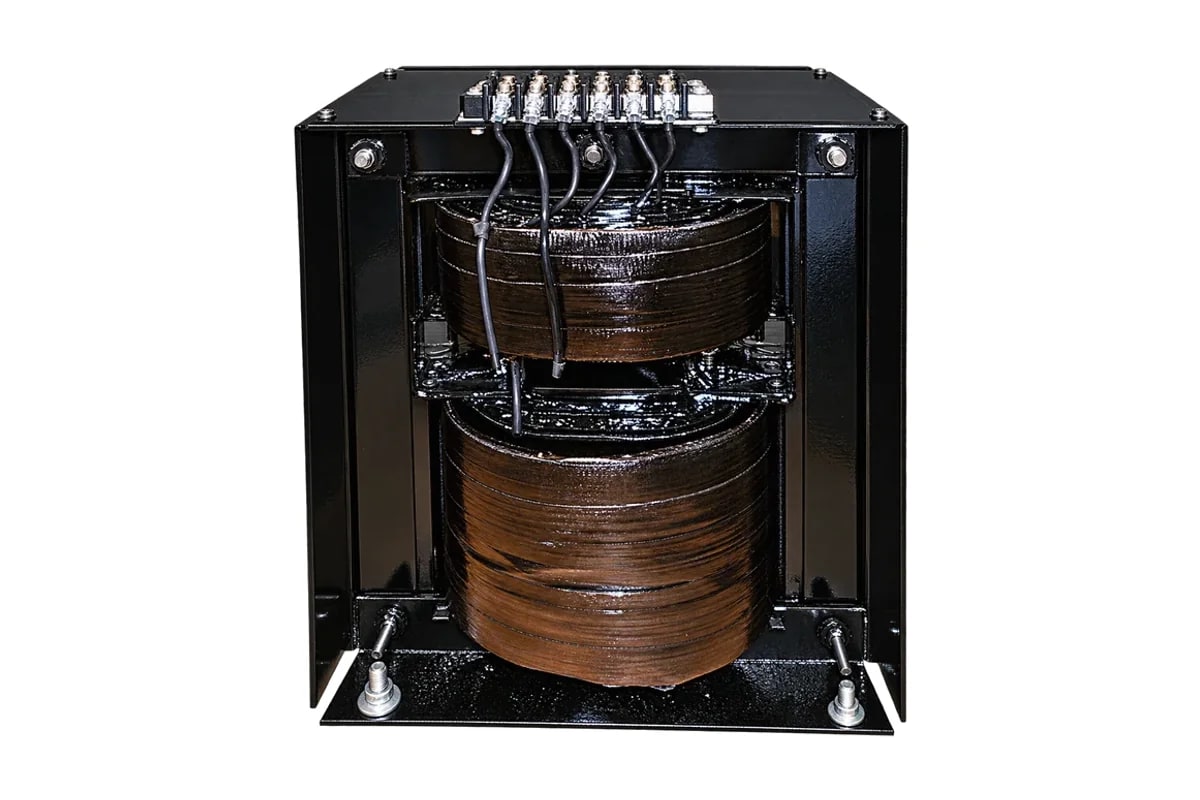
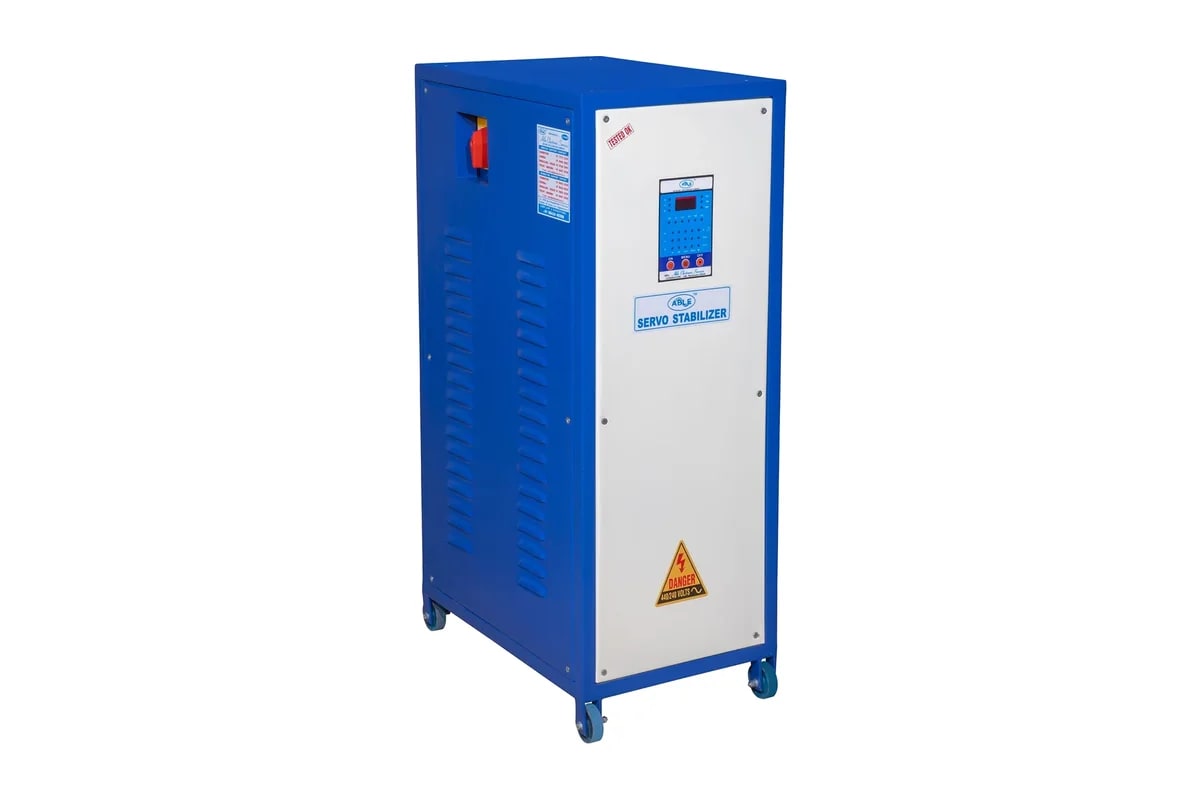
A control card measures the output voltage and drives a servo motor that moves a carbon brush along the winding of a variable auto-transformer (variac). The variac output feeds a buck-boost transformer in series with the load, adding or subtracting voltage until the output is back within the set band. Correction is smooth but limited by the motor speed, and the brush and track wear over time.
How a static (SCVS) stabilizer works
A static stabilizer replaces the motor and brush with power electronics. IGBTs or thyristors switch or modulate the buck-boost transformer so the correction happens within a few cycles of the supply. With no moving parts there is no brush wear, and the unit tolerates dust and vibration better.
SCVS vs servo stabilizer comparison
Feature | Static (SCVS) | Servo stabilizer |
|---|---|---|
Correction method | IGBT or thyristor control, no moving parts | Motor-driven carbon brush on a variac |
Correction speed | Very fast, within a few cycles | Slower, limited by motor speed |
Output accuracy | Typically about ±1% | Typically about ±1% |
Maintenance | Low; no brushes or gears | Periodic brush and track maintenance |
Initial cost | Higher | Lower |
Best suited for | CNC, medical, labs, data and sensitive electronics, dusty sites | General industrial loads, lifts, HVAC, workshops and buildings |
Where CVTs and UPS fit
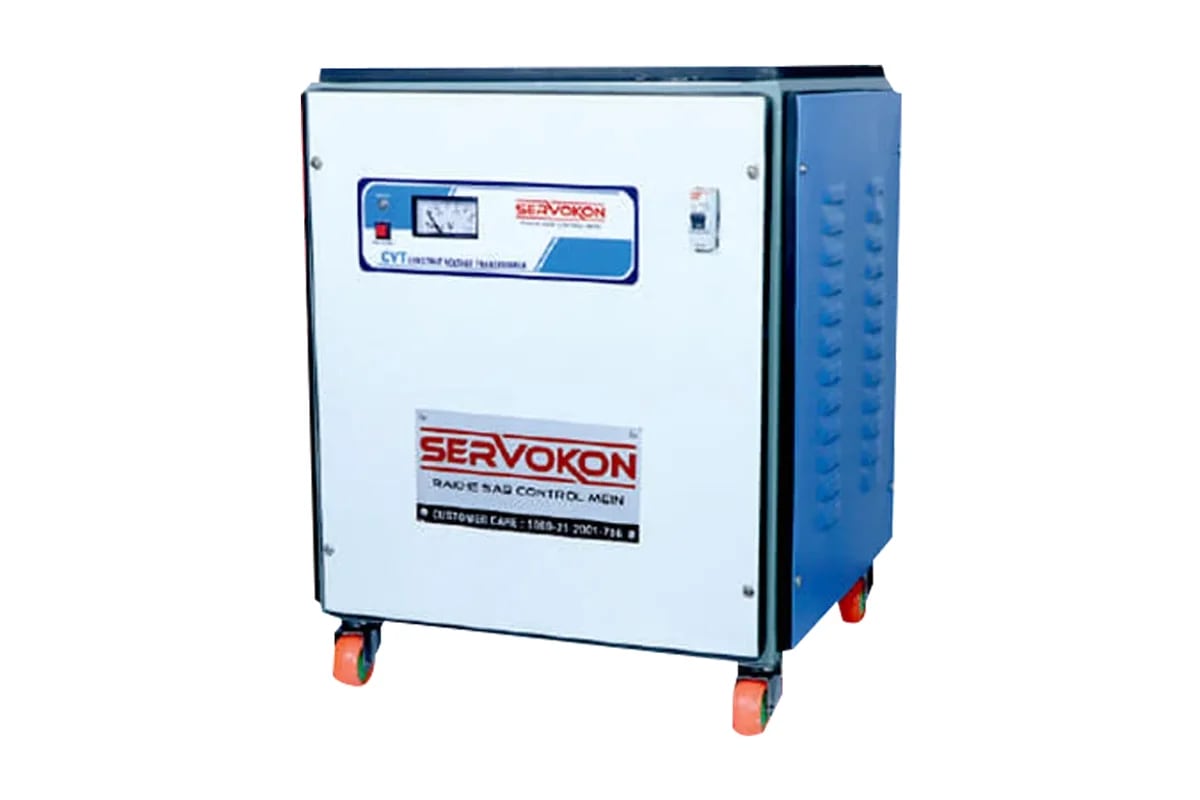
A ferroresonant CVT (constant voltage transformer) gives a stable, filtered output and some isolation for smaller sensitive loads. A UPS goes further and keeps the load running through a complete supply interruption. A stabilizer does not provide backup power; for critical loads, a stabilizer may sit ahead of a UPS or other equipment to keep the input within range.
How to choose and size a stabilizer
- Measure or estimate the input voltage range at site, including the lowest and highest values seen.
- Add the connected load in kVA and allow headroom for motor starting and future additions.
- Choose static where fast correction or low maintenance matters, and servo where cost and robustness for general loads matter more.
- Decide single-phase or three-phase, and balanced or unbalanced correction for three-phase loads with uneven phase loading.
- Specify enclosure, cooling (air or oil), indoor or outdoor installation and any isolation transformer requirement.
What to send for a quotation
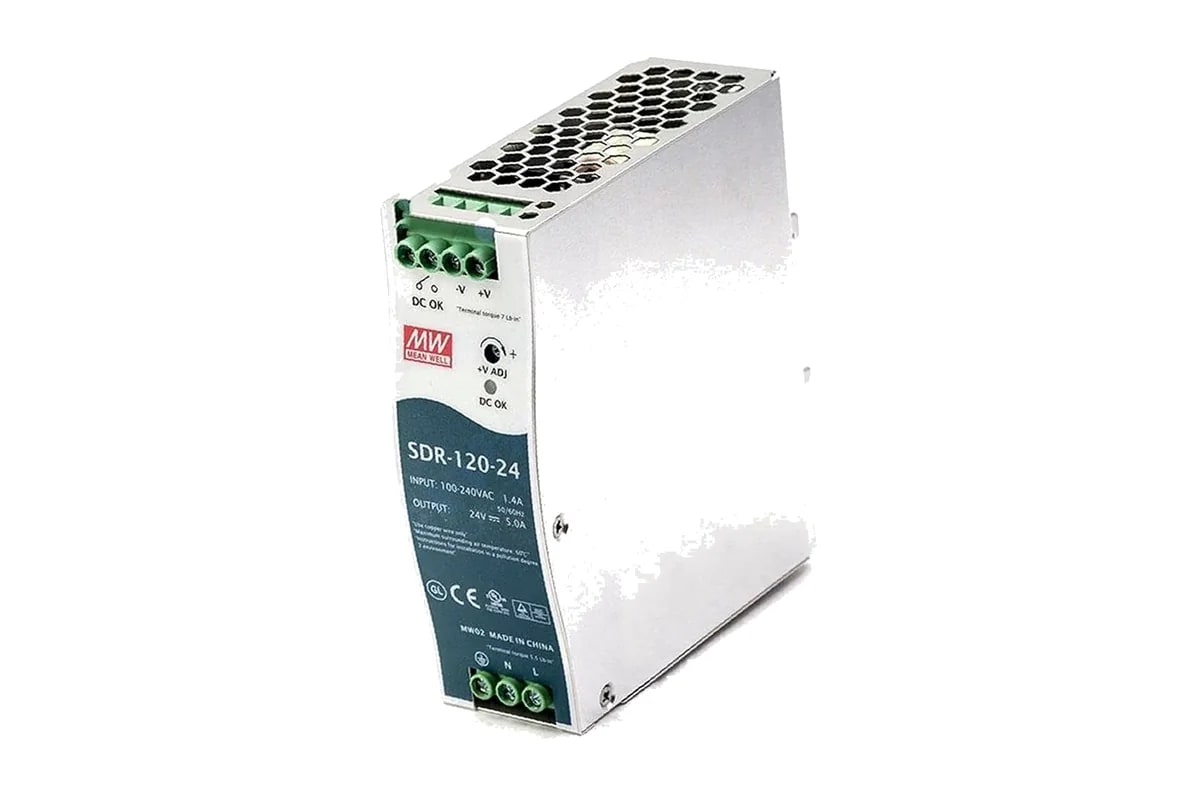
Send the load in kVA, phase arrangement, measured input voltage range, required output accuracy, type of load and installation location. Tirupati Power Enterprises quotes static and servo stabilizers, CVTs and power supplies from Kolkata with delivery across India.
Frequently asked questions
What is the full form of SCVS?
SCVS is commonly expanded as static control voltage stabilizer, also called a static constant or static voltage stabilizer: a stabilizer that corrects voltage electronically with no moving parts.
Is a static stabilizer better than a servo stabilizer?
It corrects faster and needs less maintenance, so it suits sensitive electronics and dusty sites. A servo stabilizer costs less and is a robust choice for many general industrial and building loads.
Does a voltage stabilizer replace a UPS?
No. A stabilizer keeps the voltage within range but cannot supply power during an outage. A UPS provides backup power; the two are often used together.
How do I size a voltage stabilizer?
Add the connected load in kVA, allow headroom for starting current and growth, and match the stabilizer input range to the lowest and highest voltages measured at site.
Specify your requirement
Send the rating, make, quantity and delivery location. Attach the drawing or datasheet where available.
Request a quote Or send it on WhatsApp ↗