Short answer: a current transformer (CT) reduces a high line current to a small standard secondary current, usually 5 A or 1 A, for meters and protection relays. A potential (voltage) transformer (PT or VT) reduces a high system voltage to a standard secondary voltage, usually 110 V, for the same purpose. Both isolate measuring instruments from the primary circuit.
How a current transformer works
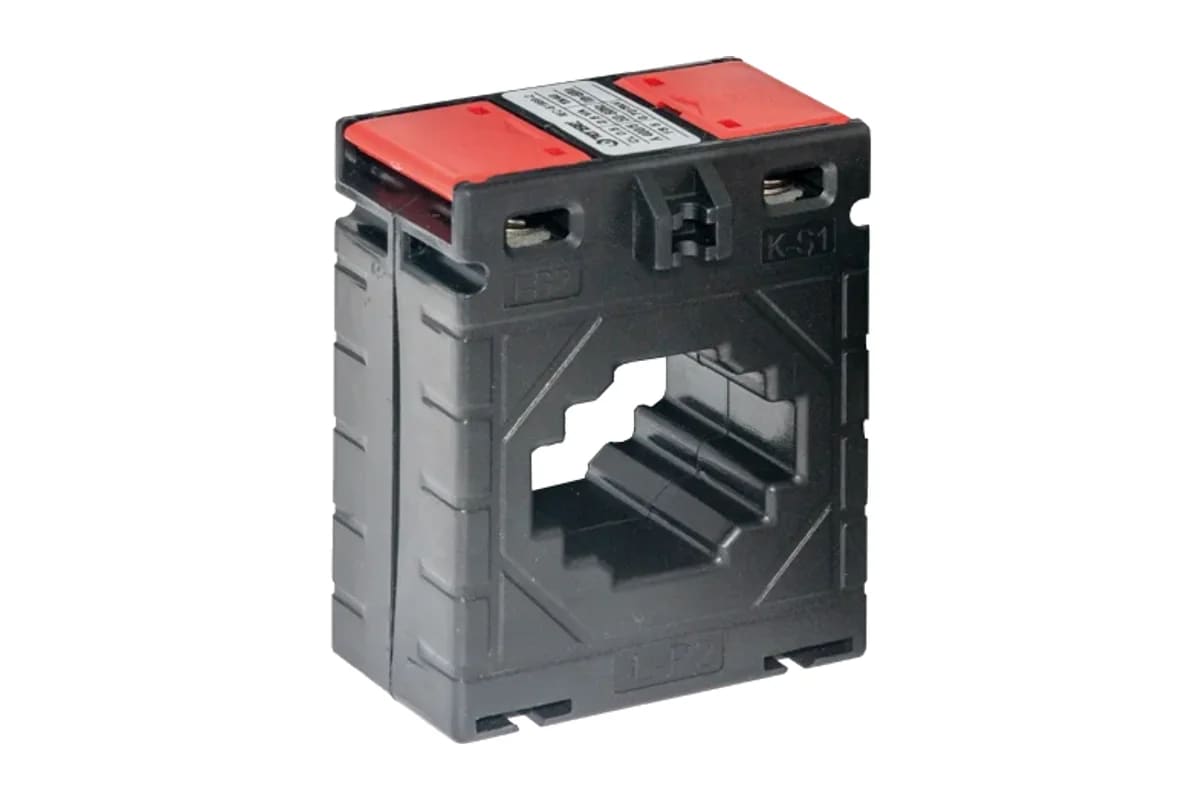
The CT primary is the line conductor itself or a few turns, connected in series with the load. The secondary has many turns, so the secondary current is the primary current divided by the turns ratio. A 400/5 A CT gives 5 A in the secondary when 400 A flows in the line.
Safety rule: never open the secondary of a CT while the primary is carrying current. With no secondary current to oppose the flux, a dangerously high voltage can appear across the open terminals and damage insulation. Short the secondary with a shorting link before removing a meter or relay.
How a potential transformer works
A PT is a precision step-down transformer connected across the system voltage. An 11000/110 V PT gives 110 V at the secondary for 11 kV on the primary. Its secondary must never be short-circuited, so it is protected with fuses.
CT vs PT comparison
Feature | Current transformer (CT) | Potential transformer (PT/VT) |
|---|---|---|
Connection | In series with the line | Across (parallel to) the supply |
Steps down | Current | Voltage |
Standard secondary | 5 A or 1 A | 110 V (or 110/√3 V) |
Danger condition | Open secondary | Short-circuited secondary |
Metering accuracy classes | 0.2, 0.5, 1.0 (0.2S, 0.5S) | 0.2, 0.5, 1.0 |
Protection classes | 5P10, 5P20, PS | 3P, 6P |
Standards | IS 2705 / IEC 61869-2 | IS 3156 / IEC 61869-3 |
Accuracy class and burden
Metering CTs are specified with classes such as 0.5 or 0.2S for accurate energy measurement. Protection CTs use classes such as 5P10, meaning 5 percent composite error up to 10 times rated current, so relays see fault currents correctly. Burden, in VA, is the load of the meter, relay and leads; choose a CT whose rated burden covers the connected burden.
How to select a CT or PT
- Primary current or voltage at the point of measurement.
- Secondary rating (5 A or 1 A; 110 V) to match the meter or relay.
- Accuracy class for metering or protection.
- Rated burden in VA, including lead resistance for long runs.
- Type: ring, wound, bar primary or split-core CT; indoor or outdoor PT; LT or HT insulation level.
What to send for a quotation
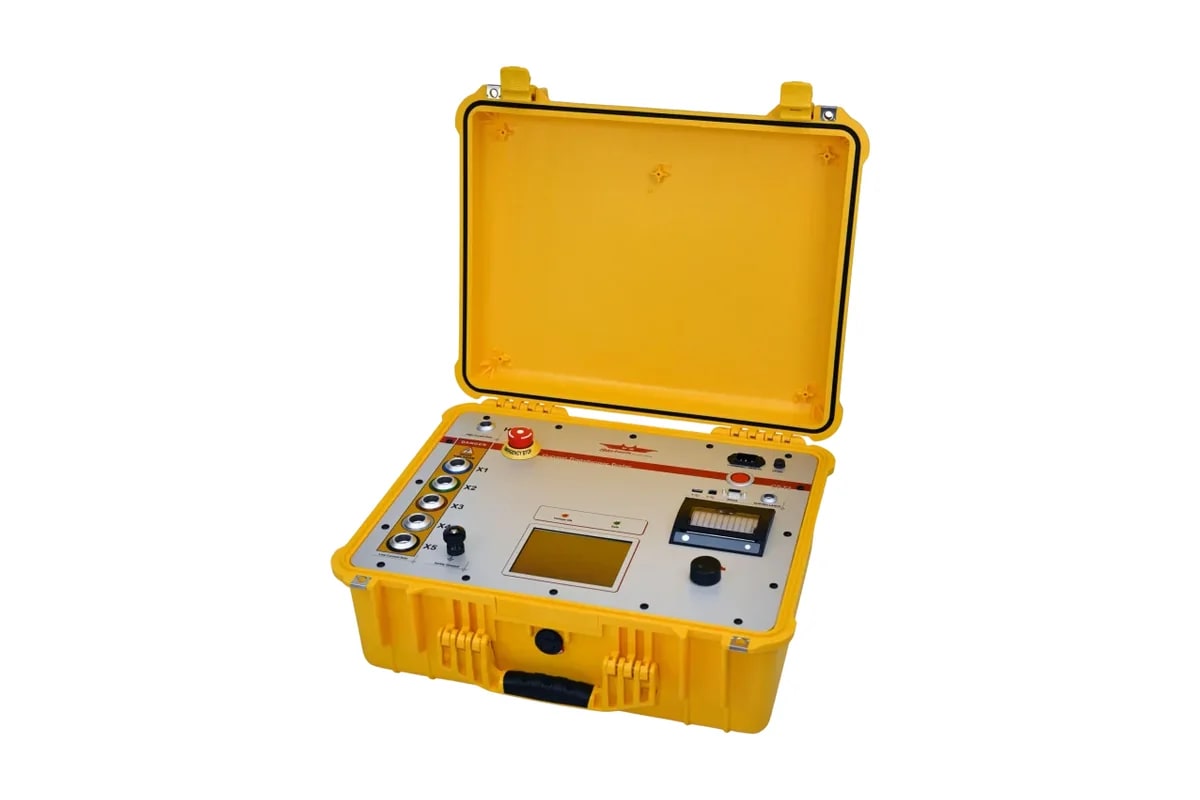
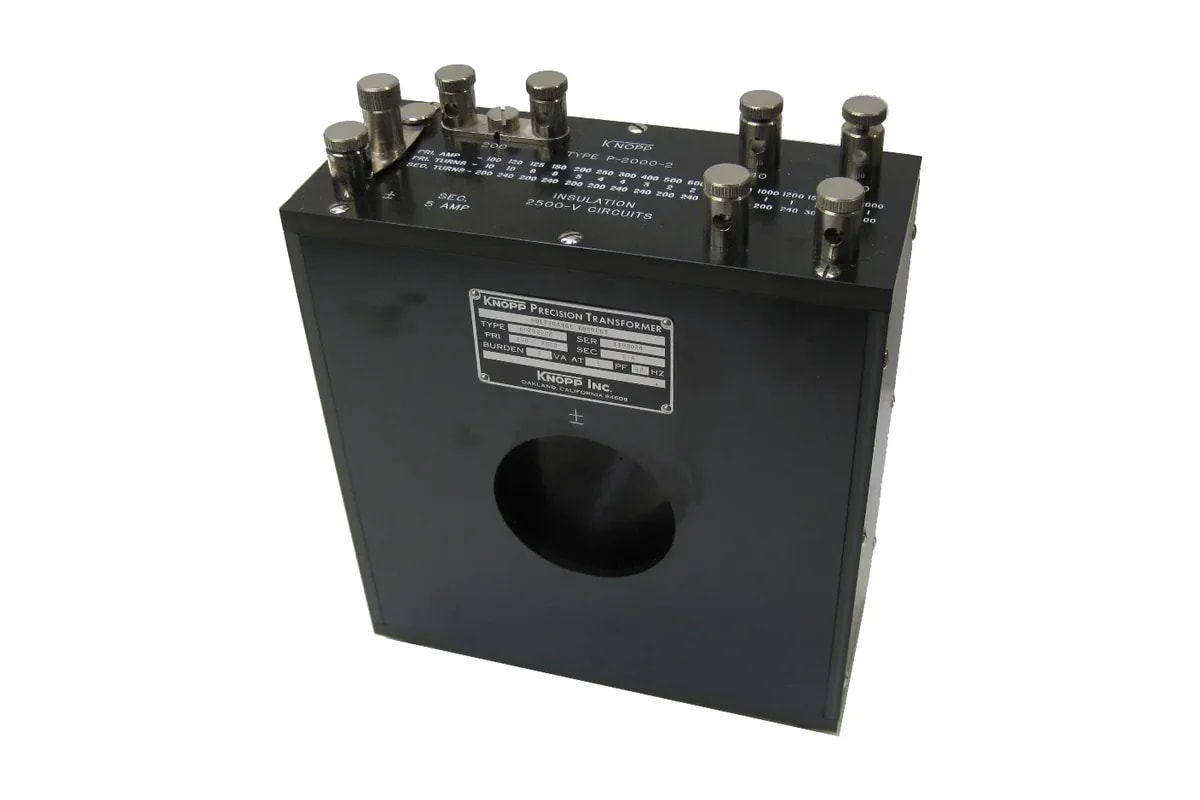
Ratio, accuracy class, burden, type, insulation level and quantity, or the metering and protection schedule from your panel drawing. Tirupati Power Enterprises quotes LT CTs and PTs, precision CTs and CT/PT test sets from Kolkata.
Frequently asked questions
What is the main difference between CT and PT?
A CT steps down current and is connected in series with the line; a PT steps down voltage and is connected across the supply.
Why should a CT secondary never be left open?
Without secondary current to balance the primary ampere-turns, the core saturates and a very high voltage can appear across the open terminals, which is dangerous to people and insulation.
What does 5P10 mean on a CT?
It is a protection class: composite error within 5 percent up to 10 times the rated primary current.
What is the CT ratio?
The ratio of rated primary to secondary current, for example 200/5 A, which means 5 A flows in the secondary when 200 A flows in the primary.
Specify your requirement
Send the rating, make, quantity and delivery location. Attach the drawing or datasheet where available.
Request a quote Or send it on WhatsApp ↗