Short answer: a thermocouple produces a small voltage from the junction of two dissimilar metals and covers very wide and high temperature ranges, up to about 1,700 °C for noble-metal types. An RTD (resistance temperature detector), usually a PT100, changes its platinum resistance with temperature and is more accurate and stable, typically used up to about 400–600 °C. Choose a thermocouple for high temperature and ruggedness, and an RTD for accuracy at moderate temperatures.
How a thermocouple works
Two dissimilar metal wires are joined at the measuring end. A temperature difference between this hot junction and the reference (cold) junction at the instrument produces a voltage, the Seebeck effect. The instrument applies cold-junction compensation and the type’s characteristic curve to convert this voltage into temperature.
How an RTD works
An RTD uses a platinum element whose resistance rises predictably with temperature. A PT100 reads 100 ohms at 0 °C and about 138.5 ohms at 100 °C. The instrument passes a small current and measures resistance. Because lead wires add resistance, 3-wire and 4-wire connections are used to cancel it.
Thermocouple vs RTD comparison
Feature | Thermocouple | RTD (PT100) |
|---|---|---|
Principle | Voltage from two dissimilar metals | Resistance change of platinum |
Typical range | About −200 °C to 1,350 °C (K); to about 1,700 °C (R, S, B) | About −200 °C to 600 °C |
Accuracy and stability | Moderate; drifts at high temperature | High; very stable |
Response time | Fast, especially small exposed junctions | Slower; larger sensing element |
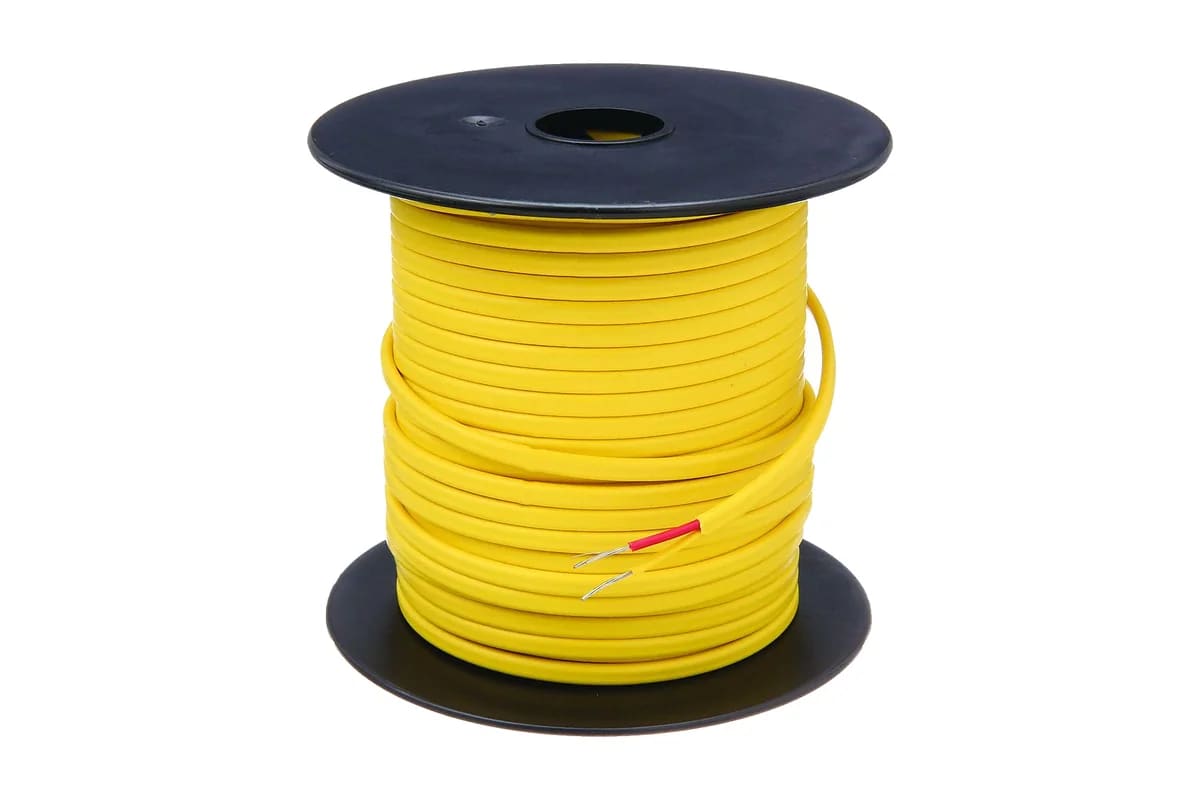
Wiring | Needs matching extension or compensating cable | Copper wire, 3-wire or 4-wire |
Cost | Lower for base-metal types | Higher |
Standard | IEC 60584 | IEC 60751 |
Common thermocouple types
- Type K (chromel–alumel): general purpose, wide range; the most common industrial type.
- Type J (iron–constantan): lower range; older equipment and plastics.
- Type T (copper–constantan): low and sub-zero temperatures.
- Type N: improved stability at high temperature compared with K.
- Types R, S and B (platinum–rhodium): very high temperatures in furnaces and glass and steel processes.
How to choose
- Above about 600 °C, or in furnaces and kilns: thermocouple.
- Where accuracy and repeatability matter at moderate temperatures, such as process lines, pharma, food and transformer oil: RTD.
- For fast changes and small spaces: a thin mineral-insulated thermocouple.
- For long cable runs to a PLC: either sensor with a head-mounted 4–20 mA transmitter.
- Always choose the sheath, thermowell and process connection for the medium, pressure and velocity.
What to send for a quotation
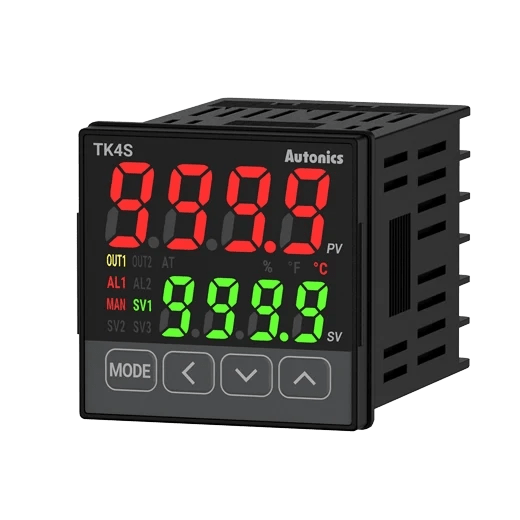
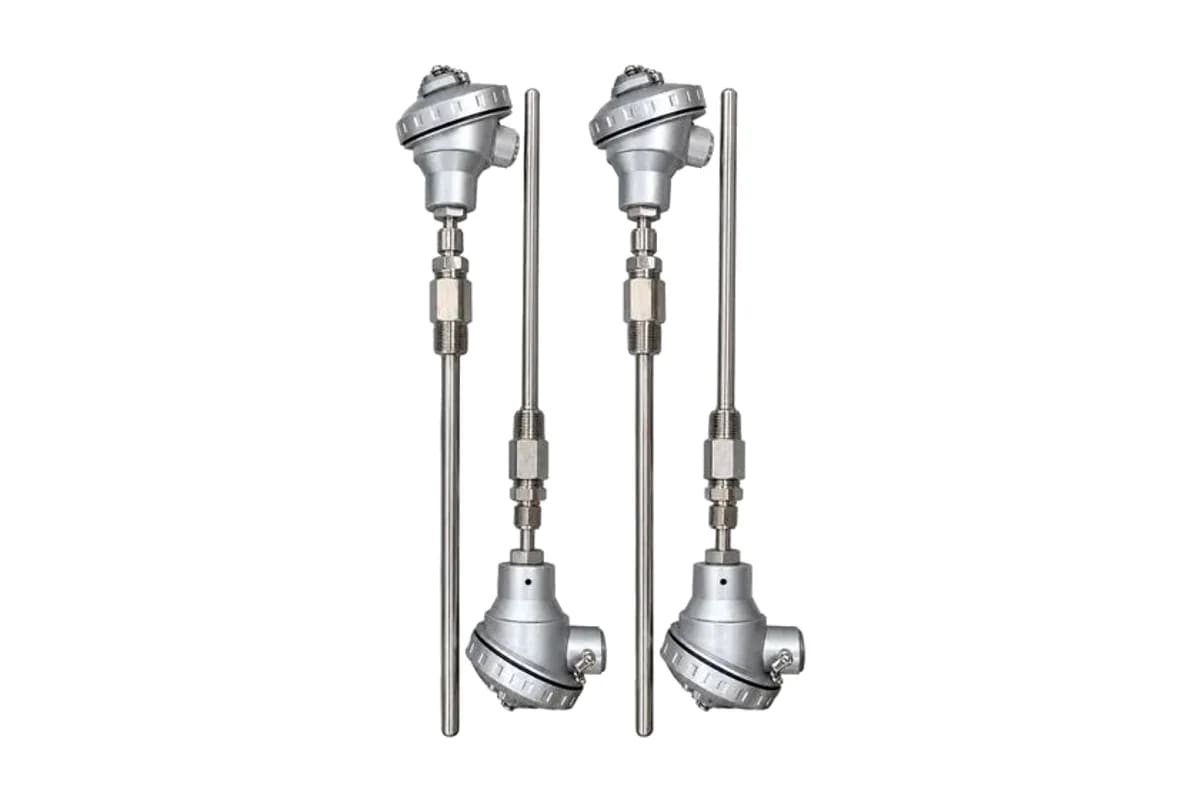
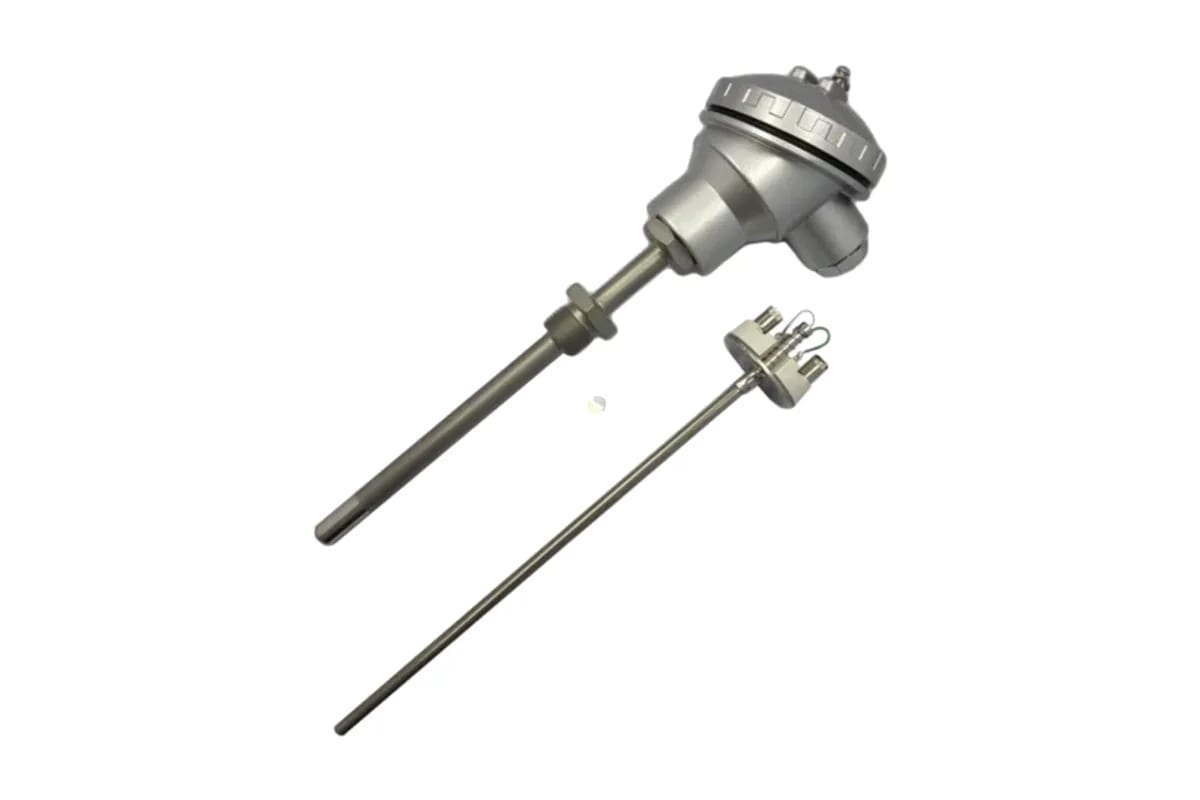
Temperature range, sensor type, accuracy class, sheath material, insertion length, process connection, head and transmitter needs, and quantity. Tirupati Power Enterprises quotes thermocouples, RTDs, thermowells, compensating cable and temperature controllers from Kolkata.
Frequently asked questions
Which is more accurate, thermocouple or RTD?
An RTD is more accurate and stable. Thermocouples are less accurate but cover much higher temperatures and respond faster.
Can a thermocouple replace a PT100?
Only if the controller or transmitter input is changed or reconfigured, since a thermocouple produces millivolts while a PT100 is a resistance input.
What is the range of a K type thermocouple?
Roughly −200 °C to about 1,250–1,350 °C, depending on wire size and sheath.
Why use a 3-wire RTD?
The third wire lets the instrument cancel lead-wire resistance, which otherwise adds a temperature error on long runs.
Specify your requirement
Send the rating, make, quantity and delivery location. Attach the drawing or datasheet where available.
Request a quote Or send it on WhatsApp ↗