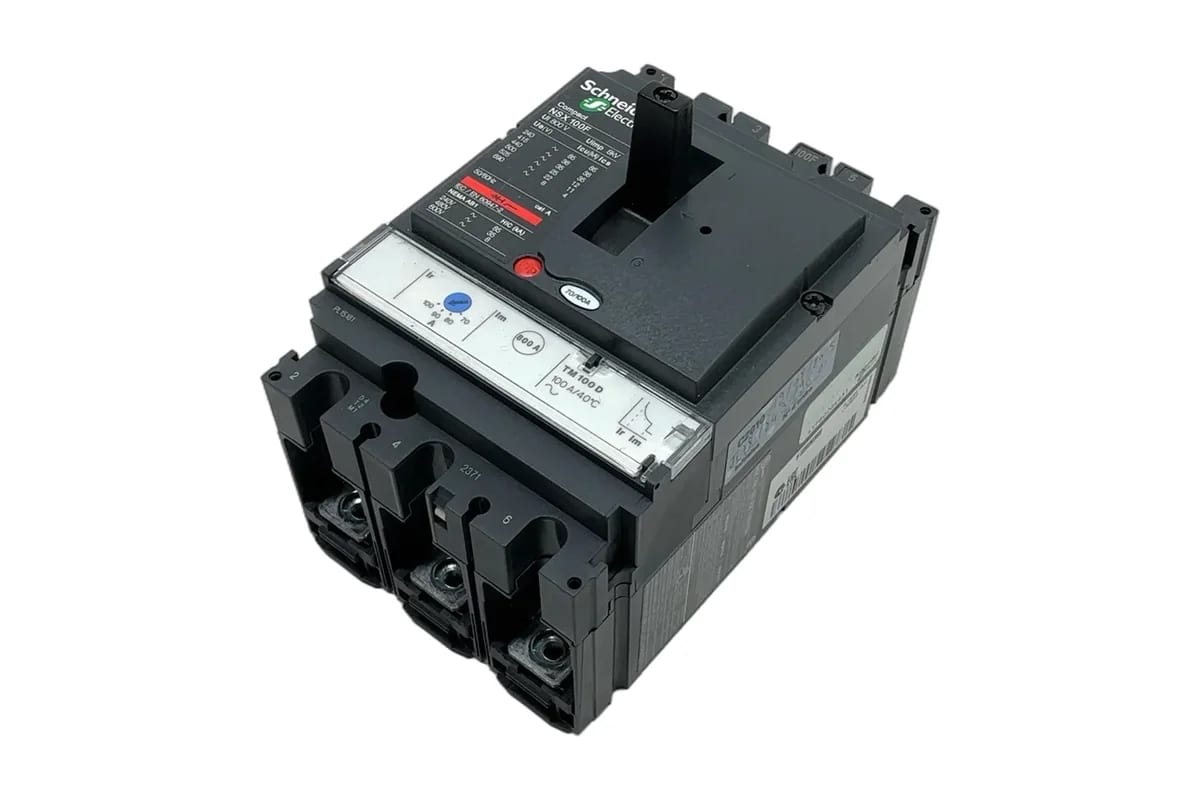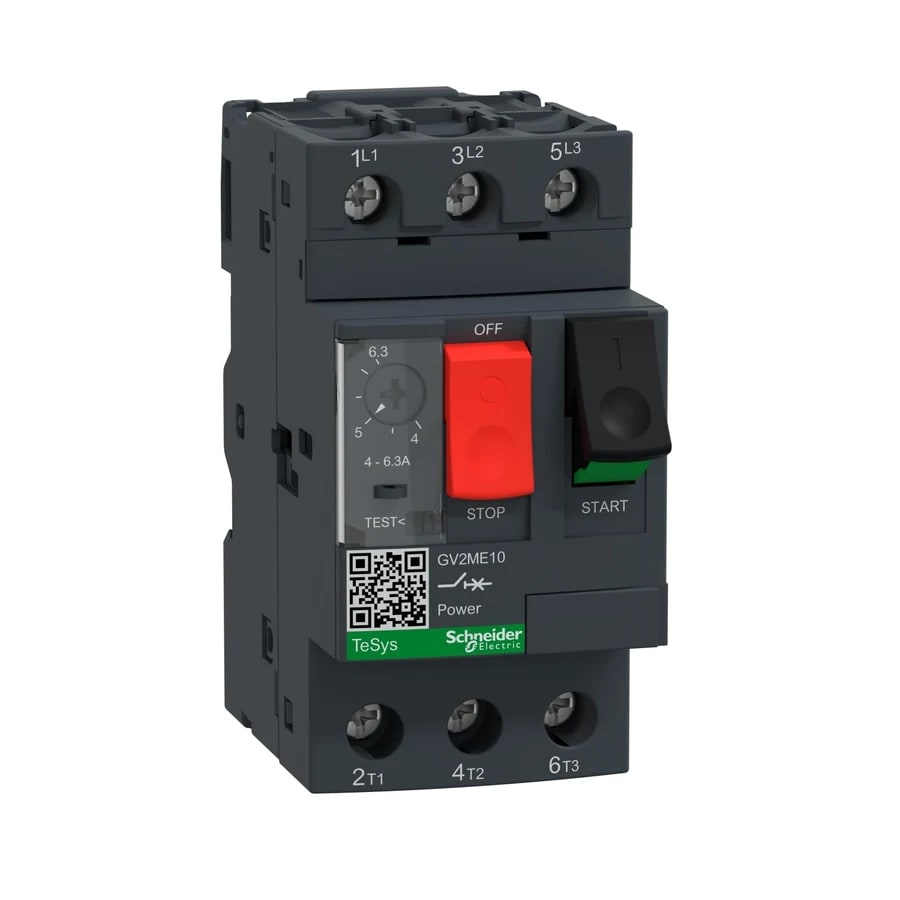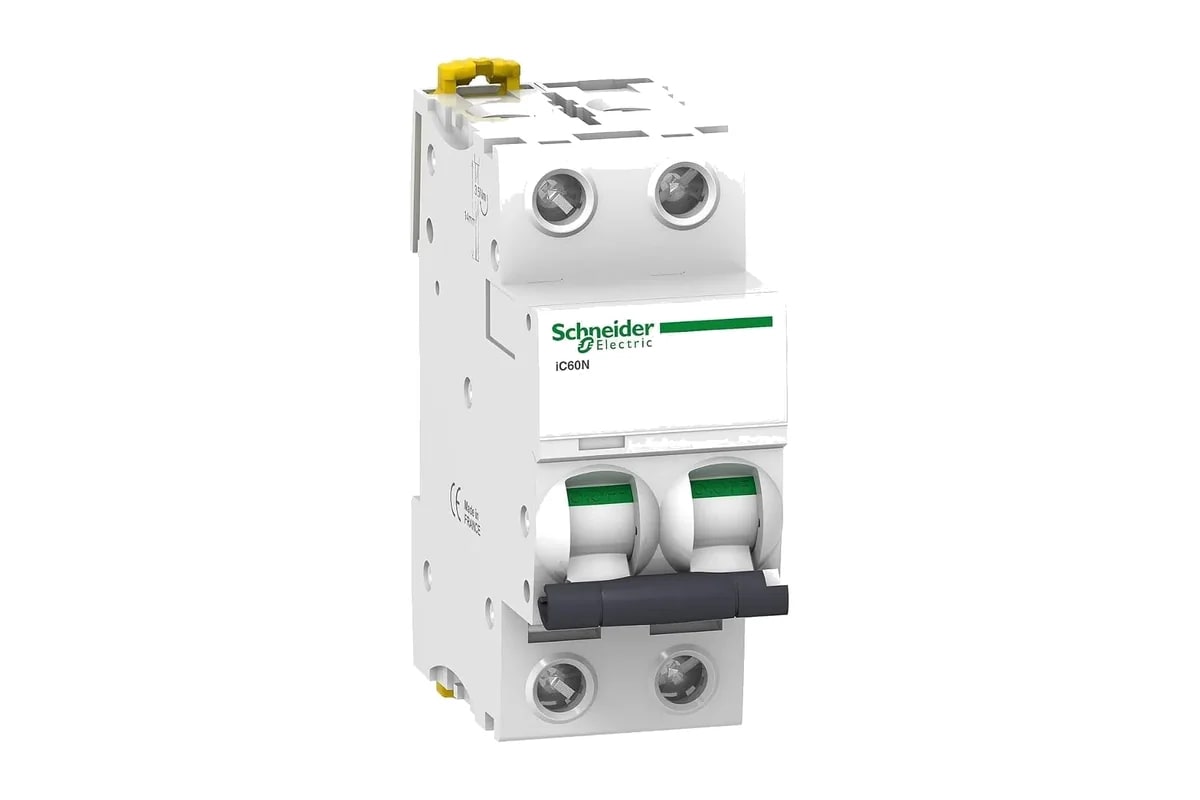
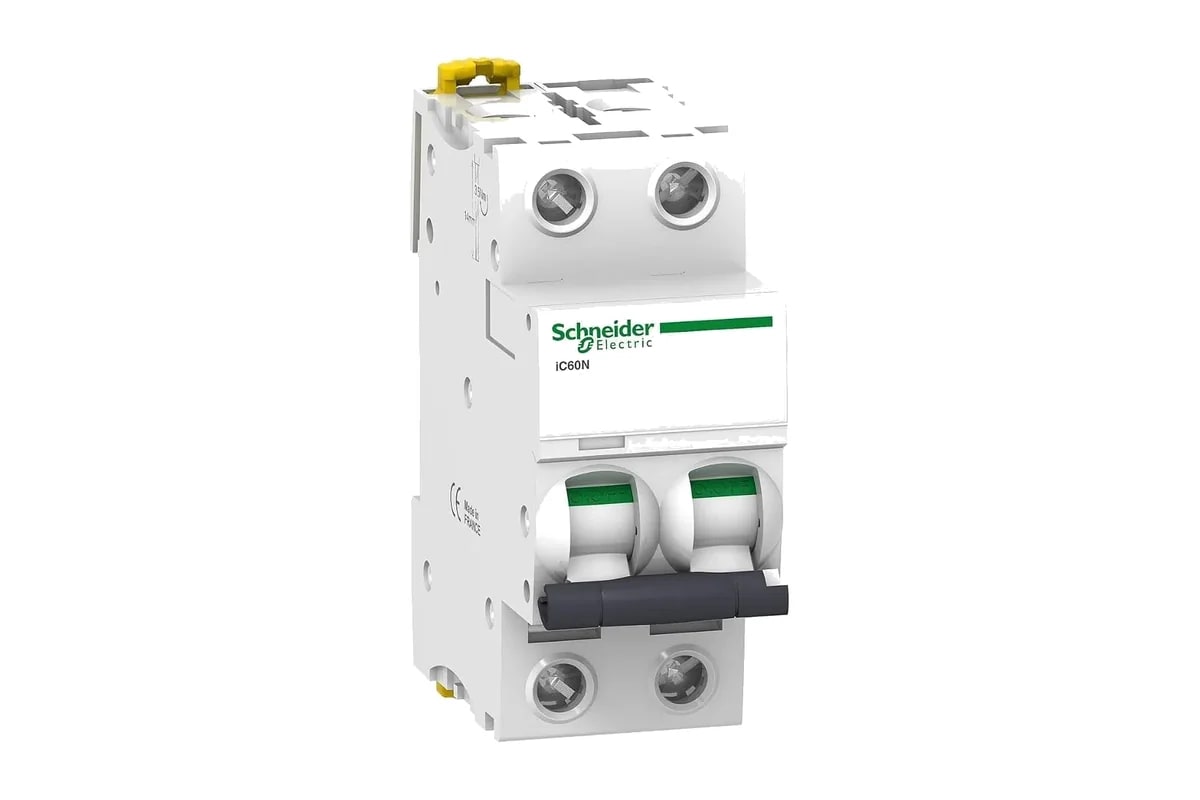
Short answer: an MCB (miniature circuit breaker) protects small final circuits against overload and short circuit; an MCCB (moulded case circuit breaker) does the same job for larger feeders and incomers with higher breaking capacity and adjustable settings; an RCCB (residual current circuit breaker) trips on earth leakage current to protect people and prevent fires, but does not protect against overload or short circuit. Most installations use them together.
What each device does
An MCB uses a fixed thermal element for overload and a magnetic element for short circuit. It is the standard device in distribution boards for lighting, sockets and small motor or control circuits, built to IS/IEC 60898-1 for household and similar use or IEC 60947-2 for industrial use.
An MCCB covers higher currents in a larger moulded housing, built to IEC 60947-2. Thermal-magnetic versions allow overload and short-circuit settings to be adjusted; electronic (microprocessor) releases add long-time, short-time, instantaneous and earth-fault protection for selective coordination with downstream devices.
An RCCB compares the current going out on the phase conductors with the current returning on the neutral. If the difference (residual current) exceeds its rated sensitivity, it trips. Because it measures only this imbalance, it must always be backed by an MCB, MCCB or fuse for overcurrent protection. An RCBO combines an MCB and an RCCB in one device. In India the term ELCB is still commonly used for current-operated RCCBs.
MCB vs MCCB vs RCCB comparison
Feature | MCB | MCCB | RCCB |
|---|---|---|---|
Protects against | Overload and short circuit | Overload and short circuit (earth fault with electronic release) | Earth leakage (residual current) only |
Typical current range | About 0.5 A to 125 A | About 16 A to 1600 A and above | 16 A to 125 A (current-carrying rating) |
Breaking capacity | Typically 6 kA or 10 kA | Typically 25 kA to 100 kA or more | Not a short-circuit breaking device; needs backup protection |
Trip setting | Fixed (B, C or D curve) | Adjustable (thermal-magnetic or electronic) | Fixed sensitivity: 30 mA, 100 mA, 300 mA |
Standard | IS/IEC 60898-1, IEC 60947-2 | IEC 60947-2 | IS/IEC 61008 |
Typical use | Final circuits in DBs | Incomers, feeders, motor and PCC/MCC panels | Socket, wet-area and fire-risk circuits |
MCB trip curves: B, C and D
The curve sets the instantaneous (magnetic) trip band as a multiple of the rated current (In). Choose it from the load inrush, not by habit.
- B curve (3–5 × In): resistive loads and long cable runs with low fault current.
- C curve (5–10 × In): general lighting, sockets and small motors; the most common choice.
- D curve (10–20 × In): transformers, motors and loads with high inrush current.
RCCB sensitivity and type
30 mA RCCBs are used for personal protection against electric shock on socket and wet-area circuits. 100 mA and 300 mA devices are used for equipment and fire protection on larger distribution circuits. Type AC detects sinusoidal AC leakage; Type A also detects pulsating DC leakage from electronic loads; Type B is used where smooth DC leakage is possible, such as some VFD and EV charging circuits.
How to choose between them
- Start with the load current and the prospective short-circuit current at the point of installation; the breaking capacity must be at least that value.
- Use MCBs for final circuits up to about 63–125 A, and MCCBs for higher currents, incomers or where adjustable settings and discrimination are needed.
- Add RCCB (or RCBO) protection wherever earth-leakage protection is required by the design or local rules, choosing sensitivity and type for the circuit.
- For motors, consider an MPCB, which combines motor overload and short-circuit protection with a setting range matched to motor current.
- Coordinate upstream and downstream devices so the breaker nearest the fault trips first.
What to send for a quotation
For each device: rated current, number of poles, breaking capacity, curve or release type, RCCB sensitivity and type, quantity and approved makes. For panel work, the single-line diagram and feeder schedule let us check ratings and coordination together. Tirupati Power Enterprises quotes MCBs, MCCBs, RCCBs and MPCBs from Kolkata and delivers across India.
Frequently asked questions
What is the full form of MCB, MCCB and RCCB?
MCB stands for miniature circuit breaker, MCCB for moulded case circuit breaker and RCCB for residual current circuit breaker.
Can an RCCB protect against short circuit?
No. An RCCB only trips on earth leakage current. It must be backed by an MCB, MCCB or fuse that provides overload and short-circuit protection.
When should I use an MCCB instead of an MCB?
Use an MCCB when the current exceeds the MCB range, when higher breaking capacity is needed, or when adjustable trip settings are required for coordination, as on panel incomers and feeders.
Which MCB curve is used for motors?
C curve suits small motors with moderate inrush; D curve suits motors and transformers with high inrush. Larger motors are usually protected by an MPCB or a contactor-overload combination.
Specify your requirement
Send the rating, make, quantity and delivery location. Attach the drawing or datasheet where available.
Request a quote Or send it on WhatsApp ↗