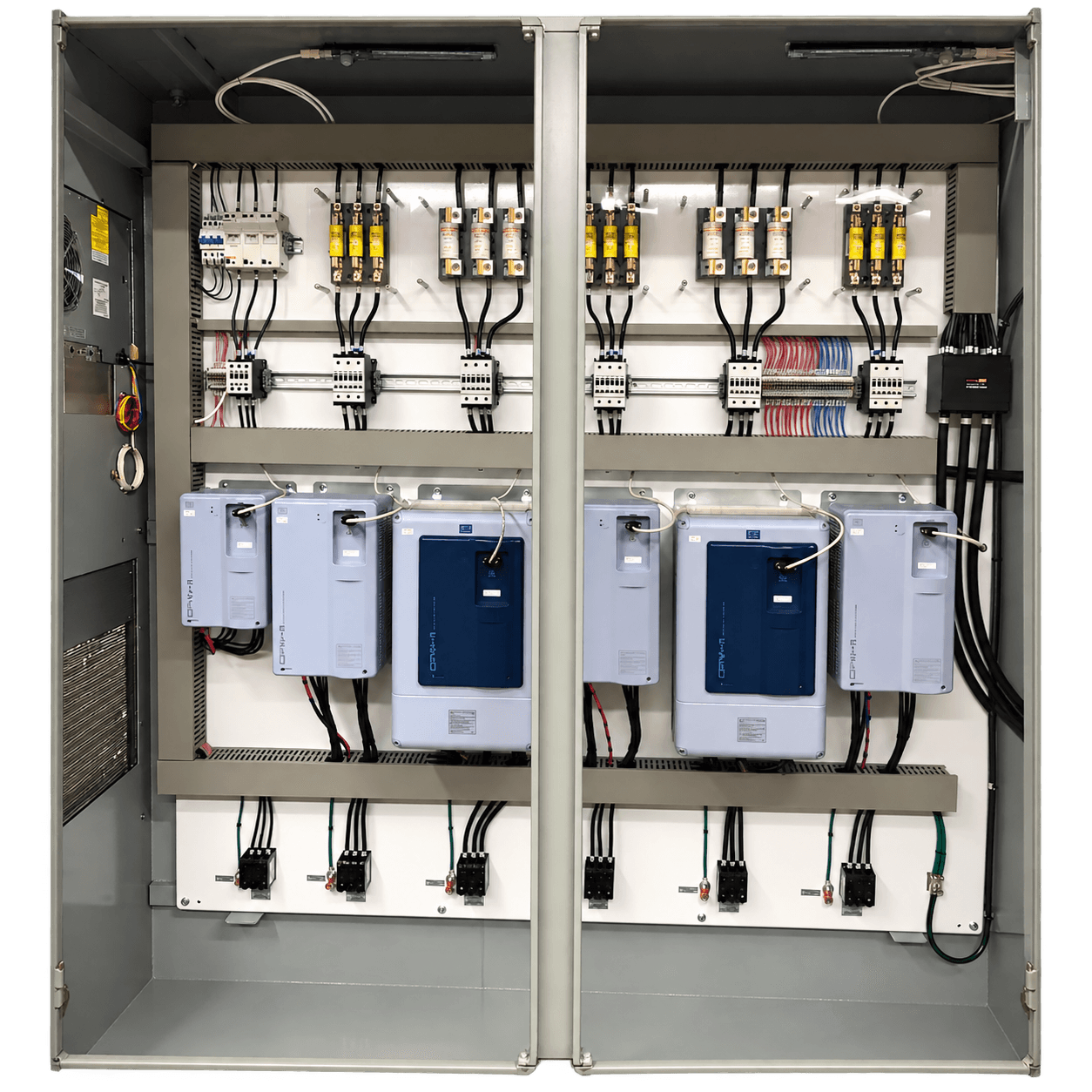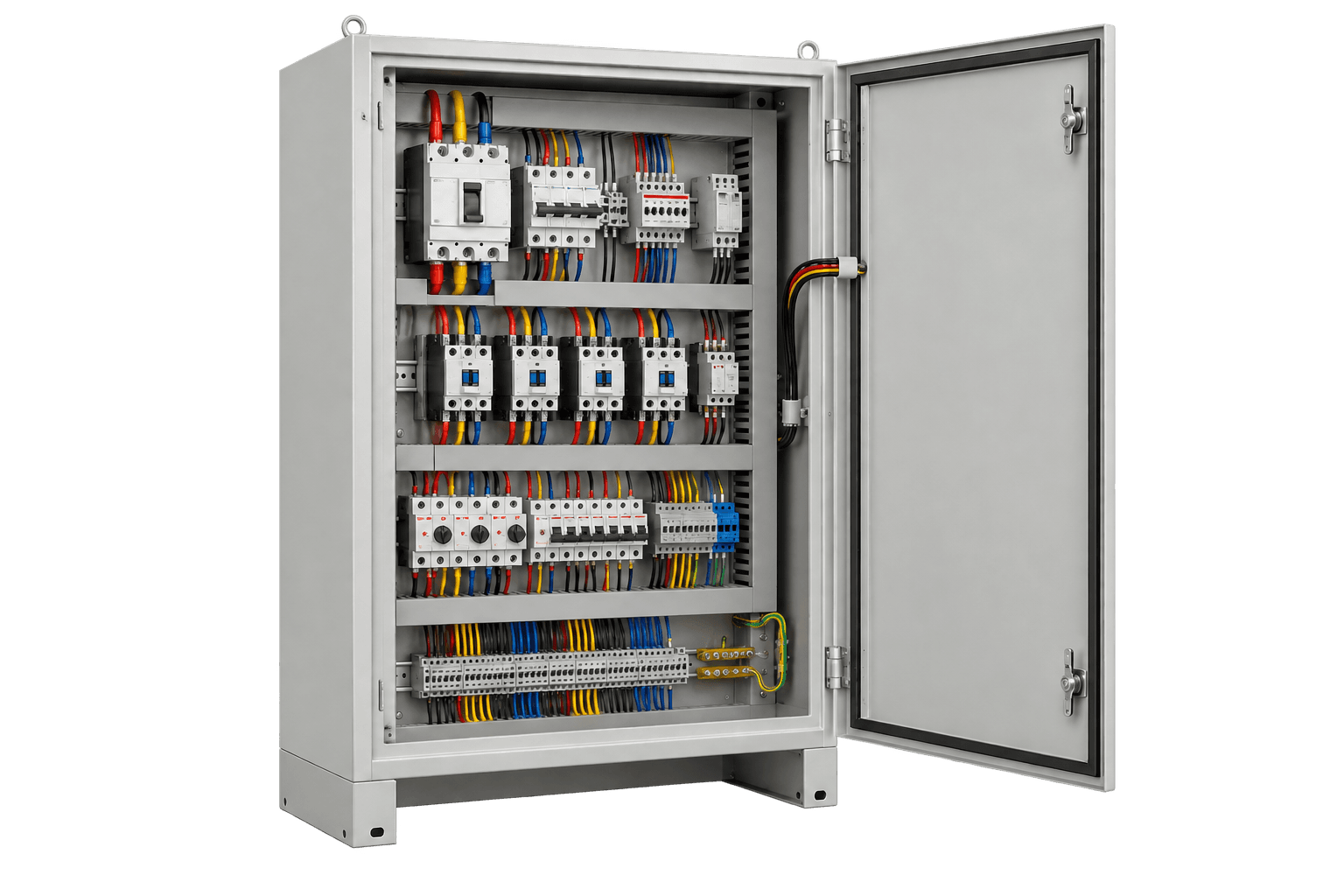
Begin with the electrical system
An LT panel specification starts with the single-line diagram and load schedule. Identify the supply voltage and frequency, incomer arrangement, outgoing circuits, expected operating demand and the prospective fault level at the installation point. Enclosure dimensions alone do not describe the assembly.
Separate normal running current from starting or transient duty. Note essential loads, alternate supplies and future expansion. The responsible designer must establish ratings and protection coordination; catalogue photographs cannot establish an assembly’s capability.
Describe every feeder
List each outgoing feeder by load, rating, starting or control requirement, protection and approved component make. A feeder serving a motor differs from one supplying a distribution board or a variable-frequency drive. Identify any required metering, status signals and spare ways.
For a replacement panel, provide the existing drawings and equipment references, but do not assume the old rating remains adequate. Changes in the upstream supply, load or installation can alter the required design.
- Feeder designation, load and operating duty
- Protective device type and required coordination
- Control voltage, interlocks and remote signals
- Cable entry, conductor sizes and termination arrangement
Define control and operating sequences
State how the panel is operated: local or remote control, manual or automatic modes, permissives, interlocks, alarms and emergency functions. For generator, synchronising or PLC panels, include the sequence and interfaces rather than relying on a panel type name.
Identify external contacts, sensors, communications and the equipment that provides each signal. Clarify which items are included in the panel scope and which are supplied or installed by others. This reduces gaps between drawings, equipment supply and site integration.
Match the enclosure to its environment
Give the installation location, ambient conditions, indoor or outdoor duty, ingress-protection requirements and restrictions on access or maintenance. Include room dimensions, front or rear access, cable-entry direction and any transport or lifting constraints.
Heat dissipation, internal layout, clearances and segregation are design matters. If an assembly standard, form of separation, verification record or inspection requirement applies to the project, state it explicitly and confirm the offered scope. Do not infer compliance from an enclosure label or photograph.
Agree drawings, inspection and documentation
The quotation should identify the reviewed specification, approved makes, availability, pricing and lead time. Confirm the drawing and approval process, inspection points, testing scope and documents required at handover.
Typical requested documents include the single-line diagram, general arrangement, wiring or control schematics, component list and the agreed test records. The required set varies with the project; specify it with the enquiry instead of assuming a universal package.
Prepare your enquiry
TPE manufactures custom electrical panels in Kolkata. Attach the BOQ, drawings and load schedule with the delivery postcode and required date. Highlight unresolved design inputs and any acceptable alternatives so they can be addressed in the line-by-line quote.
Related products and buying guidance
PLC panel specification checklist
Sources and further reading
Frequently asked questions
Can a panel be quoted from its enclosure size alone?
A useful quote also requires the electrical rating, supply arrangement, feeder schedule, protection, control sequence and installation conditions.
Does a panel photograph prove its fault rating?
No. Assembly ratings and verification depend on the actual design, components and documentation.
Which drawings should we send first?
Start with the single-line diagram and load or feeder schedule. Add the control sequence, enclosure constraints and approved component makes.
Specify your requirement
Send the rating, make, quantity and delivery location. Attach the drawing or datasheet where available.
Request a quote