Select the protection function before the reference
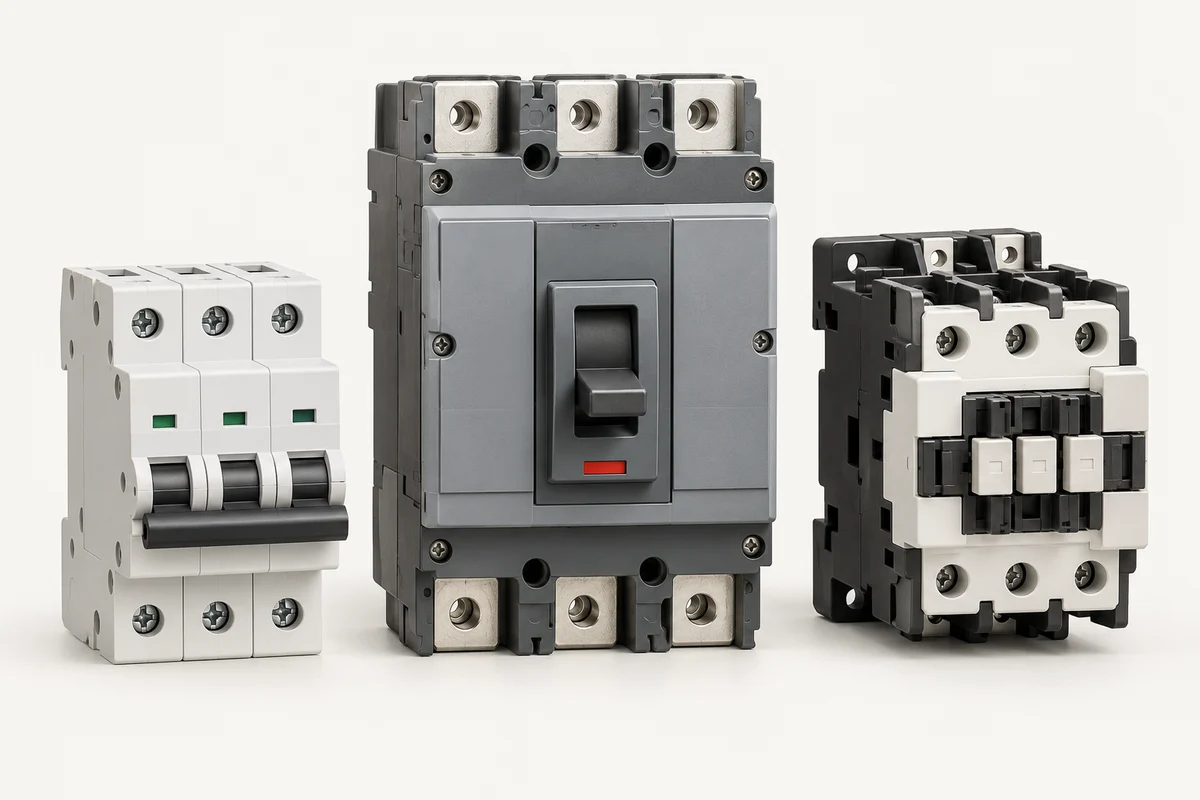
MCCB means moulded case circuit breaker. It provides circuit switching and overcurrent protection through a trip arrangement selected for the application. A purchase specification needs the operating voltage, poles, load current, prospective short-circuit current, trip functions and installation arrangement. The ampere marking alone cannot establish whether a breaker will protect a particular feeder.
MCCBs are used in distribution and equipment circuits where the available ratings and trip options suit the design. Some have thermal-magnetic trip units; others use electronic protection. Adjustable functions, earth-fault protection, residual-current accessories and communication are model-dependent. State required functions explicitly instead of assuming that every MCCB includes them.
Distinguish frame size from the protective setting
The frame identifies the breaker platform and its rating limits. The fitted trip unit and its permitted settings determine the protection available within that platform. For adjustable equipment, record both the selected rating and the intended setting range. A replacement with the same frame size can still have a different trip arrangement or operating characteristic.
Cable protection needs the installed cable capacity, including relevant derating, alongside load demand. A designer should confirm that the breaker settings protect the cable while allowing the required operating duty. Motor starting, transformer energisation and other temporary current demands may affect the review. Raising a setting simply to prevent nuisance trips can remove needed protection.
Check breaking capacity at the actual voltage
Breaking capacity describes fault interruption capability. The prospective short-circuit current at the installation point must be assessed for the supply arrangement, including changes that alter the available fault level. Read the breaker rating at the intended operating voltage; a kA value quoted for another voltage does not establish suitability.
Manufacturer data commonly distinguish ultimate short-circuit breaking capacity, Icu, from service short-circuit breaking capacity, Ics. They describe different verified duties. The project specification should state which performance is required and how continued service after fault interruption is handled. Where backup or cascading arrangements are proposed, use manufacturer-verified combinations and their stated conditions.
Coordinate with the rest of the circuit
Selectivity aims to have the appropriate downstream protection operate for a fault while retaining upstream supply where the design allows. It requires examination of protective-device characteristics and manufacturer coordination data. Two breakers with different current ratings do not automatically provide selectivity for every fault magnitude.
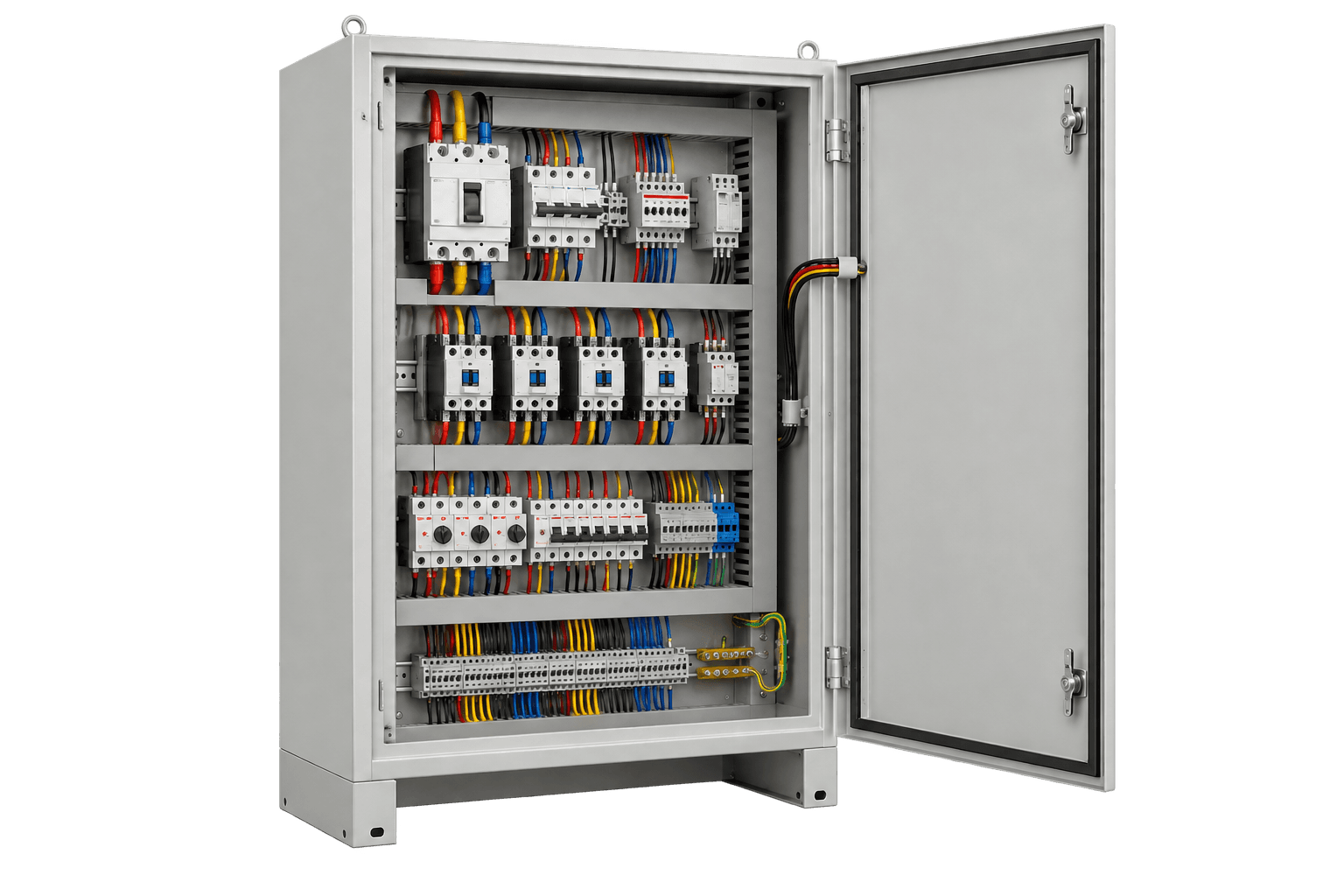
For a motor feeder, review the breaker together with the contactor and overload relay, using the selected manufacturer coordination tables. For a distribution feeder, include the upstream breaker, downstream protection and cable. Confirm neutral treatment and pole arrangement against the system design, especially where alternative supplies or changeover equipment are involved.
Replacement example: the missing trip information
A maintenance team may request an MCCB by photographing only the handle and current rating. That can omit the trip-unit reference, fault rating, accessory voltages and terminal arrangement. A visually similar replacement may not fit the busbar spacing or provide the same protective functions. Collect the complete label and the relevant panel drawing before requesting an equivalent.
If the old breaker has tripped, the cause should be investigated before returning the circuit to service. The replacement decision and the fault investigation are separate tasks. A new device with a higher rating is not a repair for an overloaded cable, damaged insulation or an equipment fault. Qualified personnel should establish the safe condition of the circuit.
Include any existing trip settings in the replacement request, with the source of those settings. They help establish what was installed, but still need review against the current circuit. Changes to the transformer, feeder cable or downstream load can invalidate assumptions from the original selection.
Make the enquiry and acceptance criteria specific
Tirupati Power Enterprises supplies switchgear and manufactures custom panels. An MCCB enquiry can be sent as a standalone requirement or as part of a panel feeder schedule. Supply enough information for commercial identification and engineering review, and state whether an exact replacement or an approved alternative is required.
Installation, connection tightening, setting verification and commissioning should follow the selected equipment documentation and the approved design. Agree any required inspection or trip-function checks with the responsible engineer. There is no single test current or setting suitable for every MCCB and feeder; retain the final settings and test records with the panel documentation.
- Operating voltage and frequency, number of poles, system arrangement and quantity.
- Frame and trip-unit reference, load duty, required rating and adjustable protection functions.
- Prospective fault current, required Icu/Ics and applicable coordination requirements.
- Mounting, terminal style, rotary handle, auxiliary contacts, shunt trip or undervoltage release, with accessory voltages.
Related products and buying guidance
Switchgear and protection range
Sources and further reading
Schneider Electric — MCCB functions and specification fields
Frequently asked questions
Is an MCCB a substitute for an RCCB?
Overcurrent protection and residual-current protection serve different purposes. Residual-current functionality must be provided by a suitable specified device or accessory; it is not present in every MCCB.
Can I select an MCCB only from motor kW?
No. Use motor current and starting duty together with cable protection, fault duty and the coordinated starter arrangement.
Do all MCCBs have adjustable trips?
No. Available trip types and settings depend on the series and fitted trip unit. Confirm the exact reference and datasheet.
Specify your requirement
Send the rating, make, quantity and delivery location. Attach the drawing or datasheet where available.
Request a quote