Select the electrical cable and its mechanical protection
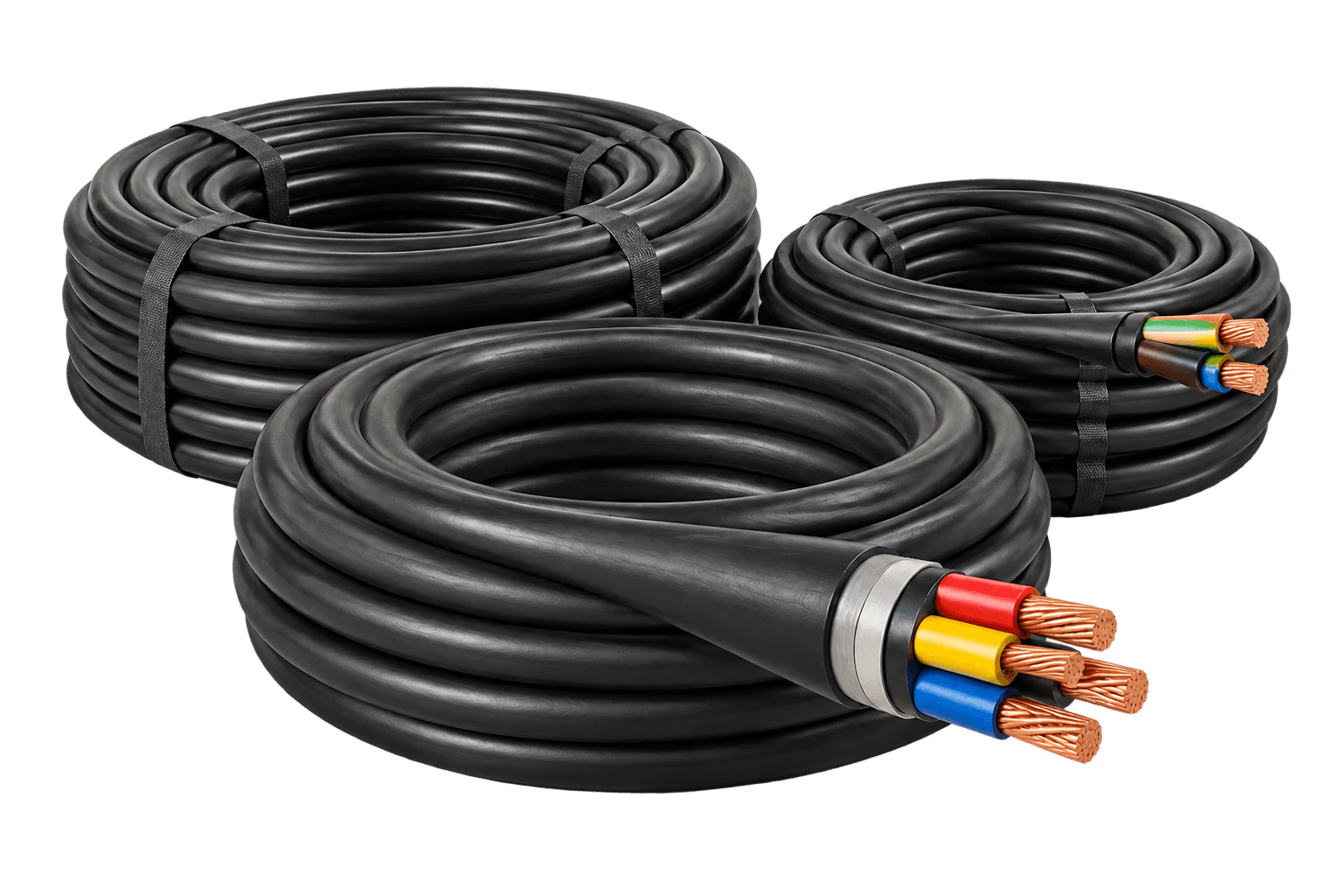
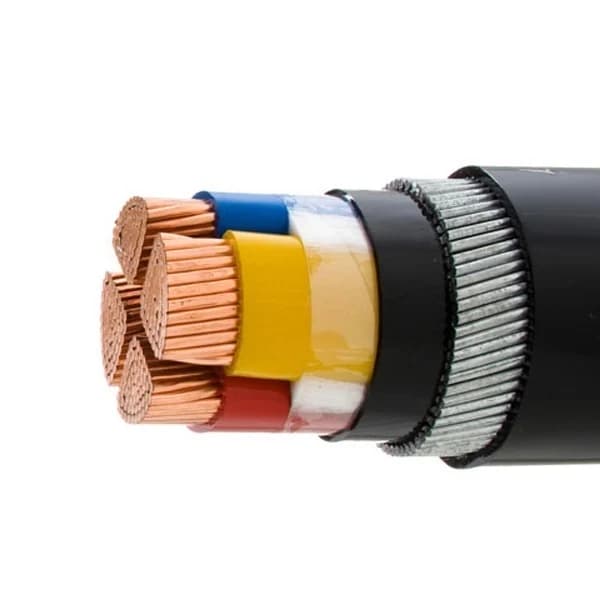
An armoured cable has a protective metallic layer around its insulated cable assembly. Select it by voltage grade, conductor material and area, core arrangement, insulation, armour and sheath, with the installation route in view. Armour adds mechanical protection, but it does not by itself determine current capacity, water resistance or suitability for a particular site.
The engineer must first establish the circuit requirements. The load, voltage drop, prospective fault duty and protection arrangement affect conductor selection. Installation temperature, grouping and laying conditions affect the usable current rating. A purchaser should obtain the approved cable schedule and then verify the proposed cable construction against it. Buying an armoured cable by conductor area alone leaves several specification fields unresolved.
Record the route before comparing cables
An industrial feeder may travel through a cable trench, rise onto a tray and enter an outdoor enclosure. Each part of that route can introduce different conditions. Record direct burial or duct installation, grouping, ambient conditions and exposure to water or chemicals. For buried runs, the designer needs the relevant soil and laying assumptions. For trays and supports, check installation clearances and the cable manufacturer's bending and pulling requirements.
The sheath must suit the actual environment. XLPE describes the insulation; it does not identify every outer-sheath or fire-performance characteristic. Use the existing XLPE vs PVC guide for insulation terminology and keep the armoured cable enquiry focused on the complete construction. If a project requires flame retardancy, reduced smoke, halogen limits or fire survival, state the required classification and applicable standard explicitly. These requirements are distinct and cannot be inferred from armour or insulation alone.
Check armour and earthing requirements
Armour may use wires or strips and can differ in material and geometry. The cable and accessory specifications must agree. Single-core AC cable arrangements need particular care over metallic armour and installation geometry because magnetic effects can introduce additional heating. Have the designer confirm the suitable construction; a multicore cable specification should not be copied automatically into a single-core feeder schedule.
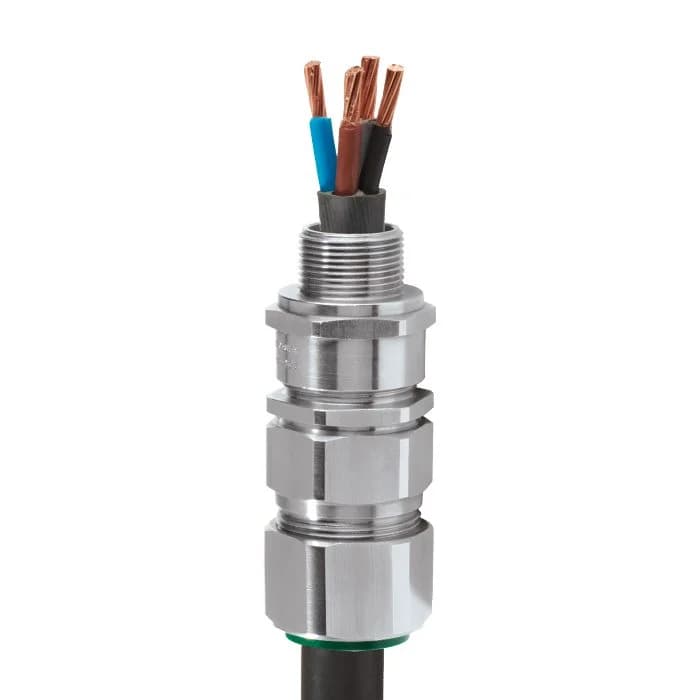
The earthing design determines how the armour is bonded and whether it can contribute to a protective-conductor arrangement. Do not assume the armour alone satisfies every fault-current and continuity requirement. Check the project design and selected cable's documented properties. The gland must retain the specified armour and fit the bedding and sheath diameters. CMP's gland chart illustrates why these dimensions need separate verification even after conductor size has been approved.
A workshop-to-pump-house feeder example
For a feeder from a workshop distribution panel to a pump house, the engineer checks motor demand, starting conditions, route length and protective-device coordination. The route survey identifies the outdoor and underground sections. The cable schedule then specifies conductor material, core count, voltage grade, insulation and mechanical protection. Procurement uses that schedule to request comparable cable offers, instead of asking suppliers to choose a size from the motor power alone.
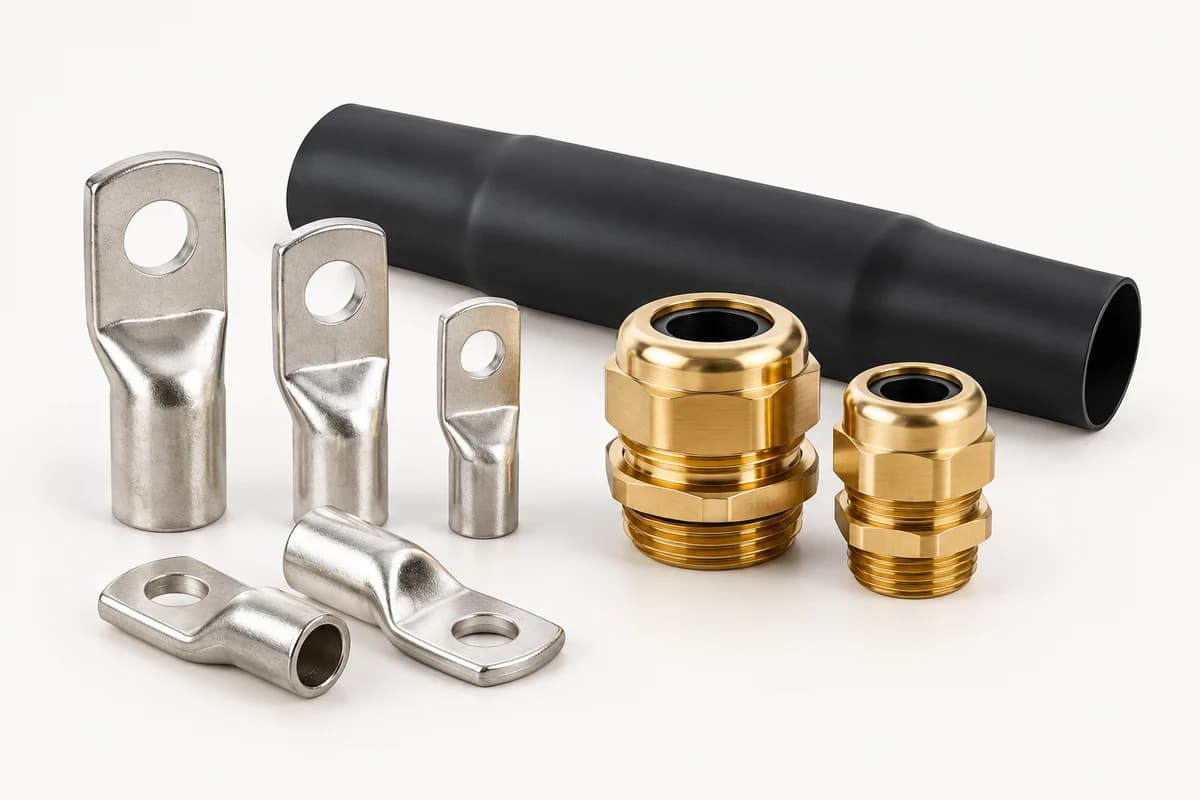
The purchaser also includes both cable ends in the material review. Glands need the proposed cable's actual dimensions. Lugs must match the conductor and equipment terminals. Enclosure entries must have enough space for the cable bend and gland assembly. If the offered cable has a different outer diameter from the design assumption, check these interfaces before accepting the alternative. The same electrical cross-section does not guarantee that existing entries and accessories will still fit.
Purchaser checklist and quotation schedule
Ask the offer to identify the cable make, construction reference, applicable standard and length basis. Clarify whether lengths are continuous or supplied in separate drums. Compare alternatives against the approved electrical and installation requirements, and request engineering acceptance where construction changes. Commercial comparison is more reliable when all suppliers quote the same conductor, armour and sheath arrangement.
For Tirupati Power Enterprises, provide the approved cable schedule with the route and accessory requirements. Separate the cable supply from installation scope where appropriate, and list required documents. Do not assume a quoted length includes gland sets, termination kits or crimping accessories. Confirm the exact supplied scope, price and delivery after the technical fields are complete.
- Conductor material, core arrangement, area, voltage grade and insulation specification.
- Armour type, sheath requirements, laying method and environmental conditions.
- Approved make, applicable standard, length per run and drum requirements.
- Gland dimensions, lug requirements, earthing arrangement and termination quantities.
Related products and buying guidance
Sources and further reading
Frequently asked questions
Does armour increase cable current capacity?
Current capacity depends on the complete cable construction and installation conditions. Use the manufacturer's rating data with the designer's derating assumptions.
Can all armoured cables be buried directly?
Confirm the cable's stated application, sheath construction and the project's laying conditions. Armour alone does not establish suitability for every burial environment.
Can I choose a gland from the conductor area?
No. Verify outer diameter, bedding diameter and armour dimensions against the exact gland series chart.
Specify your requirement
Send the rating, make, quantity and delivery location. Attach the drawing or datasheet where available.
Request a quote