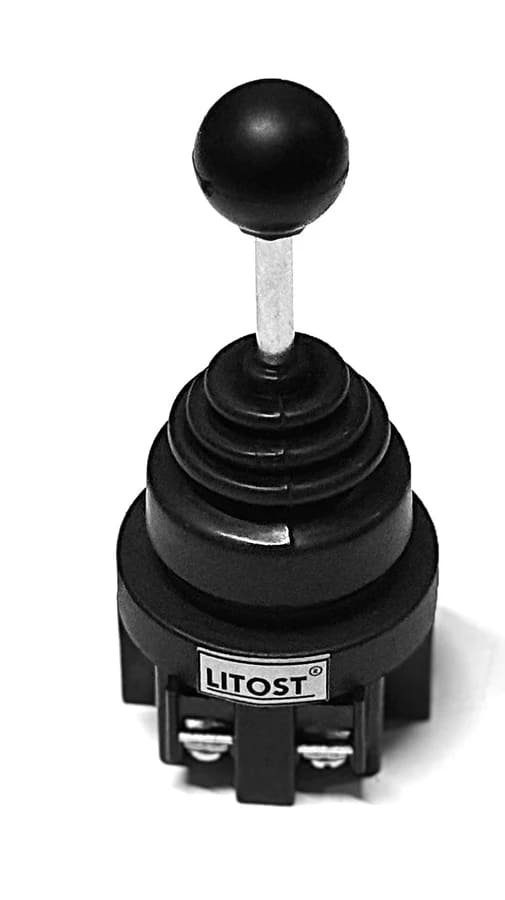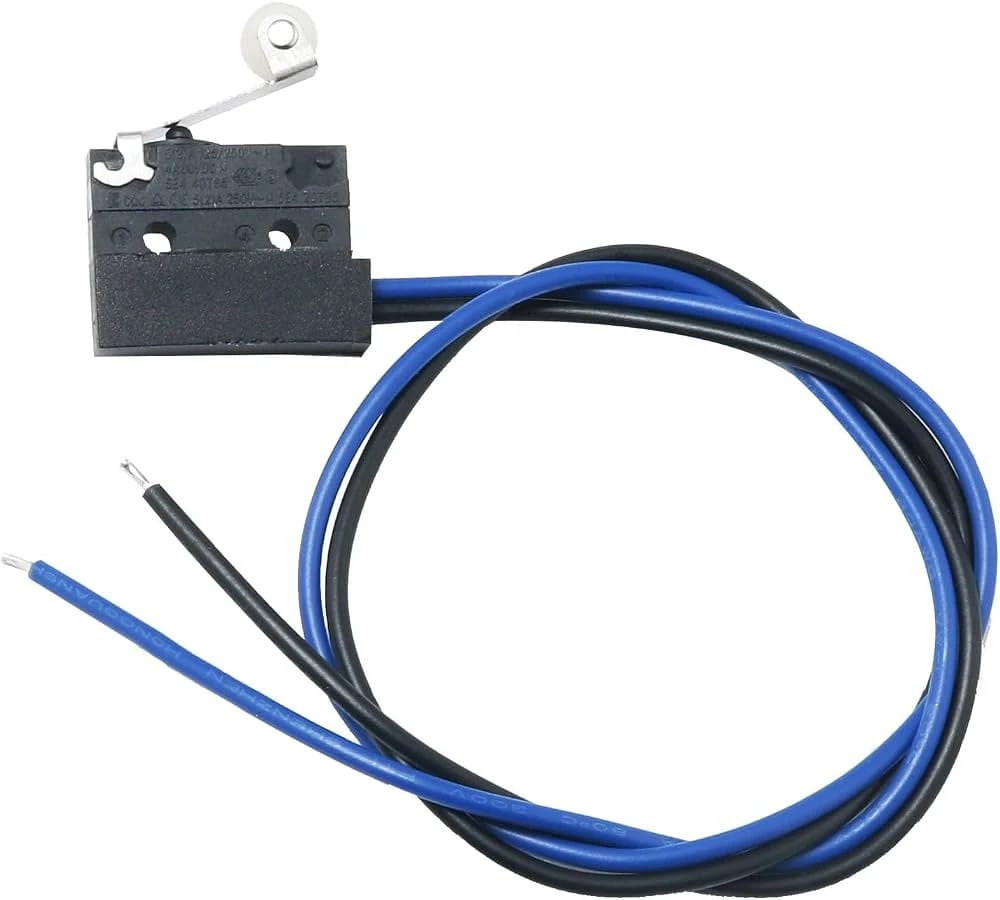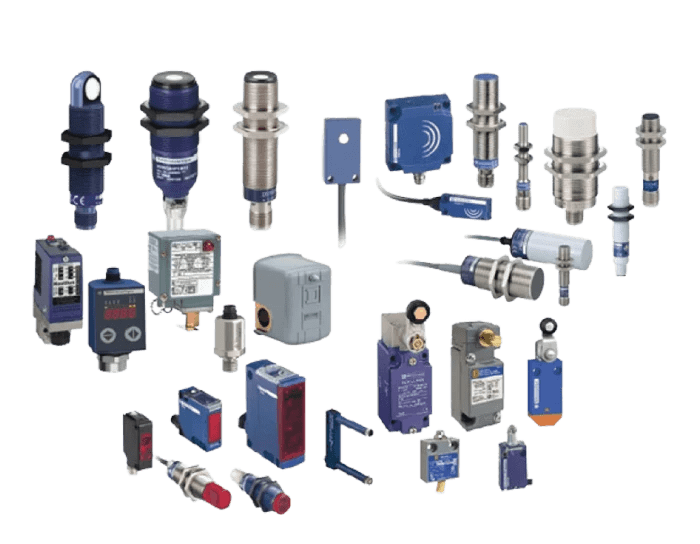
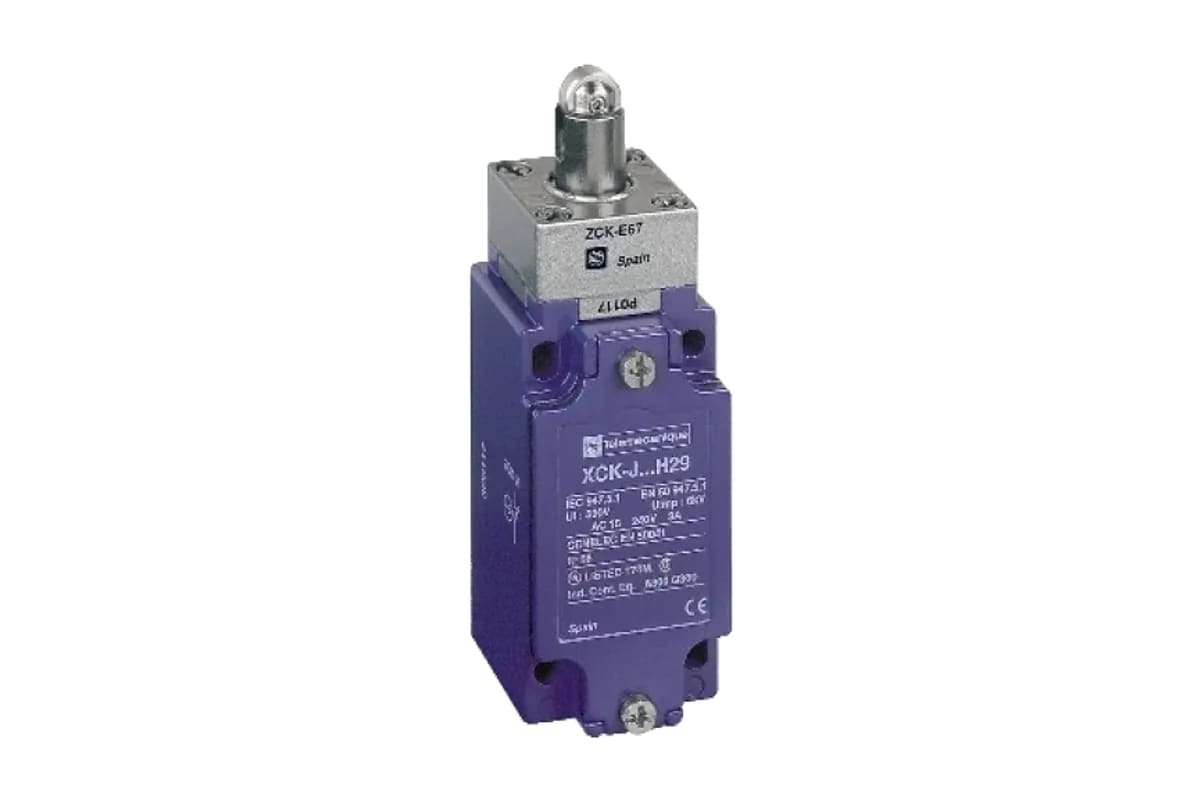
Short answer: a limit switch is an electromechanical switch whose contacts change state when a moving machine part presses its actuator. It is used to detect position, presence or the end of travel, for example on conveyors, cranes, lifts, valves and machine tools. Limit switches are chosen by actuator type, contact arrangement, electrical rating, enclosure and mechanical life.
How a limit switch works
A cam, dog or moving part pushes the actuator. The actuator moves a plunger inside the switch, which snaps the contacts from their normal state: a normally open (NO) contact closes and a normally closed (NC) contact opens. When the part moves away, a spring returns the contacts, unless the switch is a maintained (latching) type.
Actuator types
Actuator | How it is operated | Typical use |
|---|---|---|
Roller lever | Cam or dog moves past the roller | Conveyors, machine slides, cranes |
Adjustable roller lever | Lever length set to the cam position | Varying travel positions |
Plunger (push or roller plunger) | Direct straight-line pressure | Precise end stops, doors |
Fork lever (maintained) | Stays switched until reset from the other side | Reversing travel, cross travel |
Spring rod / wobble stick | Deflected from any direction | Detecting objects of varying position |
Rotary / geared | Counts shaft revolutions | Crane hoist upper and lower limits |
Contacts and ratings
- Contact arrangement: 1 NO + 1 NC is most common; 2 NO + 2 NC for more circuits.
- Snap action contacts switch quickly regardless of actuator speed.
- Ratings to IEC 60947-5-1 utilisation categories, such as AC-15 for contactor coils and DC-13 for DC loads.
- Safety applications use positive-opening NC contacts that are forced open.
Enclosure and environment
Metal-bodied switches suit heavy industry and cranes; plastic bodies suit lighter duty. Choose IP65 or IP67 for dust and water, and check temperature range, cable entry size and mechanical life for the number of operations expected.
Limit switch vs proximity sensor
A limit switch needs physical contact and works with any material, handles higher currents directly and is easy to understand, but has moving parts that wear. An inductive proximity sensor has no contact or wear and switches faster, but detects only metal at short range and needs a power supply.
What to send for a quotation
Actuator type, contact arrangement, voltage and current, enclosure material and IP rating, cable entry, quantity, and make or model for replacements. Tirupati Power Enterprises quotes limit switches, micro switches and proximity sensors from Kolkata.
Frequently asked questions
What is a limit switch used for?
To detect the position or end of travel of a moving part, such as a conveyor, crane hoist, door, valve or machine slide, and send a signal or stop the motion.
What are the types of limit switch?
By actuator: roller lever, adjustable lever, plunger, fork lever (maintained), spring rod and rotary or geared limit switches.
What is the difference between NO and NC in a limit switch?
An NO contact closes when the actuator is operated; an NC contact opens when it is operated. NC contacts are used for safety stops.
Should I use a limit switch or a proximity sensor?
Use a limit switch for contact detection of any material and higher switching currents; use a proximity sensor for non-contact, wear-free, high-speed detection of metal parts.
Specify your requirement
Send the rating, make, quantity and delivery location. Attach the drawing or datasheet where available.
Request a quote Or send it on WhatsApp ↗