What defines a cable tray requirement?
A cable tray order needs more than width and length. Specify the tray system, usable dimensions, material and finish, cable load and support span. Add bends, junctions, covers, supports and joining hardware to the BOQ. Width alone cannot establish load capacity or a complete installed price.
For an industrial project, start with the approved cable schedule and route drawing. State the applicable project standard and installation environment. The designer should check cable arrangement, capacity, segregation, supports and electrical requirements before the order is released.
Choose the system before comparing dimensions
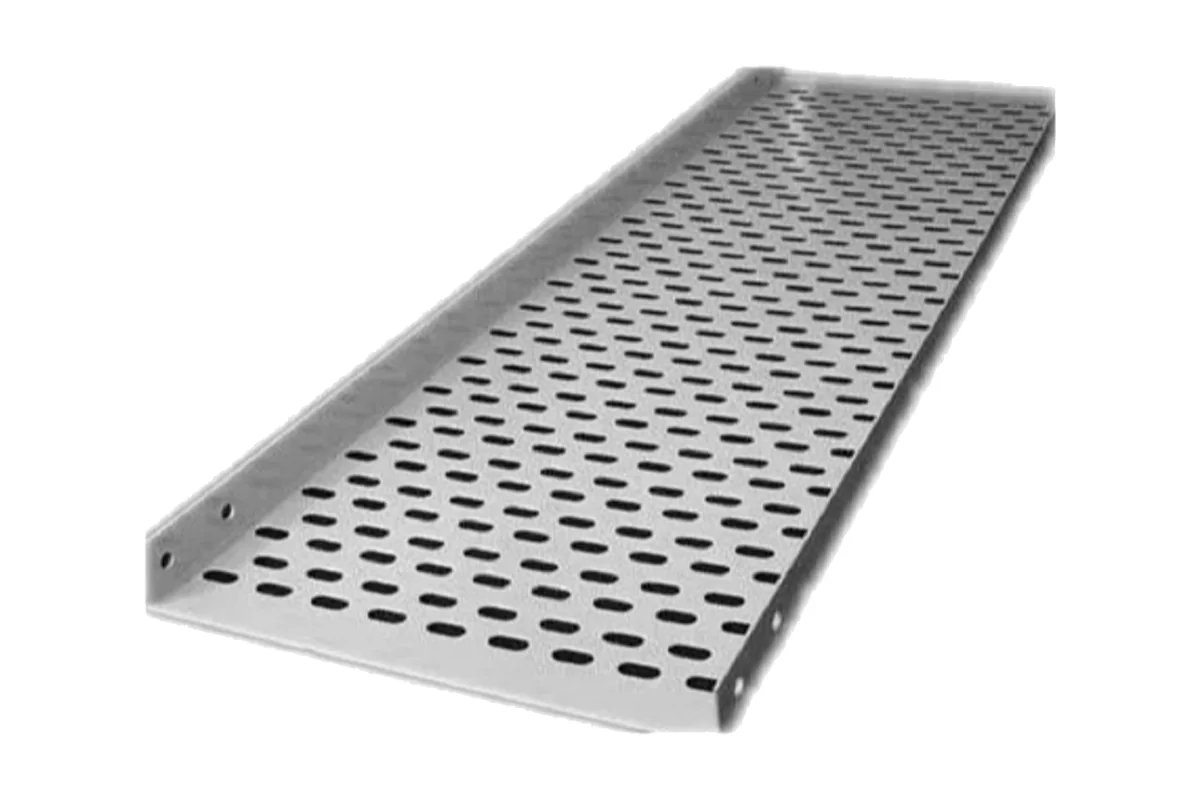
Perforated tray, ladder and wire-mesh systems have different construction and accessory families. Choose the system for the route and cable requirements, then compare the load data and fittings for that exact series. Matching a nominal width does not make components from different systems interchangeable.
Record dimensions with units and a description. For example, a request written only as '300 × 100' leaves open whether those numbers are width and side depth, and says nothing about section length, material or load. Treat any example dimension as an RFQ field, not a recommendation for a particular cable quantity.
Specification field | Include in the schedule | Why the quote can change |
|---|---|---|
System and series | Perforated, ladder or mesh; approved series | Profiles, connections and accessories differ |
Dimensions | Usable width, side depth, section length and thickness | Nominal size alone does not describe construction |
Material and finish | Specified steel/aluminium/other material and coating | Environmental suitability and fabrication differ |
Load and support span | Cable load, allowance and required span | Use the manufacturer's load data for that configuration |
Fittings | Bends, tees, crosses, reducers, risers and covers | Straight length pricing excludes much of the route |
Support and joint hardware | Brackets, hangers, couplers, fasteners and bonding provisions | Supply boundaries must be explicit |
Read load data with the support arrangement
A load-capacity figure is meaningful only with its stated span and test or installation conditions. Ask for the manufacturer's load information for the proposed tray, joining arrangement and support positions. Do not transfer a rating from a heavier profile or shorter span to a visually similar tray.
Provide the cable weight and any specified future allowance to the designer. Include concentrated-load conditions, vertical runs and any project restrictions that differ from the standard arrangement. Cable sizing, thermal effects and route capacity remain design checks; buying a wider tray does not on its own verify those conditions.
Specify finish and fittings for the actual route
Indoor dry areas, exposed outdoor routes and corrosive process areas may require different materials or finishes. Describe the environment and cite the approved specification. Terms such as 'galvanised' should be accompanied by the required coating process or specification so competing offers describe comparable construction.
A route drawing helps identify bends, tees, reducers, risers, support changes and cover requirements. List these components with quantities instead of adding an unverified percentage to straight lengths. Ask how joints, cut edges and any bonding provisions are handled under the proposed system's instructions. Confirm compatibility when extending an existing installation.
Build a quotation that can be compared line by line
Separate straight sections, fittings, covers, supports and hardware into clear BOQ lines. State whether quantities are metres, sections, sets or pieces. Ask the supplier to identify deviations, excluded accessories, packing, freight and lead time. This avoids comparing a bare tray offer with a package that includes the installation accessories.
For a Kolkata or eastern India delivery, include the destination postcode and site access constraints for long sections. Tirupati Power Enterprises reviews the requested cable-support items against the BOQ and confirms the proposed supply and commercial terms in the quotation. Available sizes, finish and documentation depend on the selected range.
- Approved make/series and tray construction
- Width × side depth × section length, units and thickness
- Material, coating and environmental conditions
- Design load, support span and required load documentation
- Route drawing plus fittings, covers, supports and fixing schedule
- Quantities, delivery postcode, required date and acceptable alternatives
Related products and buying guidance
Cable trays: product and quotation details
Cable jointing and accessories
Sources and further reading
Frequently asked questions
Can cable tray size be selected from the number of cables alone?
No. The design needs cable dimensions and arrangement, cable weight, required spare capacity, support span, segregation and installation conditions. Use the approved design and the selected manufacturer's system data.
What changes the price of a 300 × 100 mm cable tray?
System type, material, thickness, finish, section length, load requirement and quantity affect the offer. Fittings, covers, supports, joint hardware and freight may be separate. Request a specification-based quote rather than an assumed universal price.
Are supports and bends included in straight tray pricing?
Do not assume so. List the route fittings, covers, supports and hardware as separate BOQ items and ask the supplier to state what each quoted line includes.
Specify your requirement
Send the rating, make, quantity and delivery location. Attach the drawing or datasheet where available.
Request a quote