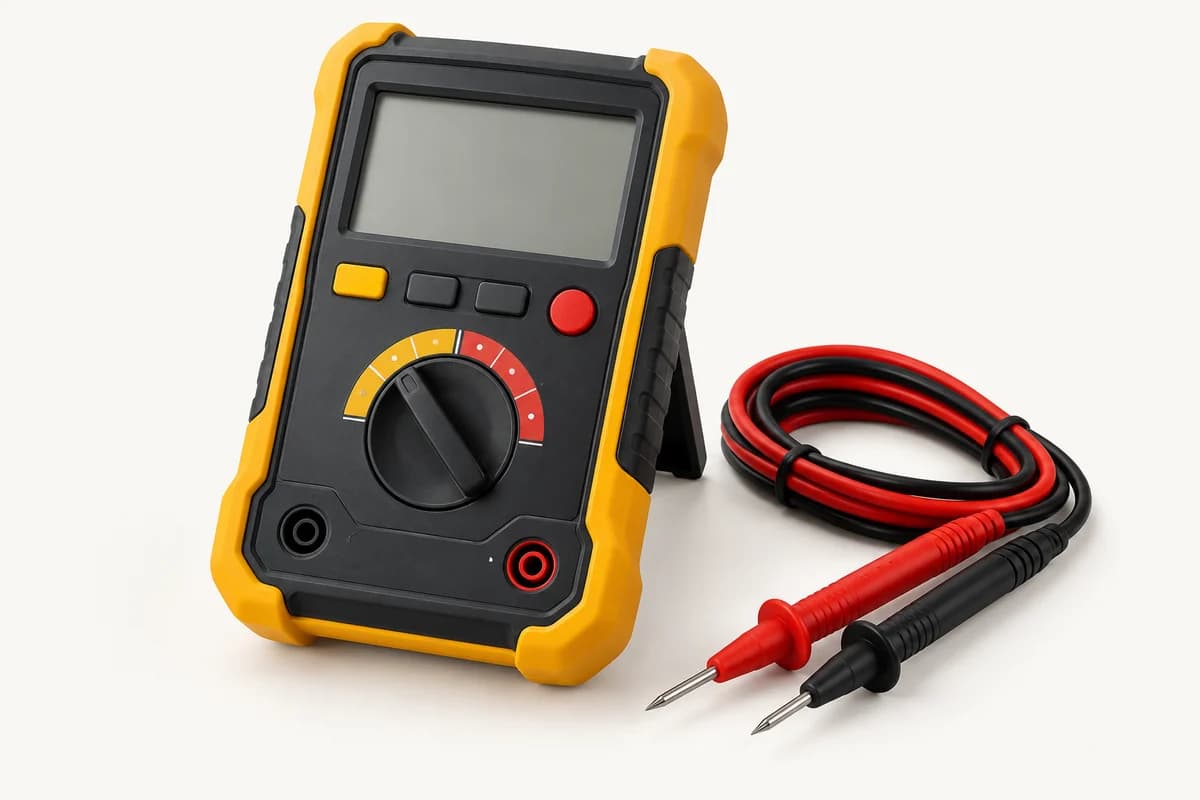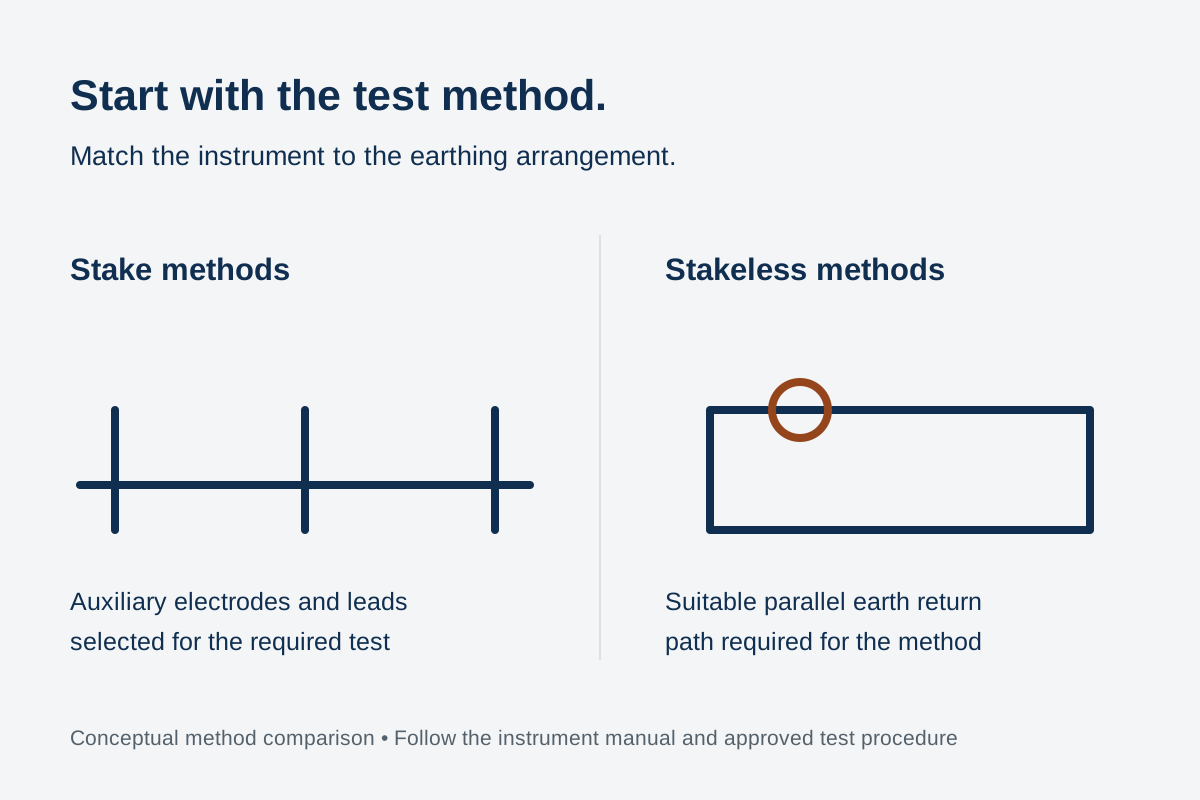
Choose the measurement method first
Choose an earth resistance tester by the required test method and the site's earthing arrangement. A stakeless clamp measurement needs a suitable closed path through parallel earth connections; it cannot establish the resistance of an isolated electrode with no return path. Stake, selective and soil-resistivity tests need their own supported functions and accessories.
Start an enquiry with the test procedure and site arrangement, rather than asking for a 'digital megger'. Insulation resistance, electrode resistance and fault-loop measurements answer different questions. Have the responsible test engineer confirm the method and safety arrangements; this guide does not instruct readers to disconnect protective conductors or perform live tests.
Earth-testing methods compared
Instrument names can hide differences in capability. Check the exact model and kit contents. A meter sold with leads for one method may need additional clamps, stakes or reels for another; the manufacturer's supported methods and accessories are the reference.
Required measurement | Capability to request | Site question to resolve |
|---|---|---|
Electrode resistance with auxiliary stakes | Supported fall-of-potential method and lead/stake kit | Is there enough suitable space for the specified test layout? |
An electrode within an interconnected system | Selective method if appropriate, with compatible sensing clamp | Can the method separate the branch under test as required? |
Ground loop without auxiliary stakes | Supported stakeless clamp method | Is there a valid parallel earth return path? |
Soil resistivity survey | Supported four-pole resistivity function and kit | Can the required electrode arrangement be established? |
Insulation condition | A suitable insulation resistance instrument | This is a different test; identify test voltage and asset separately |
Why a clamp tester is not universal
A stakeless instrument measures the loop formed by the connection under test and the parallel return network. The result depends on that network. If the required path is absent, the method does not become valid simply because a reading appears on the display. Refer to the instrument instructions and site procedure before interpreting a value.
Describe whether the site has an isolated electrode, a connected earth grid or multiple bonded electrodes. Mention access to the conductor and any restrictions on auxiliary stakes or disconnection. The test engineer can then decide which method is valid and what the result represents. A convenient clamp form factor should not determine the test plan.
Specify the instrument and the complete kit
State the measurement range and accuracy required by the test procedure, along with environmental and electrical safety requirements. Give the site noise conditions if known. Ask the supplier to identify the exact model rather than describe all instruments in a brand's range as equivalent.
List leads, reels, stakes, clamps, carrying case, power supply and any software or data-export requirements. Confirm calibration scope and documentation separately. A calibration certificate supports the instrument's stated calibration; it does not prove that a particular test method or site result is valid.
- Test asset and site earthing arrangement
- Required method and approved procedure
- Measurement range, resolution and accuracy requirement
- Required safety and environmental ratings
- Lead lengths, stakes, compatible clamps and complete kit list
- Memory/export needs and calibration documentation
- Quantity, approved make/model and delivery postcode
Acceptance values belong to the installation design
There is no single resistance value that this buying guide can approve for every installation. Acceptance depends on the earthing design, protective arrangements, applicable requirements and the test method. Ask the responsible engineer to state the criterion and record how the measurement was obtained.
For replacement or procurement, send Tirupati Power Enterprises the instrument reference or approved method specification and accessory list. Our Kolkata team can review the sourcing requirement and confirm the proposed model, documentation, availability and delivery terms. Brand references in this guide explain methods and do not establish dealership status or a stocked model.
Related products and buying guidance
Electrical testing and measuring requirements
Earthing electrode selection guide
Insulation resistance and polarisation index guide
Request an instrument quotation
Sources and further reading
Fluke: stakeless measurement and parallel ground paths
Frequently asked questions
Can a clamp earth tester measure a single isolated earth electrode?
A stakeless clamp method needs a suitable closed return path through parallel earth connections. It cannot establish isolated-electrode resistance when that return path is absent. The test engineer must select an appropriate supported method.
Is an insulation resistance tester the same as an earth tester?
No. Insulation resistance and earth resistance are different measurements. Specify the required function, method, test asset and accessories rather than relying on a generic meter name.
What earth resistance value is acceptable?
Use the criterion specified for the actual installation and test method by the responsible engineer and applicable requirements. A universal value from a buying guide is not sufficient to accept an earthing installation.
Specify your requirement
Send the rating, make, quantity and delivery location. Attach the drawing or datasheet where available.
Request a quote