What the two measurements tell you
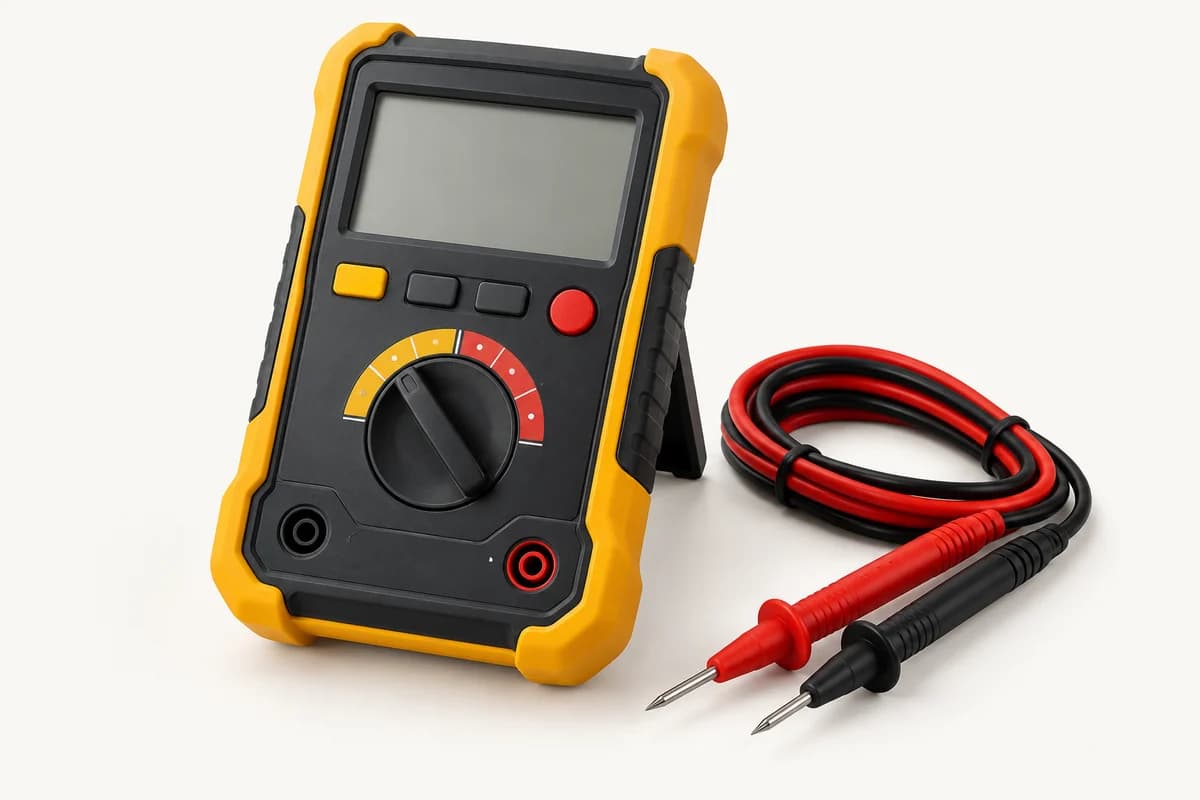
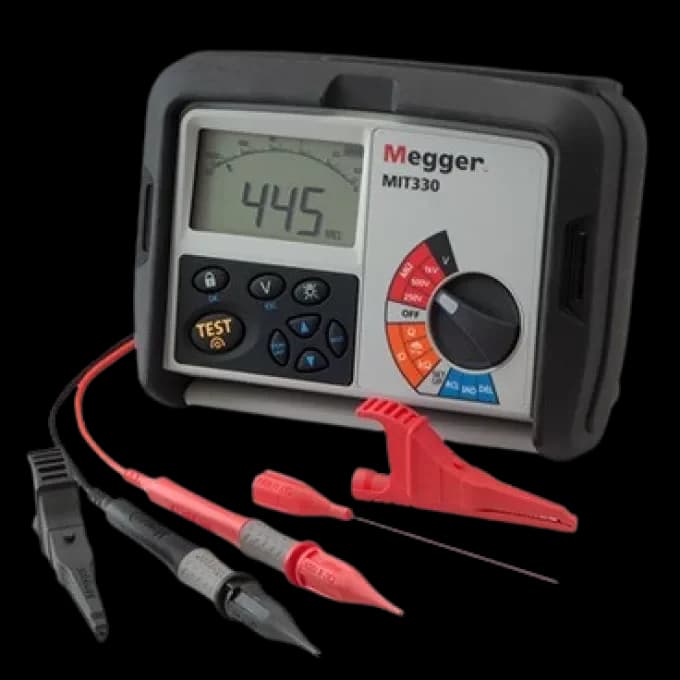
Insulation resistance is a resistance reading taken under a specified DC test voltage after a stated time. Polarisation index, usually abbreviated PI, compares the insulation resistance at ten minutes with the reading at one minute: PI = R10 / R1. A kit that displays resistance does not automatically support a timed PI test. For procurement, check the actual measurement functions and range in the proposed model datasheet.
A spot reading helps establish insulation condition at a particular point in a maintenance programme. PI examines how the reading changes during the test. Both require the asset manufacturer’s test procedure and interpretation rules. Neither measurement, taken alone, proves that equipment can return to service. Other observations and the equipment’s history remain part of the assessment.
Why the reading changes with time
The measured current includes charging current, dielectric absorption and leakage. Charging and absorption components generally decline as the test continues, so the displayed resistance can rise. The amount of change depends on insulation material, equipment capacitance and condition. A long cable and a motor winding can therefore behave differently even if an initial resistance reading looks similar.
Surface moisture and contamination can affect the result. Temperature also changes resistance, which makes comparisons between maintenance visits difficult unless the temperature and any approved correction method are recorded. A PI ratio reduces some temperature effects within the same short test interval, but it does not remove the need to document conditions or make unlike assets directly comparable.
Where PI interpretation needs care
An oil-filled transformer contains insulation with different behaviour from a rotating machine’s solid winding insulation. Megger’s PI guidance specifically discusses materials with little dielectric absorption and the limitations of interpreting their ratios. Apply the asset-specific guidance instead of copying a motor acceptance value onto transformer paperwork. A universal pass or fail ratio is unsuitable for a mixed industrial equipment list.
Instrument limits can also defeat the calculation. If the display exceeds its measurement range at one or both time points, an apparent excellent result may simply be an unavailable number. Ask for the resistance range and accuracy at the conditions you expect, together with charge capability for large capacitive equipment. Display resolution and maximum measurable resistance are separate specifications.
An example from maintenance purchasing
Suppose a maintenance department records 500 megohms at one minute and 1,000 megohms at ten minutes on one asset. Its calculated PI is 2. That arithmetic supplies a ratio; the asset procedure determines what the ratio means. If another kit shows over-range at ten minutes, it cannot provide the same numerical evidence. Comparing the two reports as identical would conceal the instrument limitation.
For repeated measurements, specify storage of timed readings, asset identification and an export format that fits the maintenance record. The report should retain test voltage, duration, temperature, connection arrangement and any guard use. Historical comparisons become more useful when the next technician can reproduce the approved arrangement and recognise changes in the measurement conditions.
Selection and quotation checklist
The test voltage must follow the equipment manufacturer and the applicable procedure. Do not select the highest available output merely because the asset operates at a high voltage. Confirm resistance range, accuracy, timer functions, PI calculation, guard terminal arrangements where required, supplied leads and the environmental limits of the instrument. Electronic controls and other connected devices may need separation under the approved test plan.
Ask about calibration documentation, battery endurance, discharge features, residual-voltage indication and the complete accessory list. These tests belong to competent personnel working on equipment made safe under an authorised isolation and discharge procedure. A discharge feature is one part of the safety arrangement; the operator still follows the instrument manual and verifies the equipment’s safe state.
Tirupati Power Enterprises lists an insulation resistance cum polarising index test kit in its testing and measuring range. Send the asset type, insulation system, manufacturer’s required test settings, anticipated resistance range, site conditions, quantity and reporting requirements with the enquiry. Include the preferred make or model if it is prescribed. The quotation can then address a defined requirement and identify any missing technical inputs.
Related products and buying guidance
Testing and measuring equipment
Request an equipment quotation
Sources and further reading
Frequently asked questions
Is PI the same as insulation resistance?
No. Insulation resistance is a resistance value under stated test conditions. PI is a ratio of timed resistance readings, normally R10 divided by R1.
Does a PI of 2 mean every asset passes?
No. Interpretation depends on the asset, insulation system, relevant procedure and instrument limitations. Use the equipment manufacturer’s criteria.
Can a standard insulation tester measure PI?
Only if its range, timing capability and operating procedure support the required test. Confirm the proposed model’s datasheet and manual.
Specify your requirement
Send the rating, make, quantity and delivery location. Attach the drawing or datasheet where available.
Request a quote