Choose from the load-change pattern
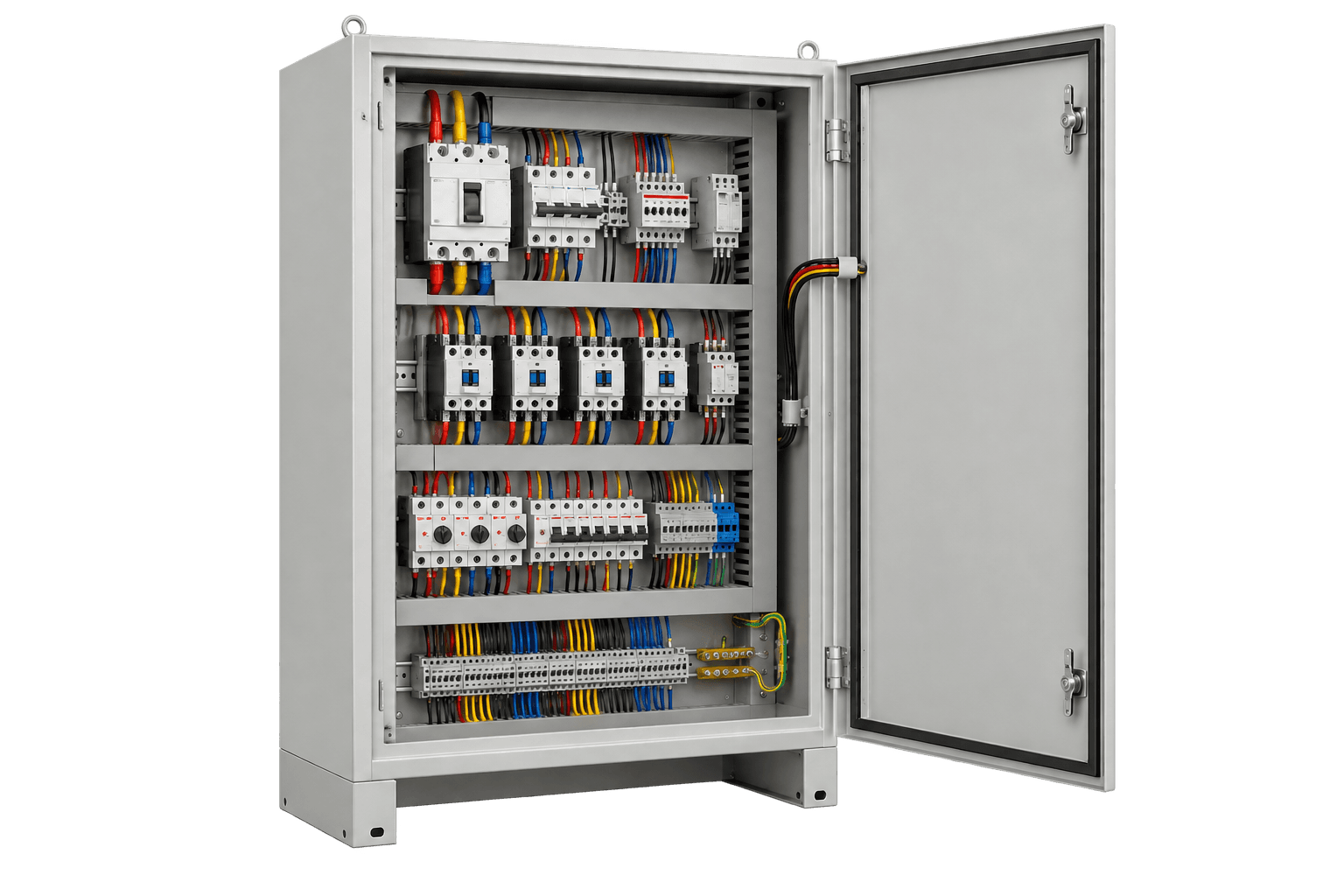
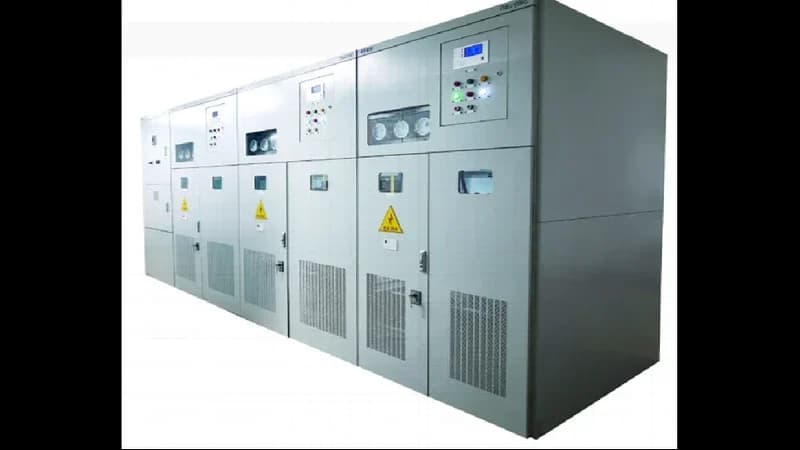
A conventional APFC panel switches capacitor stages with electromechanical contactors. A thyristorised APFC panel uses semiconductor switches to connect stages electronically. Conventional switching can suit demand that changes gradually or remains steady for useful periods. Electronic switching is worth assessing when reactive demand changes too quickly for a contactor bank to follow effectively.
Both arrangements need an engineered capacitor bank, measurement scheme, protection and enclosure. Choosing thyristors does not establish the total kVAr, solve harmonics or guarantee a particular power factor. The decision begins with the duration and frequency of load changes, then checks whether the complete controller and switching arrangement can respond to them.
What changes in a conventional panel
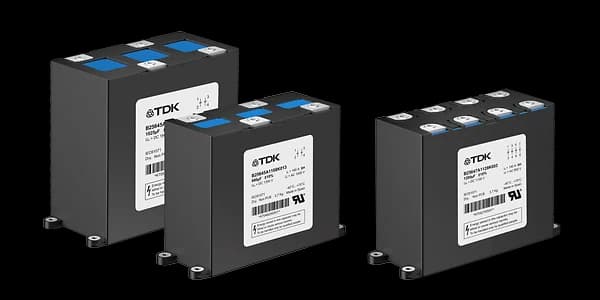
Capacitor-duty contactors are designed for the switching stresses associated with capacitor banks. Their suitability depends on the stage rating, system voltage, inrush conditions and manufacturer requirements. A motor contactor selected only by its ampere rating is not automatically a suitable substitute. The controller must observe the required disconnection and reconnection conditions for each stage.
The mechanical operating duty also matters. A plant with frequent changes can create repeated contactor operations even when the average load looks stable. Contact wear, permissible switching frequency and access for maintenance should be reviewed against the actual duty. A load log with sufficient time resolution helps show whether the controller would repeatedly chase short-lived demand.
What changes with thyristor switching
Thyristor modules remove the mechanical opening and closing action from stage switching. A suitable electronic switching arrangement can respond more rapidly and accommodate demanding switching duty. Its performance still depends on controller sampling, detection logic, the module design and the conditions required for connecting or disconnecting a stage. Obtain response information for the proposed system.
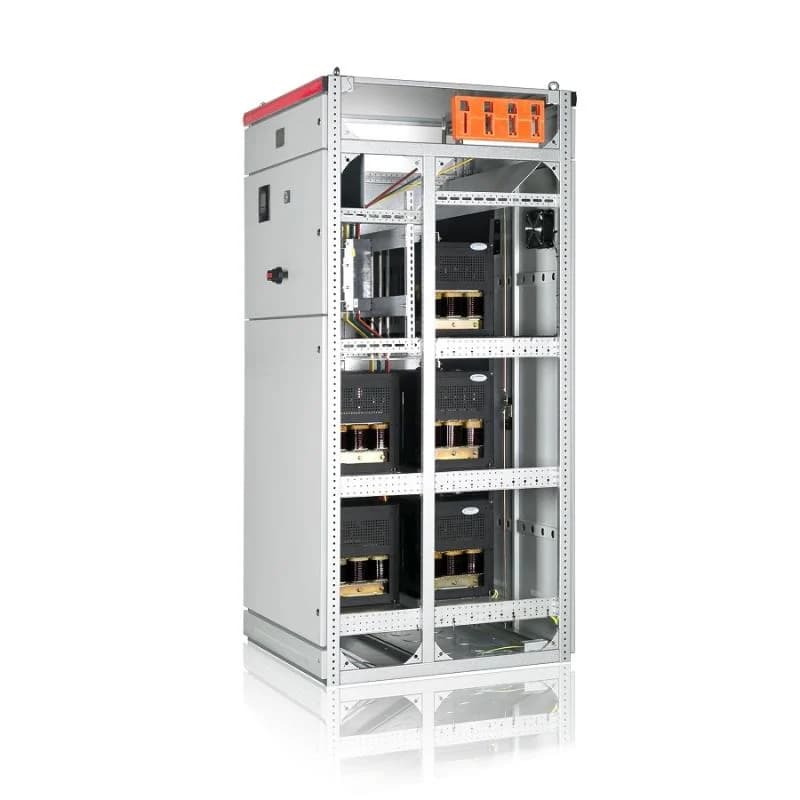
Semiconductor losses introduce a thermal-design requirement. Heat sinks, cooling clearances, enclosure ventilation and the ambient operating range need to be addressed together. Module protection and capacitor protection must suit the circuit and the manufacturer instructions. A compact enclosure selected from external dimensions alone may leave insufficient space for cooling or maintenance.
Harmonics require a separate decision
If a production line includes variable-frequency drives, welders or rectifiers, investigate harmonic behaviour before choosing either switching method. A fast switch cannot prevent resonance between an unsuitable bank and the supply network. The engineer should review harmonic measurements, the existing capacitor banks and the supply impedance, then specify detuning or filtering where needed.
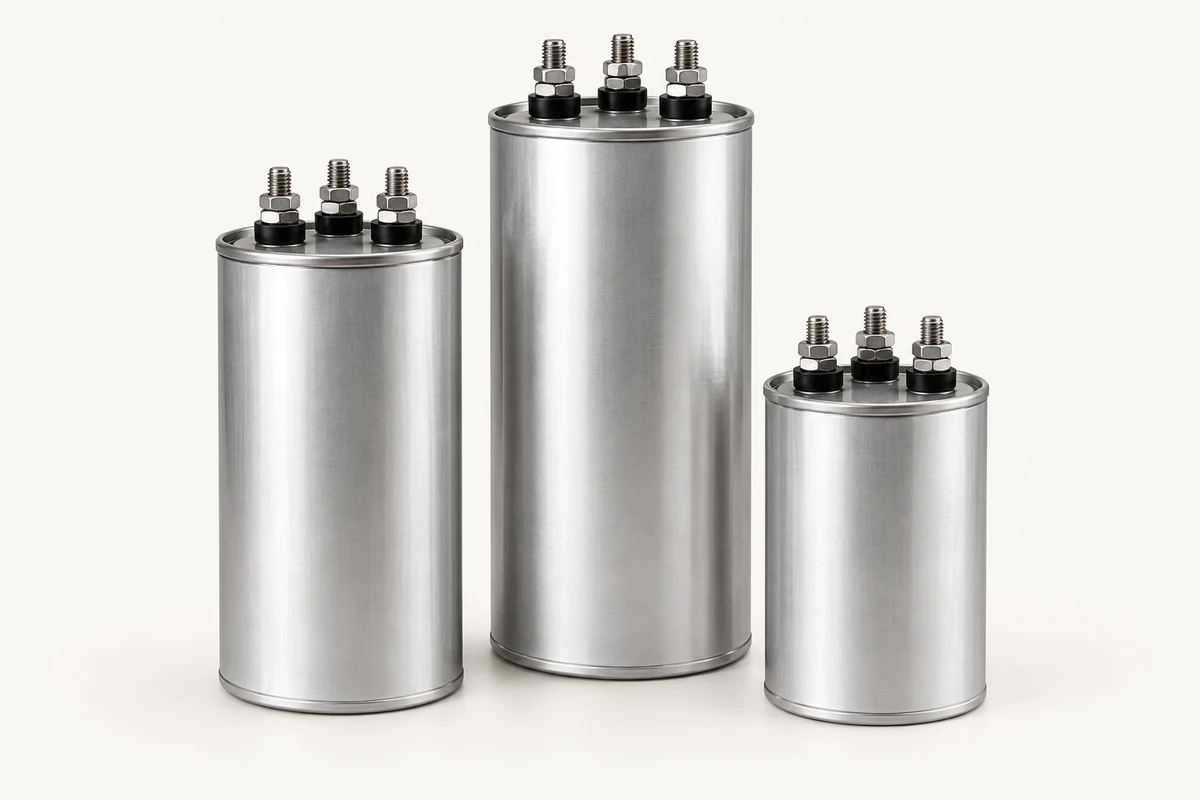
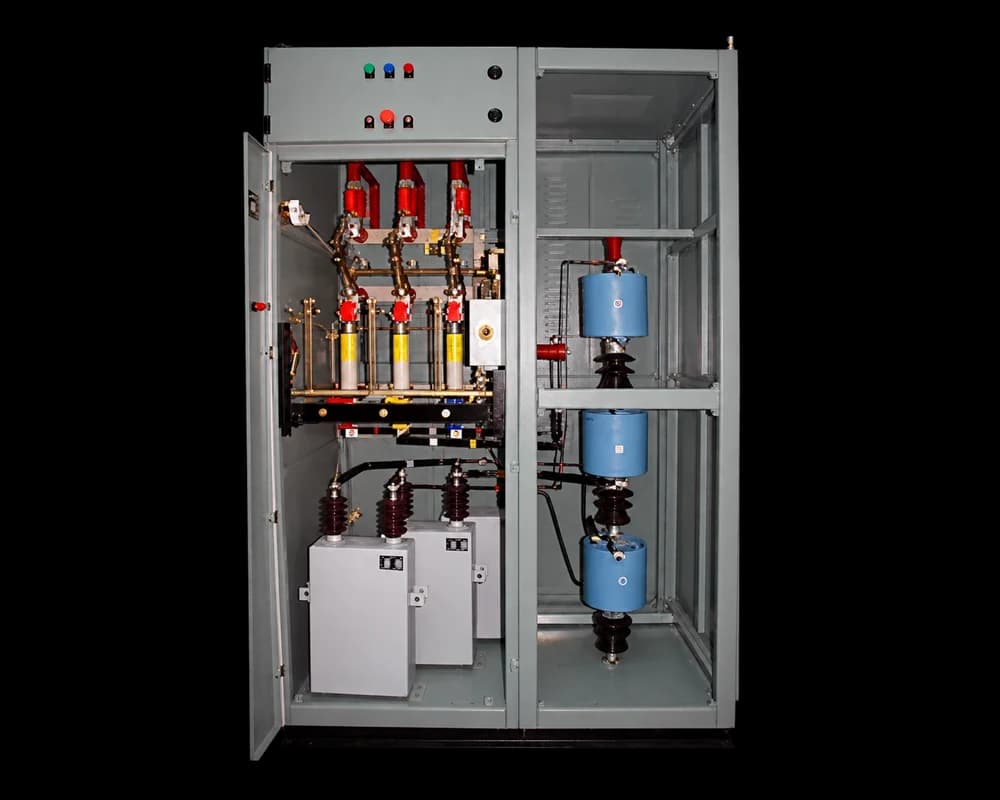
Where detuned reactors are used, capacitor and reactor selection forms a matched design. The voltage duty on the capacitor, stage output and heat generated inside the enclosure require engineering review. Do not select a reactor percentage from a generic rule or assume that a thyristorised panel necessarily includes reactors. The quotation should identify them explicitly.
Two purchasing situations
A facility whose pumps run continuously for long periods may find a conventional panel appropriate, subject to stage size, protection and power-quality review. A process with rapid repetitive reactive-demand changes may justify electronic switching. These examples describe operating patterns; they do not assign a switching method automatically to an entire industry.
For a retrofit, compare recorded behaviour with the existing controller event history and stage condition. A poor result could come from failed stages, unsuitable step sizes or incorrect measurement wiring. Replacing all contactors with electronic modules without checking these points may preserve the original problem. Specify the operating requirement first and review the complete replacement design.
Document the lowest sustained load as well as the fastest change. A bank with an oversized smallest stage can have difficulty matching low reactive demand regardless of its switching technology. Review total capacity, step resolution and switching response as separate parts of the proposal.
What a comparable quotation should contain
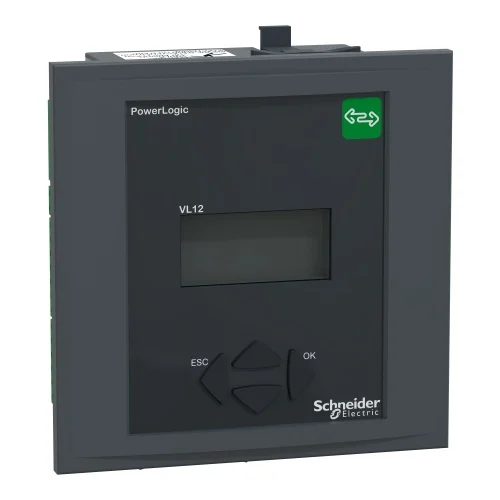
Tirupati Power Enterprises offers conventional and thyristorised APFC panels within its documented range. Send the same operating brief for both options if you want a useful comparison. Ask for the switching method, stage schedule, controller functions, thermal arrangement and maintenance access to be stated so that technical differences remain visible.
Agree who provides the site survey, harmonic assessment, installation and commissioning. Panel supply and factory inspection do not by themselves confirm performance at the final connection point. Site acceptance should check the agreed control behaviour under representative operating conditions, using equipment-specific settings and procedures.
- Load trend showing minimum demand, normal production demand and the time scale of changes.
- Voltage, target power factor, proposed kVAr, stage sizes, supply sources and CT arrangement.
- Harmonic data and explicit inclusion or exclusion of reactors or other mitigation.
- Required switching duty, ambient conditions, enclosure limits, preferred makes and documentation.
Related products and buying guidance
APFC capacity and sizing checks
Sources and further reading
Frequently asked questions
Is thyristor switching always the better choice?
Its value depends on the load-change rate, switching duty and required response. A conventional panel may meet a stable-load application when correctly designed.
Can a conventional APFC panel be upgraded?
An upgrade requires review of the controller, switching modules, protection, capacitor stages, thermal design and wiring. Compatibility cannot be assumed from the existing kVAr rating.
Does thyristorised mean harmonic filtering?
No. Thyristorised describes the switching method. Detuning and harmonic filtering are separate design requirements.
Specify your requirement
Send the rating, make, quantity and delivery location. Attach the drawing or datasheet where available.
Request a quote