Treat the gland and lug as different items
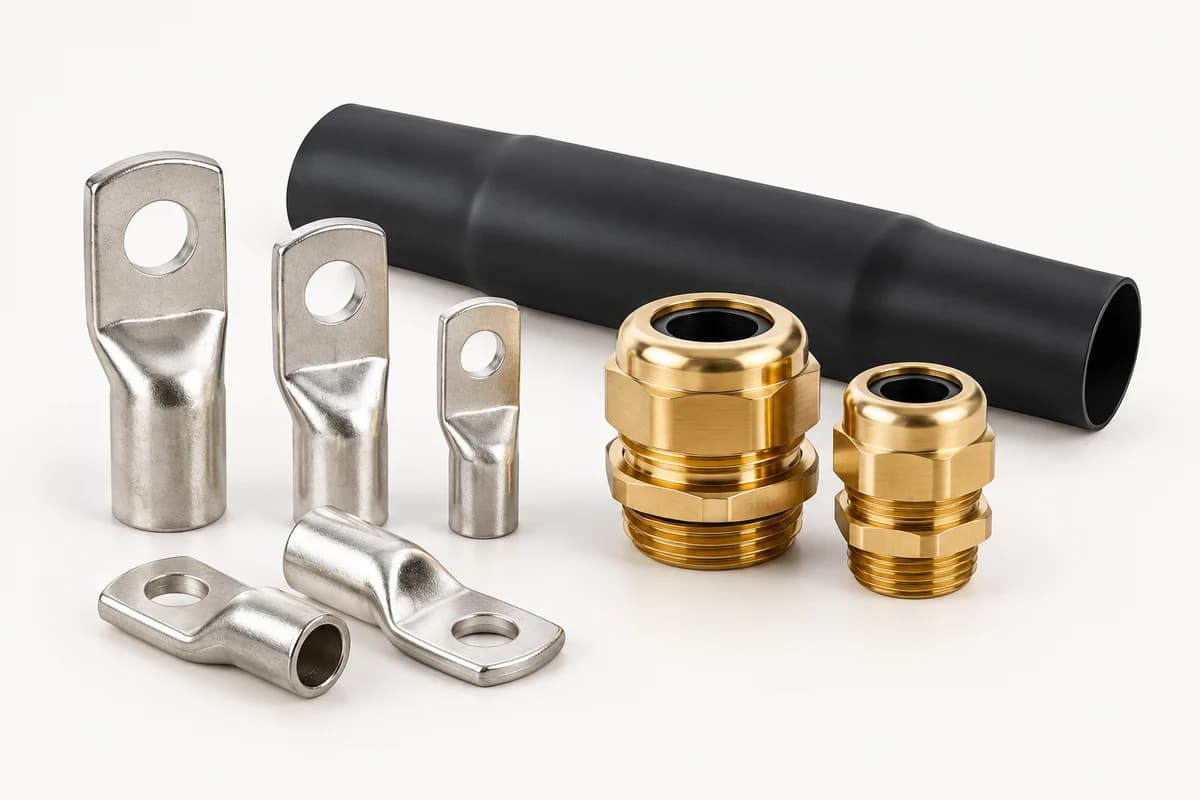
A cable gland seals and retains a cable at the enclosure entry. A cable lug connects its conductor to a terminal. They belong to the same termination assembly but are selected from different dimensions. Ordering both from cable cross-section alone leaves important information missing.
Use the cable datasheet and equipment drawings to build the termination schedule. Identify the cable construction, gland entry and conductor-terminal connection for each line. Do not assume every cable with the same nominal area has the same outside diameter.
Give actual cable dimensions for the gland
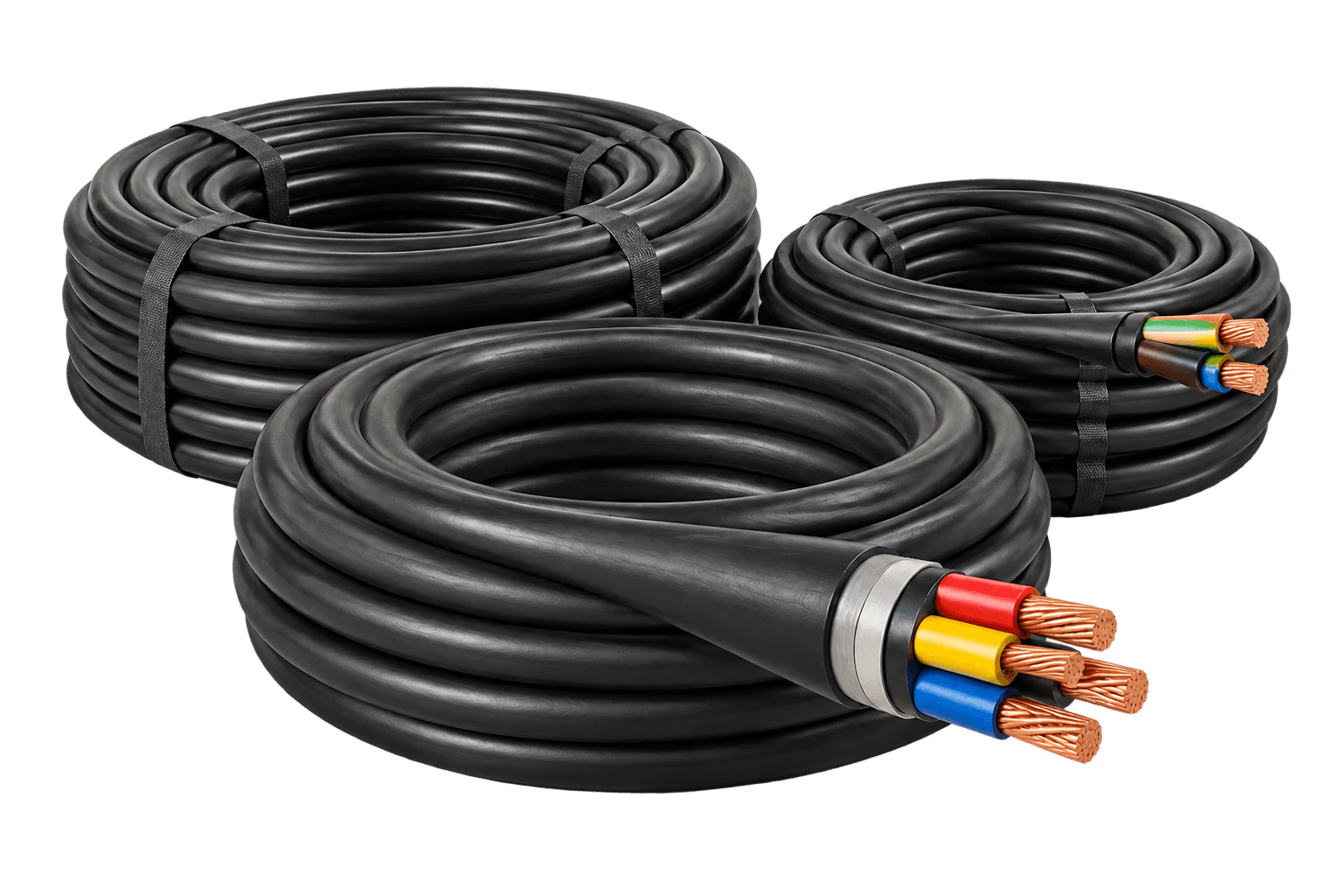
Record overall cable diameter and, where applicable, bedding diameter and armour construction or dimensions. Match them to the selected gland series’ sealing and retention ranges. State the required enclosure thread, usable thread length, environmental conditions and accessories.
For armoured cables, confirm how the selected gland retains the armour and meets the intended earthing arrangement. Single- and double-compression labels are useful descriptions, but the exact manufacturer drawing and product specification govern selection.
If a hazardous-area requirement applies, state the installation classification and required certification. A general industrial gland is not automatically suitable. Product marking and current installation instructions need to match the application.
Match conductor and terminal materials for the lug
Specify copper or aluminium conductor, cross-sectional area, conductor class and the terminal stud or palm arrangement. Include any required barrel style, inspection feature or dimensional constraint. The lug’s approved conductor range must suit the actual conductor.
For aluminium-to-copper interfaces, confirm the intended connection and whether a suitable bimetallic lug is required. Surface preparation, compounds, dies, tool settings and the crimp sequence must follow the manufacturer’s instructions. Similar-looking lugs are not necessarily interchangeable.
Count accessories and termination ends
Prepare quantities from the termination schedule, including both ends where relevant. List glands, lugs, locknuts, washers, shrouds, reducers and other required accessories separately. A cable quantity or route length does not establish the number of complete termination sets.
Check stud sizes and enclosure entries against the equipment drawing. Record which parts are supplied with the equipment and which must be procured separately. This avoids duplicate orders and missing items at installation.
Make substitutions reviewable
Give the preferred make and ordering reference. If alternatives are acceptable, state the parameters that must be retained and request their datasheets. Review dimensions, material interfaces, environmental suitability and required documentation before accepting a substitution.
TPE supplies cable accessories from Kolkata. Send your schedule, quantity and delivery postcode for a line-by-line quote with the selected make, availability, pricing and lead time. Installation and compatibility decisions should use the approved design and the actual product instructions.
Related products and buying guidance
Copper, aluminium and bimetallic lugs
Sources and further reading
Frequently asked questions
Is cable area enough to order a gland?
No. The outside diameter, bedding or armour dimensions where applicable, entry thread and installation conditions are also needed.
Should accessories be listed separately?
Yes, unless the quoted gland set explicitly includes them. Confirm what is included and count complete termination sets.
Can a similar lug be accepted as an equivalent?
Review its approved conductor range, material interface, terminal dimensions and crimping system rather than relying on appearance.
Specify your requirement
Send the rating, make, quantity and delivery location. Attach the drawing or datasheet where available.
Request a quote