What tan delta measures
Tan delta, also called dissipation factor, describes dielectric loss in an insulation system under an AC test. In a simplified equivalent circuit, it is the ratio of the resistive loss component of current to the capacitive component. It helps assess insulation behaviour when measured using a defined connection, frequency and voltage. The interpretation depends on the equipment and insulation system being examined.
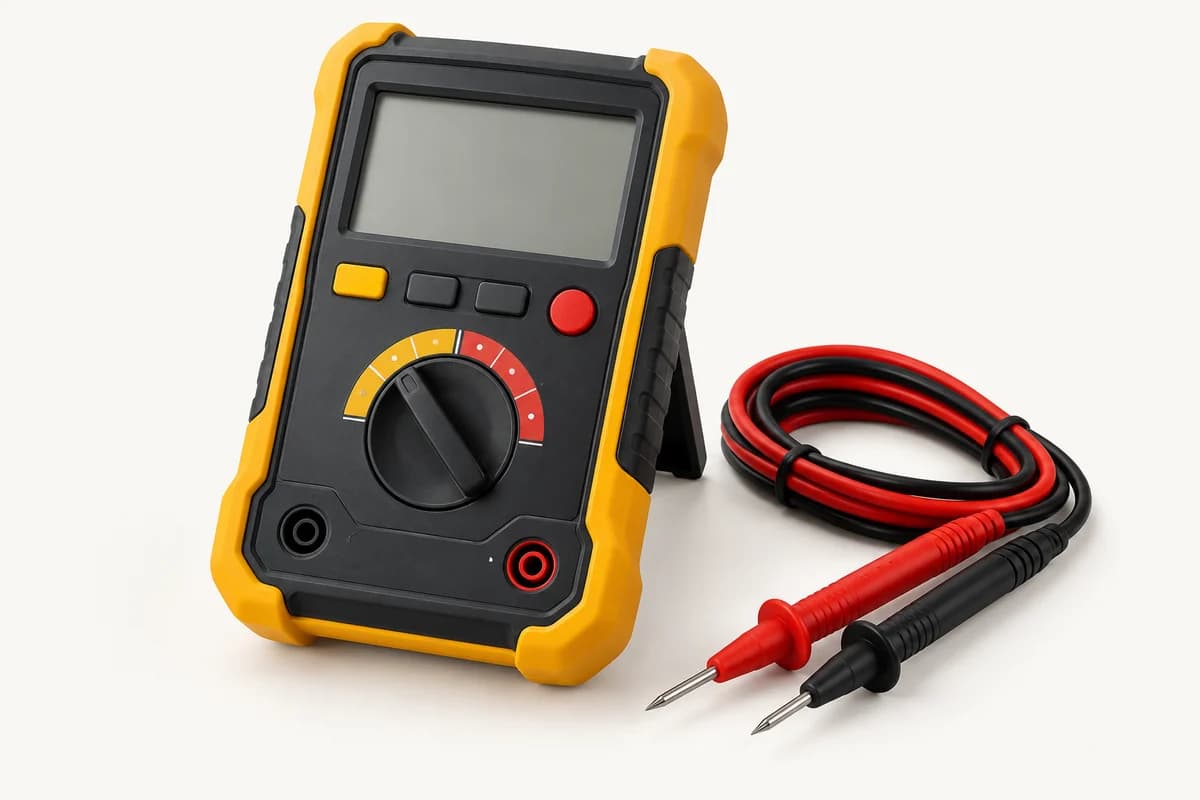
Insulation resistance uses a DC resistance measurement, so it answers a different question. Tan delta can add information about dielectric loss that a resistance reading alone does not provide. A purchase request should name the intended asset and method. A generic request for an insulation tester can otherwise produce an instrument that does not perform the required measurement.
Tan delta and insulation power factor
Insulation power factor relates loss current to total current. Tan delta relates loss current to capacitive current. For low-loss insulation the values can be close, but they are not the same definition. Reports and instrument settings should identify which quantity is being recorded, including whether results are expressed as a decimal or a percentage.
Do not confuse an insulation power factor measurement with the load power factor used to size an APFC panel. One examines dielectric loss in a test specimen; the other describes the relationship between electrical power quantities in an operating installation. The matching terminology can cause procurement errors when the asset and test duty are omitted from an enquiry.
Why conditions belong in the report
Temperature, frequency and test voltage affect dielectric behaviour. Surface contamination and measurement connections can also affect results. Record those conditions with capacitance and loss measurements where the instrument provides them. Historical readings become useful only when an engineer understands whether a change comes from the asset, the conditions or a different test arrangement.
Test mode determines which parts of a complex insulation system contribute to the measured current. Grounded and ungrounded specimen arrangements, and guarding where supported, have specific applications and limits. Those arrangements must follow the equipment and instrument procedures. Comparing differently configured tests as if they measured the same insulation path can lead to a false diagnosis.
A meaningful comparison between visits
Suppose a transformer bushing has a higher recorded dissipation factor on its next inspection. Before drawing a condition conclusion, the engineer compares temperature, test frequency, voltage, connection mode and capacitance with the previous record. A change in several of these fields makes a direct numerical comparison less reliable. The bushing manufacturer’s criteria and the maintenance programme guide the decision.
A single tan delta number cannot identify moisture, ageing or contamination with certainty. It may indicate a need for further assessment, especially when supported by a trend and other tests. Avoid using a universal acceptable percentage across transformer windings, bushings, cables and oil samples. Those assets have different construction and approved interpretation methods.
Equipment testing and oil testing need different arrangements
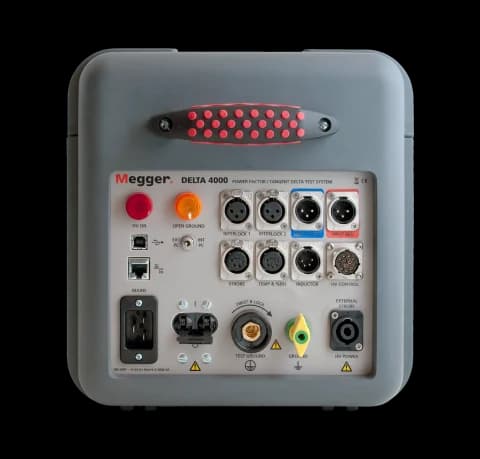
An equipment test set must support the required output, measurement accuracy, test modes and accessories for the intended assets. Environmental interference can affect field measurements, so review the manufacturer’s noise-handling specification where substations are involved. Megger’s DELTA4000 documentation describes model-specific measurement, frequency and temperature-correction features. Confirm these capabilities in the proposed configuration instead of assuming them for the whole category.
An insulating-oil dissipation-factor measurement requires a suitable oil test cell and the method’s temperature control and preparation arrangements. A field equipment tester is not automatically a complete oil laboratory system. State separately whether the requirement concerns installed apparatus, oil samples or both. Ask which cell, heating arrangement, reference accessories and software are included in the offer.
Quotation inputs and responsible use
TPE’s catalogue includes tan-delta test sets for high-voltage equipment and insulating oil. Send the asset list, manufacturer test requirements, required measurement functions, approved test settings, field or laboratory use, expected interference conditions and reporting format. Include preferred makes, quantity, lead lengths, oil-cell requirements and calibration documentation. Require the supplier to identify any limitation against the specified method.
These tests require trained personnel working to an authorised isolation and discharge procedure. Test-set maximum output is an equipment capability, not a recommended setting for an unknown asset. The manufacturer’s instructions determine the test arrangement and limits. Preserve raw readings and contextual information in the report so that the responsible engineer can make the condition assessment with the relevant asset evidence.
Related products and buying guidance
Testing and measuring equipment
Request an equipment quotation
Sources and further reading
Frequently asked questions
Is tan delta the same as insulation resistance?
No. Tan delta assesses AC dielectric loss; insulation resistance measures resistance under specified DC test conditions.
What is an acceptable tan delta value?
There is no single value for all assets. Use the manufacturer’s criteria, specified test conditions and the relevant maintenance or acceptance procedure.
Can an equipment tan delta set also test oil?
Only with the supported oil-cell arrangement, temperature control and required method capability. Confirm the complete proposed configuration.
Specify your requirement
Send the rating, make, quantity and delivery location. Attach the drawing or datasheet where available.
Request a quote